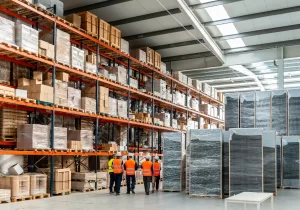
RFID tracking, fixed industrial scanning, and wearable exo-suits are converging inside warehouses as companies seek tighter inventory control, faster throughput, and lower injury risk under persistent labor and cost pressure. The combination gives distribution networks continuous visibility into goods, equipment, and worker activity, helping managers respond to disruptions, congestion, and demand swings with far greater precision.
Turning The Warehouse Into a Real-time Data System
RFID infrastructure replaces much of the manual barcode scanning that still defines many distribution centers. Tags and readers track inventory location, asset status, and material movements as work happens, so every pallet, tote, or high-value asset leaves a digital trace without extra labor. This creates a live map of stock and equipment that supports faster planning cycles and tighter working capital control.
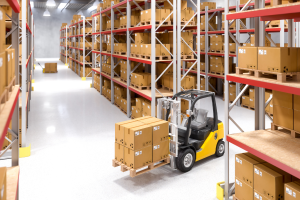
Real-time visibility is most valuable at the pinch points that govern flow. Fixed industrial scanners at dock doors capture inbound and outbound moves as trailers are loaded or unloaded, validating that the right goods are at the right door and time-stamping every handoff. Similar scanners mounted on forklift trucks record each pick, put-away, and transfer, removing the gaps created when operators must stop to scan labels manually.
Industrial machine vision adds another layer by checking label quality, load configuration, and safety markers at speed. Instead of relying on random checks, cameras verify compliance and detect anomalies continuously. This reduces misloads, short ships, and investigation time when discrepancies arise. Industry reports indicate that facilities combining RFID and fixed scanning can cut shipping errors by double-digit percentages while improving dock utilization.
The operational effect is a shift from reconciling yesterday’s transactions to managing today’s flow. Inventory accuracy improves, cycle counts become targeted and exception-based, and planners gain trustworthy data to support dynamic allocation decisions across sites. The same signals also feed control towers and digital twins, which use live movement data to stress-test capacity, adjust routes, or simulate the impact of schedule changes.
Redesigning Work With Wearable Exo-suits
Automation has not removed the need for people to lift, stack, and maneuver loads, especially in mixed-SKU environments and older buildings. Wearable exo-suits address this reality by augmenting human strength and reducing the physical cost of repetitive tasks such as case picking, pallet building, or loading at dock height. These devices support the back and joints, redistribute strain, and help maintain posture as workers bend and lift throughout a shift.
Safety regulators and insurers increasingly scrutinize musculoskeletal injuries, which remain a leading cause of lost workdays in warehousing according to occupational health statistics. Exo-suits respond to that pressure by acting as a preventive control, not just a reactive ergonomic fix. When paired with data from RFID and scanners, operations teams can identify high-strain zones or tasks and deploy exo-suits where they have the greatest impact.
The combination of human augmentation and automated data capture also changes workforce design. Roles that previously demanded high physical endurance can be opened to a broader talent pool, including older or returning workers, because the technology carries more of the load. Training shifts from basic equipment handling toward orchestration skills: interpreting exception alerts from scanners, validating anomalies flagged by vision systems, and coordinating with planning teams when flow deviates from plan.
Performance management becomes more holistic when all three elements are in place. Dock and forklift telemetry show where bottlenecks appear, RFID reveals which locations or product families generate the most touches, and health and safety teams track injury patterns to refine task design. This supports continuous improvement programs that balance productivity with well-being, rather than trading one against the other.
A More Connected Warehouse as a Resilience Asset
The strategic consequence of linking RFID visibility, fixed scanning, and exo-suits is a warehouse that behaves more like a synchronized system than a set of isolated processes. Live data from doors and lift trucks feeds planning and finance, while workforce augmentation stabilizes labor capacity during volume spikes or tight labor markets. Over time, this combination strengthens resilience: operations can flex without overbuilding automation or overextending people, and network decisions rest on current, trusted signals instead of assumptions drawn from stale reports.