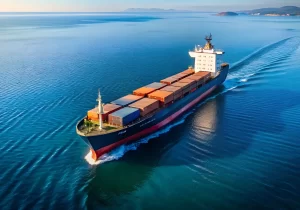
Ocean freight markets are tightening earlier than expected as cargo pull-forward, carrier capacity adjustments and equipment imbalances reshape conditions across major trade lanes. New analysis from C.H. Robinson suggests shippers will need more precise, lane-specific planning as traditional peak-season patterns give way to a more fragmented market.
Early Peak Season Without A Single Playbook
Analysis from freight broker C.H. Robinson points to an ocean market where the calendar still says midyear, but peak-season behaviors are already visible on key trade lanes. In May, U.S. containerized imports reached 2,428,758 TEUs, a 6.6% rise from April and an 11.5% gain year over year, which is consistent with normal seasonal recovery yet layered with new sources of pressure. Volumes are not only reacting to demand cycles; they are also responding to higher transportation costs, fuel surcharges, and planned tariff increases that pull cargo forward.
Retailers and other high-volume importers are advancing orders to secure space and reduce exposure to later rate spikes, which changes the timing of capacity strain across the network. Some routes are tight because underlying demand remains robust, which sustains high utilization and limits booking flexibility for weeks at a time. Other corridors feel full because of condensed shipping windows as customers accelerate orders ahead of tariff milestones or promotional events, creating short, sharp peaks that may fade quickly.
On top of demand dynamics, supply-side constraints are reshaping available capacity. Carriers are withdrawing services, scheduling blank sailings, omitting ports, or repositioning vessels, while container shortages emerge where boxes cannot be returned or redeployed fast enough. Industry reports also highlight ongoing vessel diversions around risk zones such as the Red Sea, which lengthen round voyages, consume additional capacity, and reduce schedule reliability even when headline demand does not appear extreme.
The result is a set of micro-markets rather than one global peak, where each origin-destination pair reflects its own blend of demand, disruption, and network design. Some lanes are tight for structural reasons such as sustained consumption and constrained infrastructure, while others are tight for tactical reasons linked to short-term disruptions or policy changes. Planning teams cannot assume that a booking rule that works on one corridor will translate to another in the same month.
Lane-Specific Booking Logic Becomes A Core Discipline
C.H. Robinson advises treating the root cause of constraint as the starting point for every booking decision, because that origin of pressure dictates how aggressive shippers must be. A lane that runs hot due to steady demand and limited vessel strings often requires earlier bookings, diversified carriers, and secured capacity agreements to avoid rollovers. In contrast, a lane squeezed by temporary disruption or cargo pull-forward may only justify short-term routing changes and tactical flexibility, not long-term commitments at elevated rates.
This makes the simple question ‘Is there space?’ insufficient for planning. The more relevant questions focus on why space is tight, how long that squeeze is likely to last, and whether relief will be structural or fleeting. Teams also need to judge when the lowest available rate carries hidden costs in the form of indirect routings, added transhipments, weaker schedule integrity, or longer dwell times at congested hubs. Recent trade data shows that schedule reliability in major east-west lanes still trails pre-pandemic benchmarks, so these trade-offs directly affect inventory positioning and customer lead times.
Operationally, the environment pushes transportation and network planners toward more granular scenario work. Live lane metrics on utilization, blank sailings, and equipment balance need to sit alongside contract commitments and forecast updates so that booking windows and routing choices can adjust in near real time. Where internal visibility is limited, partnerships with forwarders and brokers that can provide lane-specific disruption intelligence become a practical hedge against last-minute surprises at origin.
The uneven peak also intersects with broader resilience and cost-management agendas. When tariffs and fuel surcharges are part of the capacity story, booking and routing strategies become levers for managing landed cost variance, not only service risk. Some organizations are bringing finance, sourcing, and logistics together around shared thresholds for when to accept rate premia to protect revenue and when to reroute, delay, or rebalance inventory instead. Industry reports indicate growing use of multi-port import strategies and alternative gateways to reduce exposure to single-node congestion or restrictive local policies.
Beyond Capacity: Building A Faster Decision Cycle
Ocean freight volatility is increasingly exposing the speed of commercial decision-making rather than the size of transportation budgets. Carriers continue to adjust networks through blank sailings, service revisions and equipment repositioning in response to shifting demand and geopolitical events, making capacity a variable that changes week by week rather than season by season. Networks that regularly reassess booking priorities, routing options and inventory positioning using current lane conditions will be better prepared to absorb these changes without allowing short-term disruptions to ripple through production, customer service and working capital.