AI, cloud computing, and automation are converging to redefine the movement of goods through global networks. Logistics operators are shifting from managing assets to orchestrating intelligence, building infrastructure that predicts demand and adapts in real time. Huawei’s smart logistics initiatives illustrate how data-driven coordination is becoming the foundation of modern transport systems.
From Digital Islands to Integrated Intelligence
Most logistics networks still operate in fragments, data locked in separate yard systems, terminal software, or warehouse dashboards. The emerging model replaces those silos with integrated “operations clouds” that coordinate activity across every node.
Huawei’s SMART Logistics & Warehousing Solution is one visible example of this trend. Its “1+N” architecture connects one central logistics cloud to multiple parks and yards, allowing automated resource allocation, scheduling, and cargo movement. The platform’s use of AI models such as Wukong for document recognition points to a wider pattern: the fusion of perception (sensors), cognition (AI), and execution (automation).
Industry data shows that logistics operators adopting integrated digital control systems report double-digit gains in throughput and asset utilization. These gains stem not only from speed but from better orchestration, the ability to predict, prioritize, and rebalance flows dynamically as conditions change.
For logistics and supply chain leaders, the lesson is strategic: efficiency now depends on interoperability. The real advantage lies in how data moves between partners, not just within their own systems.
Infrastructure Becomes the New Competitive Edge
Huawei’s partnerships across ports, rail, and air transport illustrate a broader redefinition of infrastructure. China’s SF Technology uses Huawei’s platform to synchronize air cargo operations across multiple airports, handling millions of tonnes of freight with millisecond-level response times. Thailand’s State Railway is digitizing regional corridors with similar cloud-based coordination.
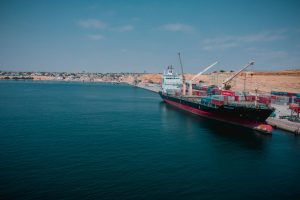
At sea, Shandong Port Technology Group is building a unified digital backbone linking operations along its 3,345-kilometre coastline. The project highlights a new strategic equation: infrastructure resilience now depends on cloud resilience. As climate volatility, labor shortages, and trade friction test conventional logistics models, operators are shifting from asset redundancy to data redundancy, ensuring that control systems can self-adjust even when physical routes are disrupted.
This evolution is not unique to Huawei. Companies from Siemens Mobility to Amazon Web Services are developing logistics-ready AI frameworks for governments and carriers, signalling that the intelligence layer is becoming as critical as the physical one. In practice, this means logistics players will increasingly choose technology partners the way manufacturers choose tier-one suppliers, not for tools, but for co-development capabilities and data governance models.
The Architecture of Control
As logistics becomes a shared digital utility, the balance of power is quietly shifting from operators to the systems that connect them. The more networks rely on common AI and cloud infrastructure, the more strategic questions arise around who controls data, algorithms, and access. The next phase of modernization may depend less on how fast systems learn, and more on who gets to decide what they learn from.