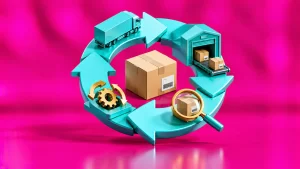
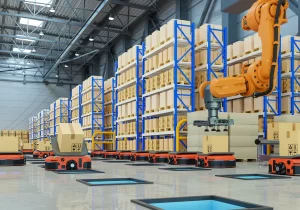
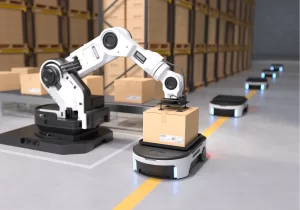
For decades, logistics planning has been defined by schedules and constraints, fixed routes, seasonal forecasts, static lane assignments. But as networks grow denser and automation pushes deeper into operations, planning itself is being redefined as a live computational process. The emerging discipline of computational logistics planning treats every route, warehouse, and transport lane as a continuously solved equation, logistics as math in motion.
From Periodic Planning to Perpetual Calculation
Traditional planning cycles relied on batch updates: once per week for routes, once per season for capacity, once per quarter for cost models. But real-world volatility, driver availability, weather shifts, demand surges, congestion patterns, doesn’t wait for planning windows.
Computational planning replaces static timetables with self-adjusting models that re-solve constraints in real time. Every truckload, yard, and lane becomes a live optimization problem, continuously recalculated based on:
• Traffic and weather feeds that update routing every few minutes.
• Warehouse sensor data tracking dock flow, queue density, and pick-path saturation.
• Carrier performance analytics that reprioritize contracts dynamically.
• Energy price and emissions models that adjust dispatch schedules around peak loads.
• Inventory velocity patterns driving on-the-fly reallocation across hubs.
Instead of humans inputting plans into systems, systems now surface mathematically optimal moves to humans, a reversal of command structure that makes logistics adaptive, not reactive.
The Computational Stack Behind Continuous Optimization
The architecture of computational logistics blends optimization science, AI, and real-time telemetry into a single orchestrated layer:
1. Constraint Solvers and Heuristics Engines: These are software systems that constantly recalculate time, cost, and capacity trade-offs across the network. Instead of running a single plan overnight or during a weekly scheduling cycle, they re-solve the problem every few minutes based on new information, traffic delays, loading times, fuel prices, labor changes, or missed pickups. Running these calculations on local servers near the operation reduces latency, allowing decisions to update as conditions change rather than after the fact.
2. Digital Twins That Simulate The Live Network: A digital twin acts like a parallel version of the logistics network, updating as new data comes in from warehouses, carriers, and demand signals. Because the model matches real operations, it can test thousands or millions of scenarios, storms, port closures, labor shortages, fuel spikes, without disrupting the actual network. Instead of planning based on historical averages, companies plan based on simulated futures.
3. Autonomous Decision Loops: These systems learn from repeated execution. They watch how routes perform, how long docks stay backed up, how often loads miss cut-off times, and then adjust the triggers that determine how the network responds. Over time, the system doesn’t just automate actions, it improves the logic behind those actions, such as sending trucks earlier on congested lanes or shifting labor ahead of expected surges.
4. Local AI at Depots, Hubs, and On Vehicles: Some decisions need to happen even when connectivity is weak, at rural cross-docks, inside steel-walled warehouses, or while vehicles move through dead zones. Local processors stored on equipment or facility servers can make short-horizon decisions independently, such as reassigning a dock door or adjusting trailer sequencing. When the connection returns, they sync back to the larger system.
5. Continuous Feedback Pipelines: Every delivery, delay, fuel charge, and inventory move becomes training data. Instead of updating models quarterly or manually, the system watches outcomes and automatically adjusts the assumptions that drive planning, travel times, carrier performance, pick speeds, yard dwell, and more. Over time, the network moves closer to a model that reflects how it actually behaves, not how it was designed on paper.
The result: the network learns as it operates, growing more efficient not from oversight, but from computation.
The Bottleneck Moves to Data Rights and Interoperability
A network that recalculates itself needs uninterrupted access to signals from carriers, yard systems, labor platforms, and energy providers. Most of that data sits outside a single company’s walls. As continuous optimization scales, the limiting factor may not be model accuracy but the commercial agreements that determine who controls movement, pricing, and telemetry data. The companies that negotiate those rights now will have a structural advantage later, long before the technology itself becomes universal.