As global supply networks grow more complex and interconnected, companies are turning to advanced supply chain management tools to detect vulnerabilities before they cause disruption. From digital mapping and environmental analytics to code verification and geopolitical monitoring, a new generation of platforms is bringing precision and speed to risk management.
Mapping Physical and Digital Dependencies
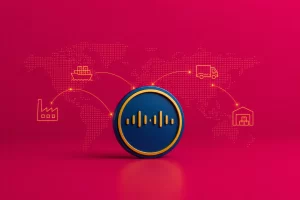
Visibility remains the foundation of supply chain resilience. Modern supply chain management tools now extend well beyond tier-1 suppliers, tracing multi-layered networks of partners and sub-suppliers. Platforms from IBM and Achilles apply artificial intelligence to automate mapping and surface weak links deep in the chain—insights that once took months of manual effort to uncover.
Yet physical visibility is only half the equation. Digital supply chains—those built on cloud platforms, software vendors, and API integrations—can introduce hidden vulnerabilities. Bitsight Discover, for instance, uses external data to chart these digital connections and expose fourth- and fifth-tier dependencies that might otherwise go unnoticed. The ability to identify single points of failure across both operational and technology layers has become a defining feature of next-generation supply chain management tools.
Predictive Analytics for Environmental, Cyber, and Geopolitical Threats
Extreme weather, cyberattacks, and political volatility are now treated as interlinked risks. Environmental analytics platforms such as Riskpulse integrate forecasting, infrastructure data, and compliance signals to calculate shipment exposure scores that update in real time, allowing businesses to reroute goods before storms or floods hit.
In parallel, the integrity of third-party software has become a critical concern after recent breaches tied to embedded code. Verification platforms like IBM AppScan and CA Veracode scan external codebases before integration, closing off one of the most common digital entry points for attackers.
At the geopolitical level, firms are turning to AI-driven analytics from providers such as Geoquant, which combine social media sentiment, policy updates, and economic indicators to forecast political instability. These systems transform what was once a slow, manual process of risk interpretation into a near real-time feed of actionable intelligence.
A New Phase in Supply Chain Risk Intelligence
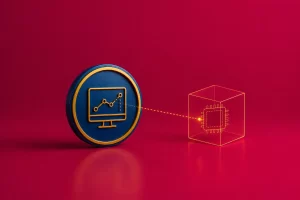
The most advanced supply chain management tools are evolving from reactive dashboards into predictive command centers that synthesize environmental, digital, and geopolitical data into a unified risk picture. As automation deepens, the emphasis is shifting from identifying where disruption might occur to quantifying its financial and operational impact. In this emerging model, visibility is no longer a static map—it’s a living simulation of global interdependence.