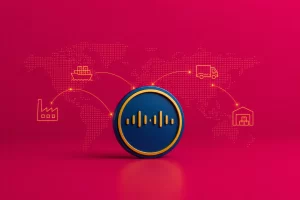
As supply chains become more interconnected and unpredictable, optimization is no longer about reducing costs alone. Organizations that consistently outperform their peers are redesigning networks, improving planning accuracy, and making smarter inventory decisions instead of relying on reactive firefighting. The real competitive advantage comes from optimizing the entire supply chain as one connected system rather than improving individual functions in isolation.
Businesses have spent years investing in automation, analytics, and digital platforms, yet many continue to struggle with rising logistics costs, inconsistent service levels, and excess inventory. The challenge is rarely a lack of technology. More often, it is the inability to optimize decisions across procurement, manufacturing, warehousing, transportation, and customer fulfillment simultaneously. This is where supply chain optimization delivers measurable business value.
Rather than treating inventory, transportation, production, and distribution as separate problems, optimization connects them into a single decision-making framework. Every inventory policy affects transportation costs. Every warehouse location influences customer lead times. Every forecasting improvement changes production planning requirements. Organizations that recognize these interdependencies consistently make better operational decisions.
What is Supply Chain Optimization?
At its core, what is supply chain optimization? It is the continuous process of improving how products, information, and capital move across the supply chain while balancing service, cost, resilience, and working capital.
Unlike traditional cost reduction programs, optimization accepts that supply chains operate within competing priorities. Reducing inventory may improve cash flow but increase stockout risk. Consolidating suppliers may lower purchasing costs while increasing disruption exposure. Expanding warehouse capacity may improve customer service but increase fixed operating expenses.
Optimization focuses on making these trade-offs deliberately using data instead of assumptions. The objective is not to achieve perfection. It is to consistently make better decisions as market conditions change.
Organizations that approach optimization as an ongoing capability instead of a one-time transformation are generally better positioned to respond to disruptions without sacrificing customer service.
Why Supply Chain Optimization Has Become a Strategic Priority
The events of recent years fundamentally changed how businesses think about operational performance. Global disruptions exposed the limitations of lean supply chains designed primarily for efficiency. Many organizations discovered that minimizing inventory, reducing supplier diversity, and concentrating manufacturing capacity created significant vulnerabilities when demand patterns shifted unexpectedly.
Today, successful supply chains pursue a different balance. Resilience, responsiveness, and visibility now carry equal importance alongside cost efficiency.
Recent industry research consistently shows that organizations investing in digital planning, scenario modeling, and end-to-end visibility recover from disruptions faster than those relying on manual planning processes. However, technology alone does not create resilience. Better decisions do.
This shift has also changed how organizations measure performance. Instead of focusing exclusively on transportation costs or warehouse productivity, many now evaluate broader outcomes such as:
- Customer service performance
- Inventory turns
- Cash conversion cycle
- Perfect order fulfillment
- Forecast accuracy
- End-to-end cost to serve
- Supply chain risk exposure
These metrics encourage cross-functional decision making rather than optimizing individual departments at the expense of overall performance.
Supply Chain Network Optimization Starts With Better Design
One of the highest-impact opportunities often lies in supply chain network optimization. Many distribution networks evolve gradually over years through acquisitions, market expansion, and changing customer requirements. Warehouses are added when capacity becomes constrained. Transportation lanes emerge based on historical demand. Manufacturing locations remain unchanged because relocating facilities appears too disruptive.
Over time, the network becomes increasingly complex without anyone asking whether it still supports current business objectives. Network optimization challenges these assumptions.
Instead of asking where facilities already exist, organizations ask where they should exist based on customer demand, transportation economics, labor availability, inventory positioning, and resilience objectives. For example, adding another warehouse does not automatically improve customer service.
An additional distribution center may reduce delivery times for one region while increasing inventory duplication across the network. More facilities also introduce additional operational complexity, higher labor costs, and greater inventory management challenges.
Similarly, consolidating warehouses to reduce operating costs may unintentionally increase transportation expenses and reduce delivery responsiveness. The most effective network strategies evaluate the complete system rather than individual facilities. Modern modeling tools allow planners to simulate multiple scenarios before making major investments.
Questions commonly evaluated include:
- Should inventory be centralized or distributed?
- Does regional fulfillment outperform national fulfillment?
- Which transportation modes provide the best balance between cost and service?
- Are current manufacturing locations still commercially viable?
- How would supplier disruptions affect customer deliveries?
Scenario modeling enables organizations to test these decisions before committing capital. Perhaps more importantly, it encourages planning based on future demand rather than historical network design.
Supply Chain Inventory Optimization Requires More Than Lower Stock Levels
Among all optimization initiatives, supply chain inventory optimization is often misunderstood. Many organizations interpret inventory optimization as simply reducing inventory. That approach rarely succeeds.
Inventory exists for a reason. It protects customer service, absorbs demand variability, and provides resilience against supply uncertainty. The challenge is not carrying inventory. The challenge is carrying the wrong inventory in the wrong locations. High-performing organizations recognize that inventory optimization begins with understanding variability.
Products with stable demand behave differently from highly seasonal products. Components sourced locally require different inventory policies than materials with extended lead times. Strategic products supporting critical customers deserve different service levels than slow-moving inventory.
Applying identical inventory rules across every product category creates unnecessary costs. Instead, inventory optimization should consider multiple variables simultaneously:
- Demand volatility
- Supplier reliability
- Manufacturing flexibility
- Customer service expectations
- Lead time variability
- Product profitability
- Storage constraints
Advanced planning platforms increasingly combine these variables to recommend dynamic inventory policies rather than static safety stock calculations. However, technology should support decision making rather than replace it.
Organizations often discover that poor master data, inaccurate lead times, inconsistent planning assumptions, or fragmented ownership limit optimization far more than software capabilities. One overlooked challenge is organizational behavior.
Sales teams naturally prioritize product availability. Finance focuses on reducing working capital. Operations seek production stability. Procurement favors larger purchasing volumes to reduce unit costs.
Each objective is reasonable independently. Collectively, they can create excess inventory throughout the network. Successful inventory optimization therefore depends as much on governance as mathematics. Clear ownership, shared performance metrics, and cross-functional planning meetings frequently deliver greater improvements than algorithm upgrades alone.
Supply Chain Planning and Optimization Must Work Together
Many organizations invest heavily in forecasting while overlooking the broader planning process. Forecast accuracy certainly matters, but planning extends far beyond predicting demand. Effective supply chain planning and optimization connects demand forecasts with procurement, manufacturing, transportation, warehousing, and inventory decisions.
Without that connection, forecasting improvements generate limited operational value. For example, a highly accurate demand forecast provides little benefit if suppliers cannot adjust production capacity, transportation contracts lack flexibility, or warehouse labor plans remain unchanged.
Planning should therefore function as a continuous decision cycle rather than a monthly reporting exercise. Leading organizations increasingly combine demand sensing, scenario planning, and integrated business planning to evaluate multiple future outcomes instead of relying on a single forecast.
This approach does not eliminate uncertainty. It improves the organization’s ability to respond when reality differs from the original plan. The difference may appear subtle, but it fundamentally changes how supply chains operate.
Rather than asking whether the forecast was correct, planners ask whether the organization is prepared for multiple possible outcomes. That mindset is becoming one of the defining characteristics of modern supply chain optimization.
Supply Chain Optimization Techniques That Deliver Sustainable Results
There is no universal blueprint for optimization. Every supply chain operates within different customer expectations, supplier relationships, regulatory environments, and product characteristics. However, organizations that consistently improve performance tend to focus on a common set of capabilities.
1. Build end to end visibility before adding automation
Many organizations invest in artificial intelligence or advanced analytics before establishing reliable operational visibility. This often leads to sophisticated tools making recommendations based on incomplete or inaccurate data.
Optimization starts with understanding what is happening across suppliers, production sites, warehouses, logistics providers, and customers. Reliable data creates the foundation for every subsequent improvement.
2. Use scenario planning instead of relying on a single forecast
Traditional planning assumes one version of the future. Modern supply chains require multiple contingency plans. Scenario planning allows organizations to evaluate the operational and financial impact of events such as supplier disruptions, demand spikes, transportation delays, or changes in sourcing strategies before they occur. Rather than predicting the future, organizations improve their ability to respond regardless of which scenario unfolds.
3. Optimize cost to serve rather than transportation cost alone
Reducing freight spend is often treated as a primary objective, but transportation decisions should be evaluated within the broader context of customer service and profitability. For example, selecting the lowest cost shipping option may increase lead times, create inventory shortages, or reduce customer satisfaction. Conversely, premium transportation may be justified for high value customers or critical products.
Understanding total cost to serve helps organizations make decisions that support long term profitability instead of optimizing individual cost categories.
4. Strengthen supplier collaboration
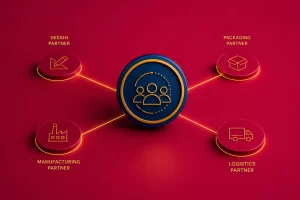
Optimization does not stop at the enterprise boundary. Sharing forecasts, improving production visibility, and jointly managing capacity constraints with suppliers can reduce lead time variability and improve inventory performance throughout the network.
Organizations that treat suppliers as strategic partners often recover from disruptions faster than those relying solely on contractual relationships.
5. Continuously review network performance
Markets evolve faster than most supply chain networks. Customer demand shifts, labor availability changes, transportation infrastructure develops, and new sourcing opportunities emerge. A network that performed well five years ago may no longer represent the most efficient configuration.
Periodic network reviews ensure facilities, transportation lanes, and inventory policies continue to align with current business priorities rather than historical assumptions.
AI is Improving Optimization, But Governance Still Determines Success
Artificial intelligence has become one of the most discussed topics in supply chain management, yet expectations sometimes exceed reality. Machine learning can identify demand patterns, recommend inventory policies, detect potential disruptions, and automate routine planning decisions at a scale impossible through manual analysis.
However, AI cannot compensate for inconsistent business processes, poor data quality, or unclear decision ownership. Many organizations discover that the biggest barriers to optimization are organizational rather than technological.
For example, planning teams may operate with different assumptions from procurement. Manufacturing schedules may change without updating logistics plans. Sales incentives may encourage behaviors that conflict with inventory objectives. These issues cannot be solved through software alone.
Successful optimization combines advanced technology with disciplined governance, standardized processes, and clear accountability across functions. Organizations that balance both elements generally achieve more sustainable improvements than those focusing exclusively on digital transformation.
Why Optimization Initiatives Often Fail
Optimization projects rarely fail because the underlying concepts are flawed. They fail because implementation becomes disconnected from operational reality. Several recurring challenges appear across industries.
One common mistake is attempting to optimize every process simultaneously. Large scale transformation programs often become too complex, making it difficult to demonstrate measurable business value early in the journey.
Another challenge is treating optimization as an information technology project instead of a business capability. While technology plays an important role, lasting improvements require changes to planning processes, operating models, performance measurement, and decision making.
Organizations also underestimate the importance of data governance. Lead times, supplier performance metrics, product classifications, transportation costs, and inventory records all influence optimization models. If this information is outdated or inconsistent, recommendations become less reliable regardless of how sophisticated the platform may be.
Finally, many initiatives define success too narrowly. Reducing inventory by 15 percent may appear successful until customer service declines and expedited freight increases. Likewise, improving warehouse productivity may create bottlenecks elsewhere in the network. Optimization should always be measured using end to end business outcomes rather than isolated functional metrics.
A Practical Roadmap for Supply Chain Optimization
Organizations looking to strengthen performance should focus on building capabilities progressively instead of pursuing large scale transformation all at once. A practical roadmap often includes the following stages:
Assess the current operating model – Identify where costs, delays, inventory, and planning variability originate across the end to end supply chain.
Improve data quality – Reliable optimization depends on accurate product data, supplier information, lead times, inventory records, and demand history.
Prioritize high impact opportunities – Focus first on initiatives that deliver measurable business value within a realistic timeframe. Examples may include inventory segmentation, transportation network redesign, or supplier collaboration.
Adopt integrated planning – Align procurement, manufacturing, logistics, finance, and commercial planning through shared assumptions and common performance measures.
Invest in continuous improvement – Supply chain optimization is not a project with a fixed end date. Business conditions change constantly, making continuous evaluation essential for maintaining competitive performance.
Frequently Asked Questions
- What is supply chain optimization?
Supply chain optimization is the process of improving how goods, information, and resources move across the supply chain while balancing cost, customer service, resilience, and working capital. It uses data, analytics, and operational planning to improve end to end decision making.
- Why is supply chain optimization important?
It helps organizations reduce unnecessary costs, improve inventory performance, strengthen customer service, respond faster to disruptions, and make better use of assets across procurement, manufacturing, logistics, and distribution.
- What is supply chain network optimization?
Supply chain network optimization evaluates the best locations for factories, warehouses, distribution centers, and transportation routes to improve service levels while controlling operating costs and increasing resilience.
- What is supply chain inventory optimization?
Supply chain inventory optimization determines the appropriate inventory levels for different products and locations by considering demand variability, lead times, supplier performance, service targets, and business priorities.
- What are the most effective supply chain optimization techniques?
Some of the most effective techniques include scenario planning, inventory segmentation, network modeling, end to end visibility, supplier collaboration, integrated business planning, demand sensing, and continuous performance monitoring.
The Organizations That Win Will Optimize Decisions, Not Just Operations
The next generation of supply chain performance will not be defined by who owns the most advanced technology or the largest planning teams. It will be determined by who makes better decisions, faster and more consistently.
Optimization should therefore be viewed as a management discipline rather than a software initiative. Organizations that continuously challenge planning assumptions, revisit network design, and measure performance through end to end business outcomes are better equipped to navigate uncertainty without sacrificing growth or customer service.
Perhaps the most overlooked advantage of supply chain optimization is that it improves decision quality across the enterprise. When procurement, planning, manufacturing, logistics, and finance operate from a shared understanding of trade offs, organizations spend less time resolving operational conflicts and more time creating long term competitive advantage. In an environment where disruption has become a constant rather than an exception, that capability may prove to be the most valuable optimization of all.