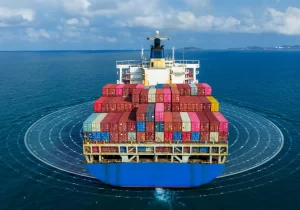
From logistics giants to digital platform innovators, supply chain companies are moving beyond transportation and warehousing to become orchestrators of data, automation, and resilience across global trade networks.
Diversified Models Reshape the Supply Chain Landscape
Supply chain companies no longer fit neatly into the categories of carriers, manufacturers, or distributors. Traditional logistics players such as DHL, FedEx, and Blue Dart are expanding into end-to-end supply chain management, offering visibility platforms, predictive analytics, and sustainability reporting. Meanwhile, global corporations like Amazon, Walmart, and Apple are blurring the line between operator and provider by running vast, self-managed networks that mirror the scale and precision of dedicated logistics firms.
Technology has become the defining competitive lever. Firms like Blue Yonder and C.H. Robinson are embedding AI-driven forecasting and dynamic route optimization into daily operations, turning data into a real-time control layer. These advancements allow supply chain companies to anticipate delays, reroute shipments automatically, and allocate capacity based on live demand signals, capabilities once reserved for digital-first enterprises.
Technology Turns Supply Chains Into Strategic Assets
What distinguishes the leading supply chain companies today is their ability to merge operational excellence with data agility. The convergence of AI, cloud-based control towers, and automation is shifting logistics from a transactional service to a strategic function that shapes pricing, resilience, and customer experience.
Recent investments underscore this shift: FedEx’s Dataworks division is expanding predictive analytics for delivery optimization, while Maersk continues to integrate inland logistics and customs brokerage through its NeoNav platform. At the same time, enterprise customers are consolidating vendor ecosystems, favoring partners who can offer integrated planning, execution, and compliance capabilities across borders.
Collaborative Networks Over Linear Chains
The next evolution for supply chain companies lies in collaboration rather than competition. Multi-enterprise ecosystems, where shippers, carriers, and suppliers share real-time data, are emerging as the new standard for agility. According to Gartner, by 2027 more than 60% of global trade will move through such networked platforms.
This model shifts the focus from efficiency to adaptability. The companies that thrive will be those that transform data-sharing into mutual advantage, building resilient networks that can sense disruption, reallocate capacity, and capture margin opportunities faster than the market itself.