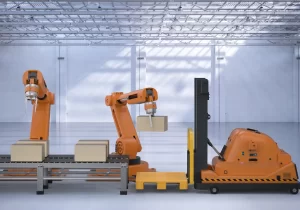
Global sales of professional service robots rose sharply in 2025, with transportation and logistics accounting for nearly half of all units sold. The latest figures from the International Federation of Robotics show where companies are committing to automation, even as questions over costs, safety and commercial viability continue to constrain more advanced robotic systems.
Logistics Drives Nearly Half of Professional Robot Sales
Global shipments of professional service robots increased 24% to nearly 250,000 units in 2025, according to the International Federation of Robotics (IFR) World Robotics 2026 report.
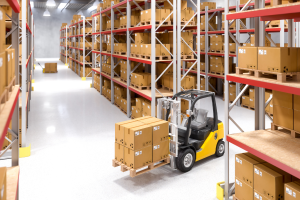
Transportation and logistics accounted for the largest share, with approximately 117,500 units sold, an increase of 21% from the previous year. The segment represented 47% of global professional service robot sales, reflecting sustained investment in automated transportation, material handling and delivery processes.
The figures show that demand remains concentrated in applications where robots can perform defined, repetitive tasks within established workflows.
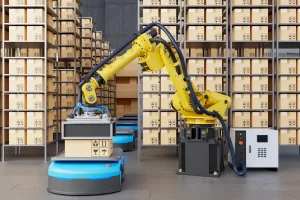
Mobile robots used to transport goods between storage, production and distribution areas are particularly relevant to this market. Automating these movements can reduce manual handling requirements and support more consistent material flows, although financial returns depend on utilization, integration costs and the volume of work automated.
The IFR also identified growing interest in Robotics as a Service (RaaS), which has become the dominant business model for transportation and logistics robotics in the United States.
RaaS allows companies to access robotic systems through recurring service arrangements rather than purchasing equipment outright. The model can reduce initial capital requirements, but it also introduces longer-term commitments involving service fees, maintenance provisions and performance expectations.
For procurement, the commercial distinction matters. Equipment ownership places greater emphasis on acquisition costs, depreciation and internal maintenance capabilities. Service contracts require closer examination of uptime guarantees, software support, utilization charges and the supplier’s responsibility when systems fail to perform.
Beyond logistics, hospitality was the second-largest application category, covering robots used for guidance, information services and telepresence. Professional cleaning ranked third, with automated floor cleaning representing its principal application.
Growth extended across other robotics categories. Medical robot sales increased 19%, while consumer service robots recorded a 37% rise, the strongest growth among the three segments reported by IFR.
Together, the figures point to expanding demand for automation, although growth rates differ considerably across applications and commercial maturity.
Humanoid Robots Face a Tougher Commercial Test
Despite growing attention around humanoid robotics, adoption remains limited compared with established service robot applications.
Approximately 7,000 full-size humanoid robots, defined as robots taller than 140 centimeters, were sold worldwide in 2025 for commercial and professional purposes, excluding research, development and entertainment applications.
Advances in artificial intelligence, sensors and control systems have supported increasingly sophisticated demonstrations and pilot projects. However, many humanoid systems remain specialized and require human supervision or intervention.
The commercial obstacles are substantial.
Safety requirements, training costs, maintenance expenses and uncertain returns continue to restrict wider deployment, particularly in industrial environments where established automation systems already perform specific tasks.
Humanoid robots are designed to work in spaces built for people, potentially allowing a single machine to perform different activities without extensive changes to existing infrastructure.
That flexibility could eventually improve equipment utilization across multiple tasks. Yet the economics depend on whether robots can perform those activities reliably enough to justify their higher complexity and support costs.
IFR identifies intuitive programming, reliable object manipulation, economies of scale and standardized safety requirements as essential areas for further development.
These constraints create a different procurement assessment from that of conventional warehouse automation. A mobile transport robot can be evaluated against a defined movement requirement, throughput target and operating schedule. A humanoid system intended for multiple tasks requires evidence that its versatility produces sufficient additional value.
The distinction becomes particularly important when suppliers promote technical capability without demonstrating sustained performance under commercial working conditions.
IFR’s separate research on the human impact of service robots also highlights the role of automation in addressing labor shortages and reducing physically demanding, repetitive or hazardous work.
Advances in AI, machine perception and autonomous navigation are improving the range of activities robots can undertake. However, human oversight remains important, particularly where tasks involve unpredictable conditions, safety decisions or complex handling requirements.
The broader adoption of robotics therefore depends on workforce integration as well as technological capability. Training, maintenance support and the allocation of responsibilities between employees and automated systems all influence the eventual cost and reliability of deployment.
Robot Contracts Will Need to Prove More Than Productivity
As robotics suppliers expand subscription and service-based offerings, contract structure will become an increasingly important part of automation economics. A system that meets its productivity target may still deliver disappointing returns if utilization is lower than expected or software, maintenance and integration costs rise over time.
Procurement decisions will need to account for the cost of changing suppliers, accessing performance data and retaining control over software-dependent equipment. Those provisions could determine whether an automation investment remains commercially attractive throughout its working life, particularly as robotic technology continues to advance.