Manufacturing used to define supply chain control. Companies invested heavily in factories because ownership meant visibility, quality, and operational certainty. As manufacturing became increasingly outsourced, many assumed those advantages would inevitably diminish.
Cisco challenged that assumption.
Today, the vast majority of Cisco’s products are manufactured by external partners, yet the company retains a remarkable degree of operational oversight across its global network. Rather than treating outsourcing as the transfer of responsibility, Cisco treats it as the transfer of execution. Planning, governance, quality, and decision-making remain firmly within its own operating model.
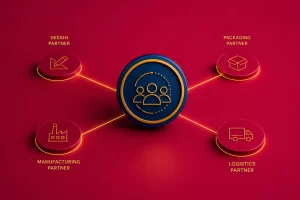
That distinction has become increasingly important as supply chains grow more distributed. For many organisations, competitive advantage no longer comes from owning production assets. It comes from orchestrating a complex ecosystem of suppliers, manufacturers, logistics providers, and technology partners as though they are one connected enterprise.
Cisco’s approach demonstrates that outsourcing does not reduce the need for control. It changes how control is achieved.
Outsourcing Doesn’t Mean Letting Go
Cisco outsources the majority of its manufacturing while managing hundreds of product families and a configure-to-order business model serving customers around the world. That level of complexity would be difficult enough within a single organisation. Across an extended manufacturing network, it requires a completely different operating philosophy.
Rather than managing suppliers through periodic reviews or performance scorecards alone, Cisco built an operating model based on continuous collaboration and shared visibility.
Its objective is straightforward: external partners should operate as an extension of Cisco’s own supply chain rather than as independent organisations connected only through purchase orders.
That philosophy requires governance, technology, and trusted relationships to work together.
Visibility Is the Foundation of Control
One of Cisco’s most distinctive capabilities has been the way it connects directly with its manufacturing partners.
For example, Cisco developed an integrated production network known as Autotest, linking production and test equipment across partner factories into Cisco’s own systems. This provided near real-time visibility into manufacturing performance, product configuration, and quality, allowing issues to be identified and addressed while products were still moving through production.
The significance goes beyond technology. Visibility enables action.
If testing identifies an increase in defects or a product begins operating outside expected quality parameters, issues can be investigated and addressed much earlier than would be possible through periodic reporting alone.
For organisations operating across multiple contract manufacturers, this kind of visibility reduces the delay between identifying a problem and resolving it, often preventing quality issues from becoming customer issues.
Standard Processes Keep Global Networks Aligned
Technology alone cannot coordinate a global manufacturing ecosystem. Cisco complements visibility with standardised processes that ensure suppliers, manufacturers, planners, and quality teams operate from the same playbook.
This is particularly important in a configure-to-order environment, where individual customer orders may require different hardware configurations, software versions, and manufacturing instructions.
Consistency in execution depends on consistent operating processes.
Rather than allowing each manufacturing partner to develop its own approach, Cisco established common standards for configuration management, quality assurance, production monitoring, and reporting.
The result is greater flexibility without sacrificing operational discipline.
Collaboration Creates Better Outcomes Than Compliance
Supplier relationships are often managed through contracts, service-level agreements, and performance reviews.
Cisco goes further.
The company has invested in collaborative planning with both suppliers and customers, recognising that earlier visibility improves operational performance across the network.
For major customers, collaborative demand planning helps identify future projects earlier, allowing manufacturing capacity and supply plans to be adjusted before demand materialises. Cisco reported significant improvements in delivery performance in parts of its business where these collaborative approaches were adopted, demonstrating the value of planning with customers rather than simply responding to orders.
The same collaborative philosophy extends to suppliers through shared communication platforms and connected digital tools that enable faster issue resolution and greater transparency.
This reflects a broader shift across global supply chains. The most resilient supplier relationships are increasingly built on shared information rather than transactional exchanges.
Control Comes From Visibility and Governance
Cisco’s operating model illustrates an important change in modern supply chains. Physical ownership is no longer the primary source of control.
Instead, control comes from combining shared visibility, consistent governance, standard operating processes, and timely information that allows multiple organisations to make coordinated decisions.
That capability becomes increasingly valuable as manufacturing networks expand across regions, suppliers diversify, and product complexity grows.
Companies that continue relying on periodic reporting or disconnected systems will inevitably struggle to manage an increasingly distributed supply base.
Those that invest in connected operations and strong governance are better positioned to identify issues early, coordinate responses, and maintain consistent performance across their partner network.
Building an Extended Enterprise
Many organisations still think about suppliers as external organisations supporting the business.
Cisco’s approach is different. Its contract manufacturers, suppliers, logistics providers, and internal teams operate within a connected ecosystem designed around shared objectives rather than isolated responsibilities. That does not eliminate complexity. It makes complexity manageable.
Instead of trying to centralise every activity internally, Cisco centralises governance while distributing execution across trusted partners.
For multinational organisations managing increasingly global supplier networks, this model offers an important lesson. The question is no longer whether manufacturing should be owned or outsourced.
The more important question is whether every participant in the network can see the same information, follow the same operating principles, and respond to issues with the same speed.
Turning Supplier Networks Into Competitive Advantage
As supply chains become more distributed, the organisations that perform best will not necessarily be those with the largest manufacturing footprint. They will be the ones that coordinate their partner ecosystems most effectively.
Cisco’s experience shows that outsourcing succeeds when it is supported by strong governance, shared visibility, standardised processes, and collaborative relationships. Without those capabilities, complexity quickly becomes difficult to control. With them, an extended manufacturing network can operate with the discipline and responsiveness of a single enterprise.
For organisations reviewing their own supplier operating model, several practical questions are worth asking:
- Do manufacturing partners have timely visibility into the same operational information as internal teams?
- Are quality issues identified during production or only after products reach customers?
- Have standard processes been established across all manufacturing partners?
- Are suppliers treated as transactional vendors or strategic collaborators?
- Is governance designed to coordinate the entire network rather than individual supplier relationships?
The future of manufacturing is unlikely to be defined by who owns the most factories. It will be defined by who can orchestrate the most connected, transparent, and responsive supply chain. Cisco’s approach demonstrates that, in a global partner ecosystem, effective control depends less on ownership than on visibility, governance, collaboration, and disciplined execution.