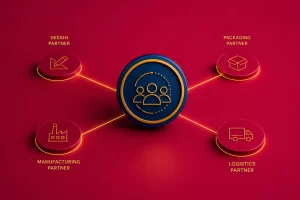
For years, supplier relationship management has been positioned as a strategic capability. In reality, most organizations still run it as a reporting exercise. Scorecards are produced, quarterly reviews are held, and performance issues are documented. Yet when disruption hits, the same organizations fall back on expediting freight, reallocating inventory, and escalating issues manually.
That gap between process and outcome is becoming harder to ignore. A modern supply chain resilience strategy cannot be built on visibility alone. It depends on how effectively supplier relationships are structured, governed, and operationalized across the business. The uncomfortable truth is that many supplier relationship management programs are not designed to influence day to day decisions where resilience is actually won or lost.
The Illusion of Control in Supplier Relationship Management
On paper, supplier relationship management looks mature in most organizations. There are defined KPIs, formal review cadences, and digital tools capturing supplier data. But this apparent maturity often masks a deeper issue. The system measures performance, but does not change behavior.
The core problem is that supplier management is still treated as a procurement activity rather than an operational lever. Procurement teams own the relationship, but the consequences of supplier performance are felt in planning, logistics, and customer service. This disconnect means insights rarely translate into action.
Take lead time variability as an example. It is one of the most critical drivers of instability across inventory, transport planning, and service levels. Yet in many organizations, it sits buried in supplier scorecards rather than being actively used to adjust safety stock policies or transport plans. The data exists, but it is not operationalized.
There is also a tendency to over-standardize. Organizations often apply the same governance model across all suppliers, regardless of their strategic importance. This creates unnecessary complexity while diluting focus from the suppliers that actually matter. According to widely referenced industry frameworks, leading organizations segment suppliers based on business impact, not just spend. However, in practice, this segmentation is rarely enforced in a meaningful way.
The result is predictable. Teams spend time managing low-impact suppliers while critical relationships remain underdeveloped. When disruption occurs, there is no structured mechanism to respond quickly because the relationship has not been built to support it.
A more effective approach starts with acknowledging that not all suppliers should be managed equally. Strategic suppliers require deeper integration, including shared forecasts, aligned capacity planning, and clear escalation paths. This is where supplier relationship management becomes a driver of resilience rather than a reporting exercise.
Supplier Diversification: A Strategy That Often Backfires
Supplier diversification is frequently presented as a straightforward solution to risk. If one supplier fails, another can step in. In theory, this makes sense. In practice, it is far more complex.
Adding suppliers increases optionality, but it also introduces operational friction. More suppliers mean more inbound variability, more coordination effort, and often higher costs. Without strong governance, diversification can actually reduce visibility and slow decision-making.
One of the most common mistakes is reactive diversification. Organizations attempt to onboard alternative suppliers during or immediately after a disruption. This rarely works. New suppliers require qualification, quality validation, and integration into existing processes. These steps take time, and rushing them introduces new risks.
A more effective supply chain resilience strategy treats diversification as a long-term capability rather than a short-term fix. This means pre-qualifying alternative suppliers, maintaining active relationships, and allocating a portion of volume to keep them operational. It is not enough to have a backup supplier on paper. They need to be integrated into the network in a way that allows them to scale quickly when needed.
There is also a commercial trade-off that is often overlooked. Splitting volume across multiple suppliers can weaken negotiating leverage and increase unit costs. The assumption that diversification always reduces risk ignores the financial impact.
Leading organizations manage this trade-off deliberately. They maintain a primary supplier for efficiency and cost, while allocating a controlled share of volume to secondary suppliers to preserve flexibility. This approach balances resilience with cost discipline, rather than sacrificing one for the other.
Another critical factor is geographic diversification. Shifting suppliers across regions can reduce exposure to localized disruptions, but it introduces new challenges such as longer lead times, increased transport costs, and regulatory complexity. These trade-offs need to be evaluated through scenario planning rather than broad assumptions.
Why Most Resilience Strategies Fail at Execution
The concept of a supply chain resilience strategy is widely accepted. The execution is where most organizations struggle. One issue is the lack of clear decision rights. During disruptions, teams often hesitate because it is unclear who has authority to shift volumes, approve alternative suppliers, or accept cost increases to protect service. This delay can be more damaging than the disruption itself.
Another challenge is fragmented data. Supplier performance, inventory levels, and transport status are often stored in separate systems. Without a unified view, it is difficult to make informed decisions quickly. This is why many organizations are investing in control tower capabilities to centralize data and improve visibility.
However, visibility alone does not solve the problem. The real value of a control tower lies in enabling faster and more consistent decision-making. This requires predefined playbooks that outline how to respond to specific scenarios, including supplier failures and capacity constraints.
There is also a tendency to rely too heavily on inventory as a buffer. Increasing safety stock can improve service levels in the short term, but it ties up working capital and does not address underlying issues such as supplier reliability. According to recent trade reports, organizations that focus on reducing variability rather than increasing buffers achieve more sustainable improvements in resilience.
Collaboration with suppliers is another area where execution often falls short. Sharing demand forecasts and production plans can significantly improve supplier performance, but it requires trust and data alignment. Many organizations are reluctant to share this information, limiting the potential benefits.
Reframing Supplier Relationship Management as an Operational Capability
To move beyond theory, supplier relationship management needs to be embedded into daily operations. This requires a shift in how it is structured and governed.
First, ownership must be shared across functions. Procurement, planning, logistics, and operations all have a role in managing supplier performance. Clear accountability and alignment on objectives are essential to ensure that insights lead to action.
Second, metrics need to be simplified and aligned with operational outcomes. Instead of tracking a wide range of KPIs, organizations should focus on a small set of metrics that directly impact service and cost. These typically include lead time reliability, fill rate, and quality consistency.
Third, governance needs to be practical. Regular supplier reviews should focus on identifying and resolving issues, rather than producing reports. Escalation processes should be clearly defined, with specific triggers and response actions.
Technology can support this transformation, but it cannot replace it. Advanced analytics and AI can provide valuable insights, but their impact depends on how those insights are used. Organizations that invest in technology without addressing process and governance gaps are unlikely to see meaningful improvements.
What Actually Drives Resilience in Supplier Networks
The conversation around supply chain resilience often focuses on structural changes such as adding suppliers or increasing inventory. While these measures have their place, they do not address the root cause of most disruptions, which is variability.
Resilience is ultimately about reducing variability and improving the ability to respond when variability occurs. This is where supplier relationship management plays a critical role.
Strong supplier relationships enable better communication, faster issue resolution, and more accurate planning. They also create opportunities for joint problem-solving and continuous improvement. These benefits are difficult to quantify, but they have a significant impact on overall performance.
There is also a growing recognition that resilience and efficiency are not mutually exclusive. Organizations that reduce variability often see improvements in both service levels and cost. This challenges the traditional view that resilience requires trade-offs.
However, achieving this requires consistent execution. It is not enough to define a strategy. Organizations need to build the processes, governance, and capabilities to deliver it.
The Real Question Is Not How Many Suppliers You Have
The industry narrative often suggests that more suppliers equal more resilience. This is an oversimplification that can lead to the wrong decisions.
Resilience is not determined by the number of suppliers, but by how well they are managed. Adding suppliers without improving management processes can increase complexity and reduce control. In some cases, it can make disruptions harder to manage.
A more useful question is whether supplier relationships are structured to support rapid decision-making and collaboration. Organizations that invest in stronger relationships, better data integration, and clearer governance often achieve greater resilience with fewer suppliers.
Stop Expanding the Supplier Base and Start Managing It Properly
There is a tendency to respond to disruption by expanding the supplier base. It is a visible action that signals progress. But it often avoids the harder work of improving how suppliers are managed.
The next phase of supply chain resilience will not be defined by how many suppliers an organization has, but by how effectively it can coordinate them. This requires a shift from reactive problem-solving to proactive management, where risks are identified early and addressed systematically.
The organizations that succeed will not be those with the most complex networks, but those with the most disciplined execution. They will treat supplier relationship management as a core operational capability, not a supporting process. That shift is not easy, but it is where the real competitive advantage lies.