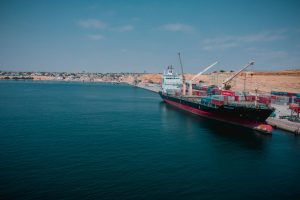
Modern ports run on code as much as cranes. Yard management systems, vessel scheduling, customs clearance, and even berth allocation are now driven by interconnected software platforms. That digital integration has accelerated trade, but it has also created a single point of vulnerability. A breach in one subsystem can ripple across port operations, shipping lines, and inland carriers within hours.
To contain that risk, several port authorities are turning to digital sandboxing, a cybersecurity architecture that isolates digital systems and simulates real-time port data within controlled environments. The approach mirrors the principle of watertight bulkheads on a ship: even if one compartment floods, the rest of the vessel remains afloat.
From Centralized Platforms to Isolated Zones
For the past decade, port modernization efforts have emphasized integration. Unified Port Community Systems (PCS) and digital logistics platforms were designed to connect customs, terminal operators, trucking companies, and shipping lines into single data environments, improving visibility and coordination. But that integration has also created sprawling cyberattack surfaces across critical port infrastructure. According to research by the U.S. Department of Homeland Security, the digital interdependence of maritime systems has sharply increased exposure to systemic cyber risks within global trade networks.
That risk materialized in July 2023 when a ransomware attack on the Port of Nagoya in Japan disrupted the port’s unified terminal system (NUTS) and forced operations to shut down for more than two days. The incident temporarily halted container handling and caused Toyota Motor Corporation, which relies on Nagoya for parts exports, to suspend an outbound packaging line. The breach illustrated how a single point of failure in an integrated system can ripple across national supply chains within hours.
Digital sandboxing reverses that logic. Instead of one monolithic platform, ports segment their digital infrastructure into isolated operational zones, each running within a secure, virtualized environment. If an intrusion occurs in one area, such as a vessel scheduling API or gate management system, sandbox isolation prevents the malware from reaching critical control networks like crane automation or customs data feeds.
How Maritime Sandboxes Work
A digital sandbox environment replicates live data flows without exposing the production system itself. Real-time vessel tracking, cargo manifests, and logistics telemetry are mirrored in parallel environments used for analytics, testing, and partner access. AI-driven threat monitoring tools observe data behavior within these sandboxes, flagging anomalies, such as unusual login patterns, unauthorized API calls, or data packet irregularities, before they infiltrate live operations.
Some ports are going further, embedding sandboxing directly into their Port Community Systems (PCS). The Port of Rotterdam now tests software integrations in virtual twin environments before deployment, while Singapore’s Maritime and Port Authority is developing sandbox clusters that let startups and logistics providers test applications safely using synthetic data rather than live customs or cargo information.
This layered isolation creates digital firebreaks: even if one application is compromised, the intrusion stops at the boundary of that sandbox, containing disruption before it cascades.
Engineering Continuity Into Port Design
Ports are beginning to treat cybersecurity as part of their physical and operational design. Digital sandboxing fits within this shift, embedding containment into the architecture itself. As automation deepens and data flows multiply, the measure of a modern port will be its ability to isolate risk without halting movement. Building that kind of continuity by design is becoming as critical to trade resilience as the cranes and ships that keep it running.