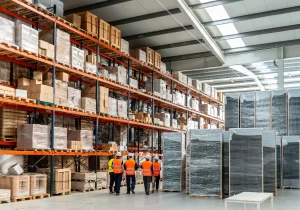
Mobile manipulators give warehouses a way to automate labor-intensive tasks without committing every process to fixed infrastructure. As fulfillment patterns become less predictable, the financial return will increasingly depend on where robotic capacity can be redeployed, not simply how quickly it performs a single task.
Automation Moves to the Work
Traditional warehouse automation concentrates activity around fixed assets. Conveyors, robotic cells and automated stations perform well when volumes, product dimensions and process sequences remain predictable. Their economics become harder to defend when demand fluctuates, handling requirements vary or workflows change frequently.
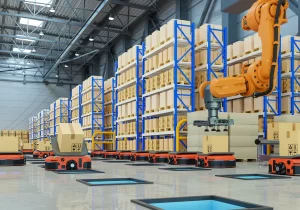
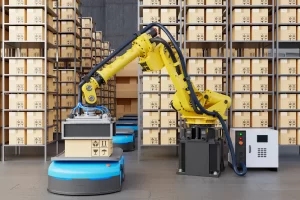
Mobile manipulators shift the unit of automation from a fixed workstation to a movable resource. Combining an autonomous mobile robot with a collaborative arm allows one system to navigate a facility, identify objects and complete physical handling tasks. The same equipment can support piece picking, replenishment, internal transport, mixed-case palletizing and trailer unloading.
This represents a meaningful change in warehouse design logic. Automation capacity can be introduced incrementally and reassigned as bottlenecks move. Facilities can target specific pockets of labor exposure without rebuilding the entire material flow around permanent equipment.
The strongest applications involve work that requires both movement and physical interaction. Loose-loaded trailer unloading is one example because it combines variable case presentation with demanding manual handling. Dynamic order picking presents a similar challenge, particularly when product mix and order profiles shift during peak periods.
Workflow Fit Determines the Return
Mobility does not remove the operational constraints that have historically limited robotic handling. Object variability, fine dexterity and unpredictable environments can reduce performance relative to skilled employees. A robot that completes individual movements successfully may still miss the required throughput once travel, charging, exception recovery and downstream handoffs are included.
The investment case should therefore begin with workflow economics. The relevant baseline includes labor availability, injury exposure, service volatility and the cost of manual exceptions. Purchase price alone provides an incomplete view. The commercial test is whether the system can deliver stable capacity during the periods and processes where labor constraints place service at risk.
Process redesign is equally important. Deploying a mobile manipulator into an unchanged workflow can preserve unnecessary travel, handoffs and waiting time. Slotting rules, replenishment timing, staging locations and exception paths may need to change so the robot receives work it can execute consistently. Human roles also require deliberate design, with employees handling quality issues, unusual items and operational decisions that exceed the system’s capability.
Integration creates another dependency. Mobile manipulators must receive priorities from warehouse management and control systems while coordinating with people, fixed automation and other mobile equipment. Weak orchestration can transfer congestion from one process to another or create inventory discrepancies when physical movements and system records fall out of sequence.
Wheeled Systems Hold the Near Term Advantage
Humanoid robots attract attention because their form resembles the workforce and infrastructure already present in warehouses. Current power limitations and emerging safety standards constrain their near-term use in live logistics environments. Wheeled mobile platforms operate within a more established safety framework and avoid the energy and control complexity associated with bipedal movement.
Advances in perception, machine vision and motion planning developed for humanoids can still improve wheeled manipulators. This gives warehouses access to better object recognition and decision capability without requiring a human form factor for tasks where wheels provide sufficient mobility.