Companies are investing heavily in supply chain solutions to cut costs, improve customer experience, and build resilience. With the global supply chain management market set to more than double between 2019 and 2027, the pressure is on to adopt smarter, technology-driven models that can withstand disruption while unlocking growth.
Defining Supply Chain Solutions Beyond the Basics
Supply chain solutions are no longer just about moving goods from factories to customers. They represent an integrated set of strategies and technologies that govern how businesses source, store, transport, and return products. When executed effectively, these solutions reduce friction across the value chain and allow companies to scale with confidence.
Logistics optimization now goes beyond route planning, incorporating AI to cut lead times and reduce fuel costs.
Inventory management systems prevent costly overstocking and stockouts, often the difference between market share gain and customer churn.
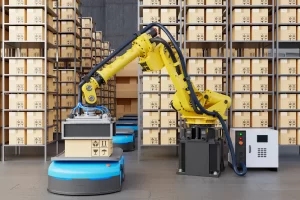
Technology-enabled visibility, powered by IoT, analytics, and blockchain, delivers real-time control of shipments and demand patterns.
Sustainable logistics solutions—from electric fleets to eco-packaging—are rising fast, with more than 40% of providers prioritizing green practices to align with carbon-reduction mandates.
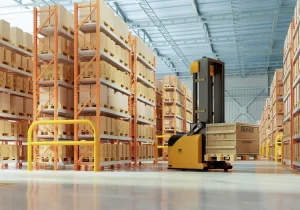
Warehousing solutions have become more specialized, with cold storage and fragile-goods handling forming part of competitive differentiation.
Reverse logistics is now mission-critical, especially in e-commerce, where return rates hover around 20–30%.
Third-party logistics (3PL) providers are increasingly sought after by firms needing bundled warehousing, fulfillment, and distribution services without heavy capital investment.
Companies that deploy advanced supply chain solutions often achieve up to 15% lower operating costs, creating both margin advantage and strategic flexibility.
Why Businesses Are Accelerating Adoption?
Several triggers explain why organizations lean on supply chain solutions at specific points in their growth cycle. Expansion into new markets brings sourcing and compliance challenges; seasonal demand spikes strain limited capacity; and customer expectations for two-day delivery force greater network reach. In each case, outsourcing to a partner with established infrastructure reduces risk.
Third-party providers also bring scalability and flexibility, helping firms manage sudden surges without building costly fixed assets. Their use of advanced digital tools like AI forecasting and blockchain integration makes capabilities accessible without high upfront spending. In parallel, providers manage compliance across trade borders, an area that has become more complex as tariffs, sanctions, and reporting rules tighten globally.
Data from Gartner shows that 81% of supply chain leaders made end-to-end visibility their top priority after the pandemic. Companies are also pushing to embed sustainability into logistics, as supply chains account for more than half of global carbon emissions. Outsourcing partners that offer lower-emission fleets and circular logistics models are becoming essential to meeting ESG commitments while maintaining service levels.
Choosing the Right Partner Is a Strategic Decision
For businesses in India and beyond, selecting a supply chain service provider is less about transactional outsourcing and more about long-term strategic alignment. Key considerations include:
Business fit: The provider’s capabilities should match specific needs, be it cold chain, last-mile, or global trade compliance.
Experience and credibility: Verified track records, client references, and certifications signal reliability.
Scalability: Providers must flex capacity to support both seasonal peaks and future geographic expansion.
Network strength: Fulfillment centers near demand hubs cut costs and improve service speed.
Technology maturity: Providers offering IoT-enabled tracking, predictive analytics, and digital documentation reduce errors and regulatory delays.
Sustainability credentials: Alignment with corporate ESG targets is no longer optional.
Comparative benchmarking of pricing and service levels, along with round-the-clock customer support, rounds out the due diligence process.
Supply Chain Solutions as Competitive Moats
Supply chain solutions have moved from back-office efficiency tools to boardroom priorities that shape competitive advantage. Businesses that treat logistics and fulfillment as strategic levers are not just cutting costs, they are gaining resilience against shocks, unlocking access to new markets, and hard-wiring sustainability into growth models.
The overlooked risk lies in inertia. Companies that delay investment in modern supply chain solutions risk losing margin to competitors who deliver faster, cleaner, and more reliably. In today’s market, resilience and customer experience are no longer differentiators, they are thresholds for survival.