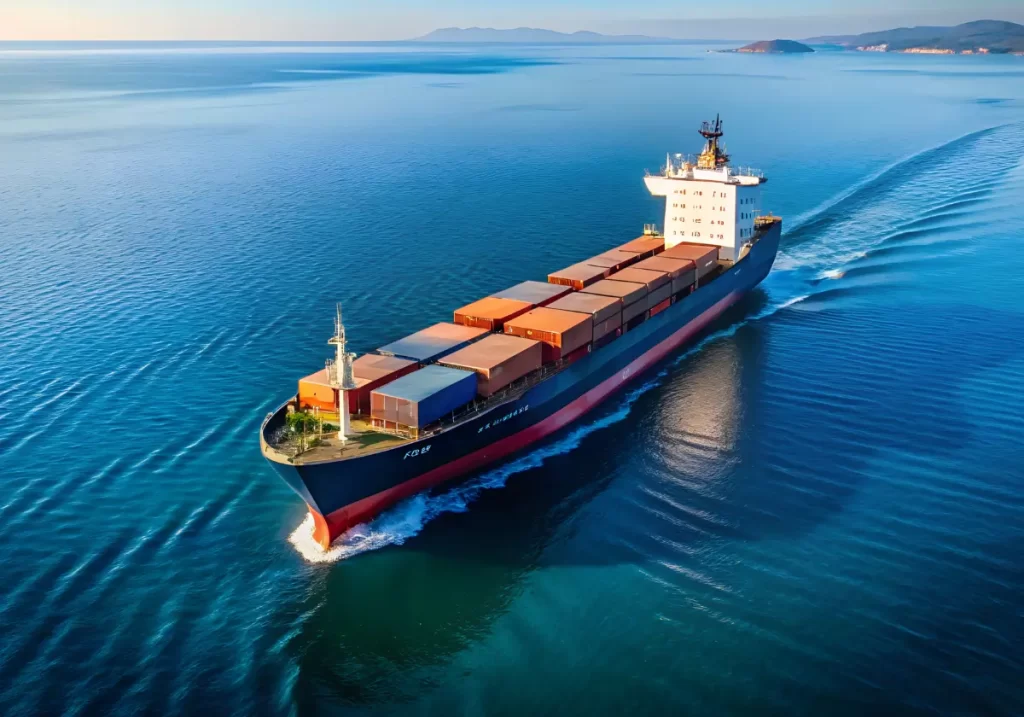
The Strait of Hormuz crisis is exposing a structural weakness in global supply chains. Critical trade flows remain dependent on routes and industrial capacity that can be difficult to replace when access is disrupted.
About 20.9 million barrels a day of oil moved through Hormuz in the first half of 2025, according to the U.S. Energy Information Administration. That was equivalent to roughly 20% of global petroleum liquids consumption. More than 20% of global liquefied natural gas trade also passed through the strait.
The current conflict has brought that exposure into sharper focus. Shipping through Hormuz has been disrupted during the fighting, while renewed military activity around the waterway pushed Brent crude above $90 a barrel on August 31.
The immediate consequences are being felt in energy markets and shipping, but the larger supply chain issue is the limited capacity available to reroute such large volumes.
Saudi Arabia and the United Arab Emirates operate pipelines that can bypass Hormuz. The EIA estimates their combined available bypass capacity at about 4.7 million barrels a day, far below the volume normally transported through the strait.
That gap demonstrates an important limitation in conventional contingency planning. An alternative route may exist, but its value depends on whether it has enough capacity to carry the required flow during a crisis.
Concentration Risk Extends Beyond Shipping
Hormuz is not an isolated vulnerability. Bab el-Mandeb, the Suez Canal and the Strait of Malacca also carry significant international trade and energy flows, creating geographic points where disruption can affect markets far beyond the immediate region.
Similar dependencies exist within industrial supply chains.
Critical minerals provide a clear example. The International Energy Agency estimates that China accounted for about 60% of global mined production of magnet rare earths in 2024, 91% of refined output and 94% of sintered permanent magnet production.
The industrial consequences became visible after China introduced export controls in April 2025 covering seven heavy rare-earth elements and related products. Shortages subsequently forced some automakers outside China to reduce utilization or temporarily halt production before export volumes later recovered.
Advanced semiconductor manufacturing presents another exposure, with significant production capacity located in Taiwan and East Asia. The industries and risks are different, but both demonstrate how specialized capabilities can become difficult to substitute when production is concentrated geographically.
These dependencies also make some vulnerabilities easier to identify before a crisis. Companies may not know what will trigger the next interruption, but they can determine where production relies heavily on a particular geography, processing center, transport corridor or industrial ecosystem.
Assured Access Changes the Planning Model
Resilience typically focuses on absorbing disruption and restoring performance. Assured access asks a different question. Which resources and capabilities must remain available for production and distribution to continue while the disruption is still underway?
Answering that question can change how contingency options are assessed.
Alternative suppliers can be qualified before demand shifts to them. Inventory policies can reflect the replacement time and strategic importance of individual materials. Secondary transportation routes can be evaluated against the volumes they might actually need to carry. Supplier mapping can extend upstream to identify shared processors, infrastructure and raw material dependencies.
These measures can increase costs. Regional sourcing, additional inventory and redundant capacity may appear less efficient when networks are functioning normally. The economic case therefore depends partly on understanding the consequences of losing access and the time required to restore it.
That replacement time can be particularly important for specialized capacity. Developing a new source of processed minerals, manufacturing capability or infrastructure may require substantial investment and lengthy qualification. A contingency plan built around capacity that cannot become available quickly offers limited protection during the disruption itself.
Supplier Diversity Can Hide the Real Exposure
The next challenge is determining whether diversification exists beyond the first tier.
Several suppliers operating in different countries may still depend on the same mineral processor, semiconductor manufacturing cluster, port or other upstream resource. A network can therefore appear diversified at the vendor level while retaining a significant common dependency deeper in the supply chain.
Hormuz provides a useful test for this distinction. The important measure is not simply how many alternatives exist, but whether enough usable capacity is available when the primary source or route becomes inaccessible.
That places greater value on understanding the infrastructure behind supply rather than counting suppliers alone. As geopolitical and trade risks become more closely tied to concentrated assets, the strength of a network will increasingly depend on whether its alternatives are genuinely independent and capable of carrying the required load.