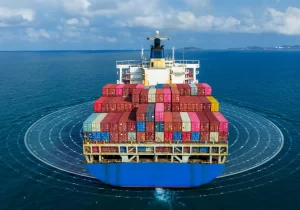
Supply chains are entering 2026 with tighter operating conditions and rising exposure to geopolitical, cyber, and environmental shocks. As digital tools mature, companies are beginning to use them not just to monitor their networks, but to reshape how decisions are made and how risks are absorbed. The shift is redefining what operational resilience looks like in practice.
AI Agents Move From Assistance to Autonomous Action
AI already supports daily planning tasks such as forecasting, routing, and supplier risk detection. The step-change in 2026 is the emergence of autonomous agents capable of executing decisions without waiting for human prompts. According to trade reports, companies are beginning to deploy agentic systems that automatically adjust order quantities, redirect shipments after a disruption, or rebalance inventory across sites based on live constraints.
The operational impact is twofold. First, manual intervention falls sharply, allowing teams to focus on medium-range planning and commercial strategy rather than routine adjustments. Second, decision cycles compress. When an agent can evaluate thousands of constraints in seconds and trigger a corrective action, the organization can hold leaner buffers without sacrificing service. Human oversight remains indispensable, but the center of gravity is shifting toward continuous, machine-driven execution that removes friction from day-to-day operations.
Digital Twins Scale from Assets to Full Network Replicas
Digital twins have long supported equipment monitoring, drawing lineage from NASA’s Apollo-era simulations. Their role is expanding dramatically. Instead of modeling a single production line or warehouse, companies are now constructing end-to-end network twins that incorporate suppliers, transportation flows, inventories, and downstream demand.
This broader scope allows planners to test how a port closure, regional strike, or commodity shortage might ripple across the network and to evaluate mitigation strategies before disruptions materialize. Recent industry coverage shows adoption accelerating in sectors with long lead times or capital-intensive operations, where the cost of a wrong decision is high. With geopolitical unpredictability continuing into 2026, these twins are increasingly functioning as real-time decision environments rather than periodic planning tools.
This shift also reflects a broader trend: the convergence of AI agents, IoT telemetry, and simulation models into unified orchestration layers that synchronize material, labor, and transportation decisions at scale.
Visibility Extends Beyond Tier 1 as Risk Profiles Deepen
Most organizations have gained clarity over Tier 1 suppliers, but that visibility rarely reaches far enough upstream. Disruptions often originate among Tier 3 or Tier 4 vendors with limited digital maturity and no direct contractual link to the buyer. As a result, multi-tier insight is becoming a strategic requirement.
IoT sensors, blockchain-based traceability, and control tower platforms are allowing companies to gather live signals from deeper in the chain, including environmental conditions, production status, and early indicators of distress. The goal is not just transparency but early detection, identifying anomalies before they cascade into inventory shortfalls or production delays. With regulatory scrutiny increasing in areas such as sustainability reporting and forced-labor compliance, upstream visibility is also becoming integral to governance, not just continuity.
Where Technology Quietly Rewrites Cost Structures
One underappreciated outcome of these maturing systems is how they reshape the economics of supply chain decisions long before they reshape the workflows themselves. As recent trade coverage has shown, companies deploying network-wide simulations and AI-driven execution are discovering cost patterns, such as lane volatility, micro-stockout frequency, and supplier cycle drift, that were previously hidden in aggregate reporting. These findings are not merely diagnostic; they often reveal structural cost exposures that have been accepted for years because they were difficult to quantify. The next phase of competitive advantage may come from companies that use this newfound visibility not to react faster, but to rethink which costs are truly fixed, and which ones only looked that way when the data was out of reach.