Tariffs imposed over the past year are increasingly shaping labor decisions across supply chains, according to a new joint survey from the Association for Supply Chain Management and CNBC. The findings point to a sharper turn from cost pressure to structural change, as companies move beyond short-term mitigation and begin resizing operations.
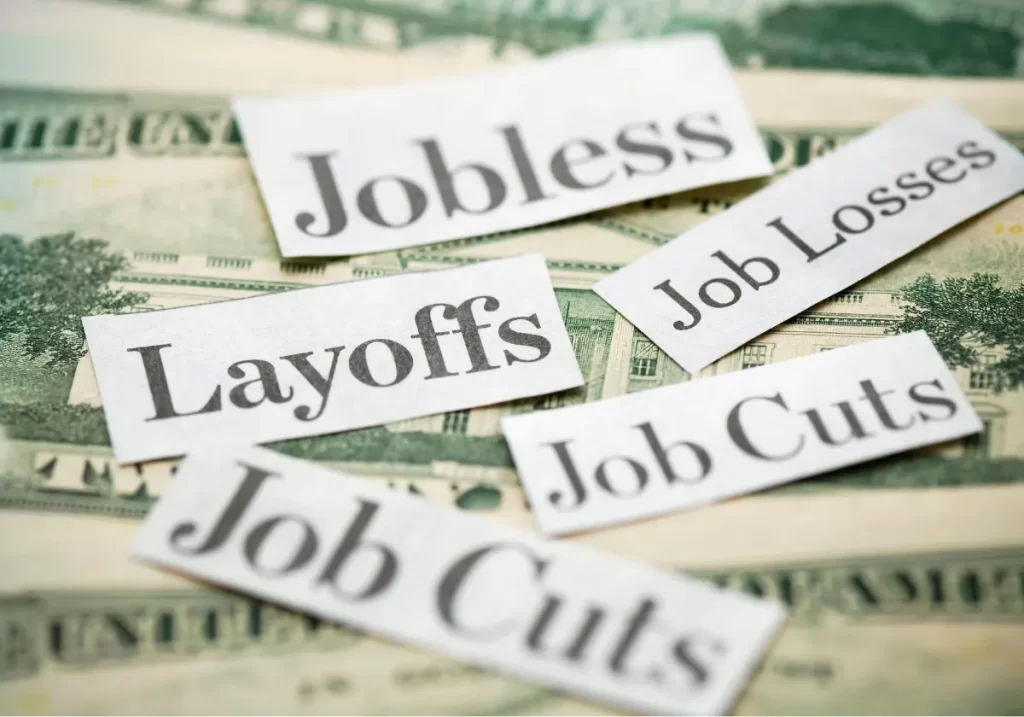
The survey found that 32% of supply chain managers reported layoffs at their companies, roughly double the share reported in April. The shift comes amid a cooling labor market, where hiring momentum has slowed and long-term unemployment has begun to edge higher, adding friction to already strained operating environments.
Layoffs Accelerate as Cost Pressure Becomes Structural
The scale of workforce contraction is notable. Employers cut more than 1.2 million supply chain jobs in 2025, representing a 58% year-over-year increase, according to the research. Warehousing experienced the most severe pullback, with job cuts up 317% compared with the prior year.
While tariffs are a central driver, the data suggests they are acting as a catalyst rather than a lone cause. Rising labor costs, weaker volume growth, and accelerating investment in automation have converged. In warehousing and distribution, the adoption of AI-enabled planning tools, robotics, and automated handling systems has given companies more levers to reduce labor exposure as margins tighten. Trade reports throughout 2025 consistently showed automation projects being pulled forward as a hedge against both cost volatility and labor availability.
Cost inflation tied directly to tariffs remains acute. Sixty-five percent of respondents said supply chain costs rose between 10% and 15% in 2025, forcing revisions to budgets, staffing plans, and capital priorities. Another 34% reported cost increases exceeding 15%, a level many respondents associated with pressure on long-term competitiveness rather than temporary disruption.
Administrative Burden and Cash Flow Strain Add to the Impact
Beyond headline cost increases, respondents pointed to the operational drag created by tariff compliance itself. Tracking rule changes, validating tariff codes, and managing documentation have absorbed time and resources that would otherwise be directed toward network optimization or service improvement.
“Navigating the tariffs is an administrative burden,” said Abe Eshkenazi, chief executive of ASCM. “We’re spending a huge amount of time tracking rule changes, validating codes and trying to find the most effective way to operate in the short term without a long-term plan.”
The policy backdrop remains unsettled. The White House has indicated that businesses could receive refunds for certain tariffs already paid, but the issue is under review by the Supreme Court. According to Forbes, more than 1,000 companies, including Costco, Revlon, and Goodyear, have filed legal challenges. Collectively, those firms paid an estimated $133.5 billion in tariffs under the International Emergency Economic Powers Act through mid-December.
Even if refunds are ultimately approved, respondents emphasized that much of the damage is irreversible. Lost productivity, deferred investment, and cash flow constraints created by upfront tariff payments cannot be unwound after the fact.
“This isn’t just about resilience or reacting to a court ruling,” Eshkenazi said. “It’s about having certainty in the U.S. economy and what kind of pricing models we can plan on.”
Where Tariff Volatility Meets Automation Timelines
One development worth watching is how tariff-driven cost pressure is accelerating automation decisions that were once paced by multi-year ROI horizons. According to recent trade reports, several large distributors and manufacturers have pulled forward robotics and AI deployments originally scheduled for 2027–2028, not to replace labor in the abstract, but to gain pricing insulation when policy turns unpredictable. As more companies recalibrate their timelines in this way, tariffs may end up influencing the speed of technological adoption more than the policy debate itself, shaping supply chain design in ways that persist long after the legal questions are settled.