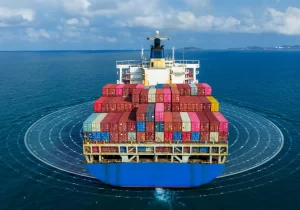
The White House has approved a 60-day Jones Act waiver that relaxes long-standing limits on domestic coastal shipping, opening U.S. energy trades to additional vessels as fuel prices surge. The move targets short-term relief for maritime logistics, with consequences for cost, capacity, labor, and risk across domestic transport networks.
A Time-Limited Release Valve for Coastal Capacity
The temporary waiver allows oil, natural gas, and other energy cargoes to move between U.S. ports on foreign-built and foreign-crewed ships that would normally be excluded by cabotage rules. The Jones Act, in force for more than a century, restricts coastwise movements to U.S.-built, U.S.-flagged vessels with predominantly U.S. crews. That structure narrows the available fleet when planners need to pivot quickly during price or supply shocks. For the next two months, schedulers can draw from a somewhat broader pool of tonnage to reposition fuel from production centers and import terminals to regions facing tight inventories.
The policy change lands as diesel prices sit above 5 dollars per gallon and crude benchmarks have climbed sharply since conflict escalated in a key oil-producing area. Elevated energy prices expose every friction in physical distribution. Coastal voyages can bypass pipeline congestion and cut overland miles, which matters when long-haul trucking rates and rail capacity are both under pressure. A modest increase in vessel options can support route redesigns that reduce dwell, shorten sailing distances to deficit markets, or better match terminal windows.
Energy officials present the waiver as a tool to keep fuel and related resources moving reliably to industrial users, freight operators, and households during disruption. From an operational standpoint, the measure functions as a short-term capacity release valve in an otherwise closed domestic maritime market. It gives operators another way to rebalance inventories between hubs on the Gulf Coast, East Coast, and other regions without relying solely on pipelines and inland modes that may already be running at or near constraint.
Organized labor views the same decision through a different lens. Maritime unions argue that loosening Jones Act protections weakens the U.S. merchant marine and shifts critical work to foreign vessel owners, with knock-on effects for military readiness and long-term workforce stability. Their concern is not limited to wages. A smaller or less active U.S.-flag fleet erodes the pool of trained mariners and can reduce the number of vessels available for defense and emergency sealift, which federal agencies have historically treated as a strategic capability.
Practical limits also constrain how much change a 60-day waiver can deliver. As a West Coast maritime economist notes, ships must be identified or diverted from existing trades, crews arranged, and regulatory checks completed before any new services start. The U.S. Coast Guard still needs to inspect hulls and certify officers. Terminal compatibility, charter market availability, and insurance requirements further narrow the set of foreign vessels that can enter domestic rotations quickly. In practice, only a subset of theoretically eligible tonnage will convert into real sailings in U.S. coastal trades during the waiver window.
Policy as an Active Tool in Energy Network Design
For teams managing energy logistics, this episode highlights how legal and regulatory levers now operate as part of the response toolkit when markets come under stress. Cabotage rules, previously treated as a fixed boundary condition, are proving more elastic during declared emergencies or sharp price moves. That flexibility adds another dimension to scenario planning. Contingency playbooks now need to account not only for alternative ports, carriers, and modes, but also for how rapidly government may authorize exceptions that change the economics of coastal moves.
Historical precedent supports this shift. Past waivers during major hurricanes and refinery outages have shown that targeted relaxation of Jones Act rules can ease local shortages by enabling direct coastal deliveries when pipelines or storage assets are compromised. The current decision takes that logic into a context defined by geopolitical tension and price volatility rather than physical damage. This suggests that policymakers see maritime flexibility as a repeatable instrument for managing energy supply disruptions driven by external shocks.
Domestic shipowners and shipyards face a more complex planning horizon under this pattern. The Jones Act has long underwritten investments in U.S.-flag fleets, construction capacity, and mariner training. Temporary waivers, even if infrequent, introduce uncertainty into assumptions about protected volumes and rate structures. Owners must account for the risk that, during spikes in demand or price, they may be competing with foreign-operated vessels that operate under different cost and regulatory regimes. That uncertainty can influence decisions on fleet renewal, yard expansions, and training pipelines that have multi-decade payback periods.
For network designers responsible for moving fuel and energy-related commodities, the coming weeks serve as a live test of how rapidly non-traditional vessels can integrate into domestic rotations and what measurable impact they have on cost and lead time. Some corridors may see tangible relief where foreign tonnage is already nearby, compatible with terminal infrastructure, and able to clear inspections quickly. Other routes will remain governed by longer-term constraints such as berth capacity, draft limits, and commercial contract structures. The operational lesson is that regulatory flexibility delivers the most value in corridors where physical and commercial readiness are already in place.
A Different Kind of Maritime Benchmark for Future Crises
This waiver creates a concrete reference point for how far, how fast, and under what conditions U.S. coastal rules may flex in future disruptions. Teams that document the real effects on capacity, rates, and service reliability today will be better equipped to calibrate network choices, contract structures, and advocacy positions when the next crisis arrives, instead of treating regulatory shifts as an ad hoc surprise each time markets tighten.