Zara has consistently navigated economic downturns, supply chain disruptions, changing consumer preferences and geopolitical uncertainty better than most global apparel retailers for more than two decades. While many fashion brands compete through celebrity endorsements, large advertising campaigns or deep discounting, Zara’s competitive advantage has been built around a different asset, one of the world’s fastest and most responsive supply chains.
Owned by Inditex, Zara combines proximity sourcing, vertically coordinated production, rapid product development and highly automated distribution into an operating model that allows it to react to demand rather than predict it months in advance. That responsiveness has helped the company maintain strong profitability through periods that challenged much of the apparel industry, including the pandemic, inflationary pressures and recent tariff uncertainty. Inditex closed FY2025 with revenue of €39.9 billion, a gross margin of 58.3% and net profit of €6.22 billion, underscoring the resilience of its integrated operating model despite a volatile trading environment.
Zara’s Supply Chain Advantage Didn’t Happen by Accident
The foundations of Zara’s supply chain trace back to founder Amancio Ortega’s unconventional philosophy that companies should spend on operations rather than advertising. Zara historically invested almost nothing in celebrity endorsements, runway sponsorships, or glossy campaigns. Instead, Ortega built an internal engine that fused frugality, responsiveness, and ruthless simplicity.
The Origins of Speed
The origins go back to the 1960s, when Ortega began producing quilted robes inspired by luxury styles but manufactured cheaply and quickly. That obsession with speed and affordability became the DNA of Zara. When the first Zara store opened in 1975 in A Coruña, Spain, the company built relationships with local manufacturers within driving distance of its headquarters.
These early suppliers became a strategic moat. They enabled the brand to avoid offshore lead-time delays and preserve responsiveness. The operational heart of this model emerged in the early 2000s with The Cube, which is Inditex’s massive command center in Arteixo, Spain. Zara famously spends on logistics infrastructure rather than billboard campaigns.
The Cube Turns Information Into Speed
The center of Zara’s supply chain is Inditex’s headquarters in Arteixo, Spain, widely known as The Cube.
Unlike a traditional corporate headquarters where design, merchandising and sourcing operate independently, The Cube brings together commercial teams, designers, buyers, sourcing specialists and logistics planners within a single operating environment. Customer demand, inventory availability and store performance are reviewed continuously, allowing product decisions to move rapidly from concept into production.
This close coordination reduces the delays that often exist between creative teams, manufacturing partners and distribution operations. Instead of waiting for seasonal reviews or lengthy approval cycles, Zara adjusts collections throughout the selling season using information gathered from stores around the world.
Store managers play an important role in this process. Beyond reporting sales figures, they provide qualitative feedback about customer preferences, product fit, color trends and purchasing behavior. Combined with inventory and sales data, this information allows commercial teams to decide whether products should be replenished, modified or discontinued.
The approach reflects a philosophy that Inditex has maintained for decades. Rather than attempting to predict fashion trends months in advance, the company builds flexibility into its operating model so that decisions can be made closer to the point of demand.¹
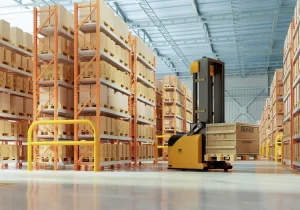
Speed also extends into logistics. Automated material-handling systems connect production and distribution activities around the Arteixo campus, while centralized distribution operations prepare merchandise for frequent deliveries to Zara stores worldwide. The objective is not simply faster transportation. It is reducing the time between customer demand, production decisions and product availability.
Proximity Sourcing Gives Zara More Options
One of the defining characteristics of the Zara supply chain is its sourcing strategy.
Many apparel companies concentrate production in low-cost manufacturing regions, often committing to large purchase orders months before products reach consumers. While this approach lowers manufacturing costs, it also increases forecasting risk and reduces the ability to respond when demand changes unexpectedly.
Inditex follows a different model.
The company combines global sourcing with significant manufacturing capacity located close to its European headquarters. Spain, Portugal, Morocco and neighboring countries continue to play an important role in producing fashion-sensitive garments where speed is more valuable than achieving the lowest possible manufacturing cost. More standardized products with longer planning horizons are sourced through a broader international supplier network.
This balanced sourcing model gives Zara several advantages.
Shorter transport distances allow products to reach distribution centers more quickly. Manufacturing schedules can be adjusted during the season rather than being fixed months in advance. Smaller initial production runs reduce the risk of excess inventory, while successful products can be replenished before consumer demand shifts elsewhere.
The benefits became particularly valuable as retailers faced higher freight costs, inflationary pressures and growing trade uncertainty over the past several years. During FY2025, Inditex said its diversified sourcing base and integrated operating model helped the company navigate an increasingly complex global environment while maintaining healthy profitability and disciplined inventory levels.¹
Unlike retailers that rely heavily on one manufacturing region, Zara can spread sourcing across multiple countries and adjust production according to changing business conditions. That flexibility reduces dependence on any single supplier or geography while strengthening resilience against disruptions.
Another important distinction is that Zara does not attempt to maximize factory utilization at all times. Maintaining manufacturing flexibility allows production to respond more quickly when customer demand changes. Although Inditex does not disclose detailed capacity utilization figures, the company consistently emphasizes agility and responsiveness over maximizing output from every production facility.¹
This philosophy also extends to inventory planning.
Rather than committing entirely to finished garments months before the selling season, Zara delays many production decisions until more customer information becomes available. The company can therefore allocate materials, production capacity and distribution resources according to actual demand instead of relying exclusively on long-range forecasts.
That ability to postpone decisions while maintaining rapid execution has become one of the company’s most durable competitive advantages.
The result is a supply chain that prioritizes responsiveness over scale alone. While competitors often focus on reducing unit manufacturing costs, Zara balances efficiency with the ability to react quickly when consumer preferences change. That combination continues to distinguish the company from much of the global apparel industry and provides the foundation for the next stage of its supply chain evolution.
Technology Extends the Supply Chain Beyond Manufacturing
While Zara built its reputation on proximity sourcing and rapid product development, its competitive advantage today increasingly depends on technology that connects inventory, stores and logistics into a single operating network.
One of the most important investments has been the expansion of RFID technology across the Inditex brands. Every Zara garment carries an RFID tag, allowing inventory to be identified and tracked throughout its journey from distribution centers to stores. Employees can quickly locate products, replenish shelves more efficiently and maintain greater inventory accuracy than traditional barcode-based systems.
The value of RFID extends beyond store operations. Inventory visibility supports Zara’s integrated omnichannel model, where products can be fulfilled from stores or distribution centers depending on customer demand. Rather than managing physical retail and e-commerce as separate businesses, Inditex operates them as a unified inventory network that allocates stock dynamically across channels.
This approach improves product availability while reducing excess inventory and markdowns. Stores no longer function solely as points of sale. They have become local fulfillment hubs that support click-and-collect orders, online returns and ship-from-store capabilities, allowing inventory to serve customers regardless of where the purchase originates. Inditex has repeatedly described this integration between stores and digital channels as one of the defining strengths of its business model.¹
Technology is also reshaping the customer experience inside Zara stores.
Many flagship locations now include automated collection points for online orders, assisted checkout solutions and digital tools that simplify returns and exchanges. These investments reduce waiting times, improve labor productivity and enable stores to process higher transaction volumes without proportionally increasing staffing levels.
Behind the scenes, automation continues to expand across the logistics network. During 2024 and 2025, Inditex completed one of the largest logistics investment programs in its history, allocating approximately €900 million annually to expand distribution capacity and modernize facilities. The program included new logistics infrastructure such as Zaragoza II, which increases distribution capacity while incorporating higher levels of automation, energy efficiency and operational flexibility.¹
These investments are designed to support future sales growth without fundamentally changing the company’s operating philosophy. Instead of replacing the existing supply chain, automation strengthens the speed, visibility and coordination that have long differentiated Zara from its competitors.
The company’s investment in Spanish robotics specialist Theker Robotics during 2025 further illustrates this direction. While Inditex has disclosed few operational details, the investment reflects a broader commitment to warehouse automation and intelligent logistics technologies that improve productivity across its distribution network.²
Why Competitors Continue to Struggle
Many apparel retailers have attempted to replicate elements of Zara’s operating model, yet few have reproduced the complete system.
Some companies have successfully accelerated digital merchandising. Others have lowered production costs through extensive offshore manufacturing. Few have combined product development, sourcing, manufacturing, logistics and retail execution into a tightly coordinated operating model that continuously responds to customer demand.
H&M, for example, relies heavily on outsourced manufacturing across Asia. While this strategy provides cost advantages, it also requires longer production lead times and greater dependence on long-range forecasting. Collections are often committed months before products reach consumers, making inventory management more challenging when demand shifts unexpectedly.
SHEIN has built an exceptionally responsive digital merchandising platform supported by a highly flexible supplier ecosystem. Its data-driven product development allows thousands of new products to be introduced rapidly. However, the company operates through a substantially different supply chain architecture that depends on a broad outsourced manufacturing base rather than the selective vertical integration and regional production network that characterize Zara’s model.
Luxury fashion houses face a different set of priorities. Seasonal creative calendars, limited production runs and brand exclusivity remain central to their business models. Product development is driven primarily by creative direction rather than continuous commercial feedback, making rapid in-season adjustments less common than in fast fashion.
Zara’s advantage therefore comes less from producing clothing quickly than from reducing decision time throughout the organization. Information moves rapidly between stores, commercial teams, sourcing specialists and logistics operations, allowing production and inventory decisions to be updated continuously as demand evolves.
That organizational structure is significantly more difficult to replicate than any individual technology or manufacturing process.
Looking ahead, Inditex continues to invest in strengthening this foundation rather than replacing it. The company expects ordinary capital expenditure of approximately €2.3 billion during 2026, with investment focused on store optimization, digital capabilities, technology integration and maintaining a modern logistics network following completion of the extraordinary expansion program.¹
Management has consistently emphasized that stores remain central to the business despite continued growth in online sales. Rather than viewing digital commerce as a substitute for physical retail, Inditex continues integrating both channels into a single operating platform supported by shared inventory, common logistics infrastructure and unified commercial decision making.
This strategy reflects a broader shift occurring across retail. Competitive advantage increasingly depends not only on sourcing products efficiently but also on moving information quickly enough to make better decisions before consumer demand changes again.
For Zara, that capability has become its defining strength.
The company’s supply chain was never designed simply to reduce manufacturing costs. It was built to shorten the distance between customer demand and business response. Every investment in logistics, automation, stores and digital technology reinforces that objective.
As trade patterns continue to evolve, geopolitical uncertainty reshapes sourcing decisions and consumer preferences change more rapidly, retailers with rigid production models are likely to face increasing pressure. Zara enters that environment with an operating model built around flexibility, coordinated execution and continuous adaptation.
More than fifty years after the company opened its first store in A Coruña, the principles behind the Zara supply chain remain remarkably consistent. The technologies have evolved, the logistics network has expanded and digital capabilities have transformed retail operations, but the underlying strategy has not changed. The business continues to compete by making better decisions faster than its rivals, and that discipline remains one of the strongest competitive advantages in global fashion.