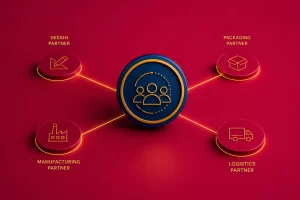
As tariffs, freight volatility, and shifting consumer demand put pressure on apparel economics, Oxford Industries is making a larger operating bet. The company is moving away from a model where wholesale volume and third-party logistics absorb much of the complexity and toward one where demand, inventory, fulfillment, and customer experience sit under greater direct control. The new distribution center in Lyons, Georgia, is the physical foundation of that strategy.
In Brief
- Oxford Industries is using its new Lyons distribution center to support a more vertically controlled direct-to-consumer operating model.
- Tariff costs are being managed through sourcing, inventory timing, pricing architecture, and channel mix rather than broad price increases.
- Wholesale exposure is being reduced while direct channels, experiential formats, and owned customer relationships become larger drivers of profitability.
The Strategic Break: A DTC-first Network Under Tariff Pressure
For years, many apparel companies relied on wholesale channels to generate volume while outsourcing large parts of fulfillment and inventory complexity. That model is becoming increasingly difficult to sustain. Tariffs are creating cost volatility. Consumer demand is less predictable.
Inventory mistakes are more expensive. At the same time, direct channels offer higher margins, better customer data, and greater pricing control. Oxford Industries is responding by restructuring how its network operates. The company is building a more vertically integrated model where inventory, fulfillment, customer engagement, and margin management are increasingly connected. The Lyons distribution center sits at the center of that transition.
Lyons Is More Than A Distribution Center
The new Lyons facility is often described as a logistics investment. Operationally, it is much more significant. Oxford is consolidating multiple brands into a single fulfillment platform while reducing dependence on third-party logistics providers.
One brand transitioned into Lyons at the end of February. Four brands are already operating from the facility. Additional migrations are scheduled through the summer, including the eventual transfer of volume currently handled by an external logistics provider. The objective is not simply cost reduction. The objective is greater control.
A centralized fulfillment platform allows inventory to be managed across brands, channels, and customer touchpoints through a common operating framework. Instead of maintaining fragmented inventory pools and fulfillment processes, Oxford can increasingly manage inventory as a shared enterprise asset. That creates opportunities to improve inventory utilization, increase fulfillment flexibility, and support a larger mix of direct-to-consumer demand. The investment profile reinforces this view. Management has indicated that most ongoing Lyons costs will appear through depreciation rather than variable operating expense, suggesting a capital-intensive facility designed to generate scale efficiencies over time.
Direct Channels Are Becoming The Economic Engine
The Lyons investment only makes sense when viewed alongside Oxford’s broader channel strategy. The company is deliberately reducing reliance on wholesale while increasing exposure to direct channels. Management expects wholesale revenue to decline during fiscal 2026. At the same time, food and beverage operations are expected to grow at a high-single-digit rate, while direct-to-consumer performance is expected to remain comparatively resilient. This reflects a broader shift in how value is created. Wholesale generates volume.
Direct channels generate visibility. They provide richer customer data, stronger pricing control, higher gross margins, and greater influence over inventory flow. Tommy Bahama provides one example of how the economics change. Direct-to-consumer comparable sales improved during the quarter while wholesale declined. Women’s direct business grew approximately 7.5 percent. Cross-category purchasing increased as more customers purchased both men’s and women’s products in the same order. Those behaviors improve fulfillment economics because more revenue is generated from each shipment. As direct penetration rises, the value of a centralized distribution asset such as Lyons increases.
Tariffs are Reshaping Supply Chain Decisions
The first quarter illustrates how significant tariff pressure has become. Oxford reported approximately $11 million of incremental tariff expense during the period. That represented roughly 280 basis points of pressure within cost of goods sold. Rather than relying primarily on pricing increases, the company is attacking the issue operationally. Sourcing has been adjusted. Carrier agreements have been renegotiated. Inventory timing has been modified. Product pricing architecture has been refined. Inventory positioning is particularly important.
Management indicated that most fall inventory had already been received under the current tariff regime, limiting near-term exposure to future policy changes. This effectively turns inventory timing into a risk-management tool. Purchasing decisions are no longer driven solely by seasonal demand requirements. They are also being used to manage policy volatility. The company is pursuing tariff refunds as well, having already filed substantial claims and begun receiving recoveries. Importantly, those proceeds are expected to support debt reduction rather than fund operating spending. That approach treats tariff recoveries as balance-sheet opportunities rather than recurring earnings.
Inventory Discipline Is Replacing Volume Chasing
One of the more revealing aspects of Oxford’s recent results is the relationship between units and profitability. Average order values have increased. Average unit retail has increased. Units sold have declined. This suggests the company is becoming more selective about where volume comes from. The objective is not maximizing shipments. The objective is maximizing profitable demand.
Inventory reflects this discipline. Overall inventory positions have been reduced despite higher tariff costs embedded within products. Brands are being managed differently depending on their strategic position. Johnny Was has tightened inventory, reduced promotional activity, and pulled back from lower-quality wholesale and off-price channels. Margins improved even as revenue declined.
Lilly Pulitzer illustrates the opposite challenge. Product assortment decisions created demand gaps that required more promotional activity than originally planned. The difference highlights a key reality. Operational improvements can increase efficiency. They cannot instantly correct merchandising mistakes. Product architecture still determines a significant portion of supply chain performance.
The New Constraint Is Execution
The transition creates meaningful opportunities, but it also raises the operational bar. A more centralized fulfillment network creates greater dependence on execution quality. Distribution disruptions affect multiple brands simultaneously. Inventory accuracy becomes more important. Demand forecasting becomes more important. Labor planning becomes more important.
The Lyons ramp introduces additional complexity as brands move from legacy facilities and external providers into a common platform. At the same time, Oxford is becoming more dependent on direct customer demand. That creates greater exposure to fluctuations in consumer spending and traffic patterns. The company is also operating in an environment where future tariff structures remain uncertain. While much of the current year’s inventory is protected by earlier purchases, future seasons will depend on whatever trade environment ultimately emerges. The result is a model that is potentially more profitable but also more operationally demanding.
Why Margin Is Becoming a Supply Chain Outcome
Oxford Industries is increasingly treating margin as the output of network design rather than simply the result of pricing decisions. The Lyons distribution center, sourcing adjustments, inventory discipline, tariff management, and channel mix strategy are all working toward the same objective. Generate more profit from every unit that moves through the network. That requires greater control over demand, inventory, fulfillment, and customer relationships.
Wholesale remains important, but it is no longer the center of the operating model. The center is direct control. Lyons provides the physical infrastructure. Tariff management provides the financial discipline. Brand and channel decisions provide the demand foundation. Together, they form a more vertically integrated operating system designed to protect profitability even when external conditions remain volatile. For Oxford Industries, the long-term goal is not simply to offset tariffs. It is to build a network where margin is increasingly determined by execution rather than by factors outside the company’s control.