DHL Supply Chain, the contract logistics arm of DHL Group, is extending its global automation strategy with a structured rollout of Robust.AI’s Carter robots across Latin America. The partnership formalizes a five-year roadmap focused on repeatable deployments, systems integration and measurable performance gains.
Strategic Alliance Anchors DHL’s Latin America Automation Push
Robust.AI, known for applying AI and human-centered design to warehouse robotics, will initially deploy 15 Carter units into DHL retail operations in Mexico. This marks the first use of collaborative robots in DHL’s Latin America network, highlighting the region’s growing importance for e-commerce fulfilment and omnichannel distribution.
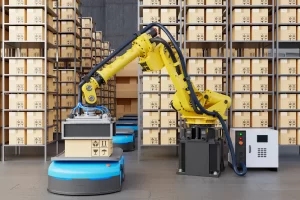
Carter is designed as a collaborative robotic cart that can operate safely around people while supporting picking, putaway and internal material movements. It blends motor assistance, sensor-driven navigation and an interface built to be intuitive for warehouse staff. The aim is to lower the barrier to adoption relative to more rigid automation, while still delivering meaningful throughput and accuracy improvements.
DHL executives in Mexico describe the alliance as central to an innovation agenda that keeps customers and employees at the core of operational design. By pairing flexible robotics with established warehousing processes, DHL expects to respond more quickly to demand swings, SKU proliferation and service-level requirements in sectors such as retail, technology, life sciences and manufacturing.
From North American Proof Points To Regional Scaling
The Latin American deployment builds on earlier implementations of Carter in DHL facilities in North America. According to DHL, those operations recorded productivity gains exceeding 60% after integrating the robots into warehouse workflows, alongside improvements in safety indicators and process consistency.
Early results from Mexico are already showing a productivity uplift of around 30%, signalling that the solution can transfer beyond its original deployment environment. DHL plans to integrate Carter with its warehouse management system by 2026, following a phased schedule that allows sites with different maturity levels to come onstream over time.
Carter’s architecture is designed for stepwise capability expansion. In the current phase, the robot provides motor-assisted movement that reduces physical strain for associates performing picking and replenishment. Over time, DHL intends to activate more advanced autonomous navigation and tighter WMS connectivity, enabling point-to-point transport and more dynamic task orchestration.
This staged model also provides operational flexibility. Because Carter does not require extensive fixed infrastructure, DHL can relocate robots between facilities and align fleet size with seasonal volumes or new contract start-ups. Industry reports show that such ‘automation-as-a-service’ dynamics are increasingly valued in markets where demand volatility and capital constraints make large, static installations harder to justify.
Robust.AI’s leadership highlights that choosing modular, human-centric automation can accelerate return on investment while signalling to frontline teams that technology is intended to support rather than replace them. This employee-centric message is particularly relevant in Latin America, where labour remains comparatively cost-competitive but workforce safety, retention and training are rising on the agenda of multinational logistics operators.