Air cargo has always reserved special treatment for high-value shipments, from pharmaceuticals to semiconductors. But congested skies, inconsistent regulations, and rising security risks are making traditional airfreight less predictable. A new model is emerging: drone corridors, dedicated aerial lanes built to carry critical cargo quickly and securely between manufacturing sites, airports, and distribution hubs.
By carving out protected routes with defined rules of engagement, logistics operators are beginning to treat drones less as experimental add-ons and more as core assets for safeguarding time-sensitive, high-margin flows.
From General Airspace to Controlled Corridors
Conventional air cargo networks rely on passenger belly capacity or chartered freighters, both prone to disruption from strikes, weather, or geopolitical events. High-value shipments like biologics or chipsets face risks of spoilage, theft, or delay when trapped in general cargo flows.
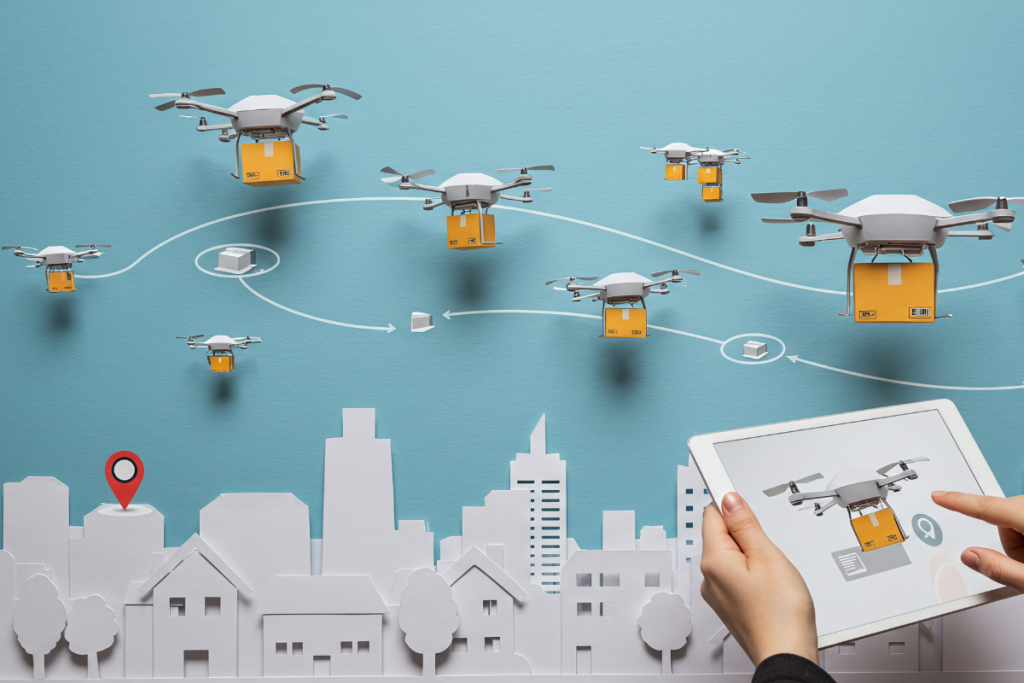
Dedicated drone corridors offer an alternative. These are structured aerial lanes, often just a few hundred feet above ground, that operate under harmonized rules for flight plans, clearance, and security. They are designed to reduce congestion, standardize oversight, and provide priority access for critical goods.
Pharmaceutical examples: Trials in Germany and Belgium have moved temperature-controlled vaccines directly from production sites to hospitals, cutting hours from delivery windows.
Semiconductor pilots: Taiwan and Singapore are exploring drone corridors linking fabs with export terminals, ensuring uninterrupted supply of chips when road congestion or port delays occur.
By shifting these flows into ring-fenced lanes, logistics leaders gain both speed and predictability.
Building the Drone Corridor Stack
To make corridors viable, logistics operators are layering multiple capabilities:
Secure Routing Protocols: Drone corridors are not simply open skies; they are predefined, geofenced paths vetted and approved by aviation authorities. Each flight is mapped against controlled airspace, reducing the risk of mid-air conflicts with conventional aircraft. Regulators gain real-time visibility into flight activity, enabling continuous oversight and faster intervention when anomalies occur. This level of control moves drones from experimental airspace into a regulated framework closer to commercial aviation.
Payload-Specific Drones: Unlike standard delivery drones, corridor aircraft are purpose-built for sensitive cargo. They incorporate thermal insulation and packaging systems to preserve the integrity of biologics, vibration-dampening technology to protect delicate chipsets, and tamper-proof locks to deter theft or interference. These enhancements address the exact vulnerabilities that make high-value shipments risky when handled through conventional cargo channels.
Integrated Dispatch Systems: Corridors are most effective when they are not isolated pilots but part of existing supply chain architecture. By linking with warehouse management systems (WMS) and transportation management systems (TMS), high-value orders can be automatically flagged and routed to drone shipment as soon as a corridor is available. This creates an automated layer of prioritization, ensuring that time-sensitive cargo doesn’t get trapped in slower or less secure modes.
Surveillance and Recovery Layers: Safety and reliability hinge on visibility. Drones operating in corridors are continuously tracked using onboard sensors, ground-based radar, and satellite links. If conditions shift, whether a sudden storm or a loss of signal, corridor systems are designed to reroute flights automatically or trigger recovery protocols. This redundancy reassures regulators and shippers alike that the lanes are resilient, not fragile experiments.
Cross-Border Harmonization: The promise of corridors will fall apart without regulatory alignment. For lanes that cross national or regional borders, customs and security approvals are built into pre-flight authorization. That means clearance is granted before takeoff, rather than at landing, eliminating paperwork bottlenecks that can erase any time advantage. Early initiatives in Europe and Asia suggest this harmonization is possible, but scaling it will require unprecedented coordination among regulators.
Corridors as a New Trade Policy Lever
If drone lanes become central to moving high-value goods, their regulation may shift from aviation oversight to trade policy. Governments already treat semiconductor supply and pharmaceutical flows as strategic assets; allocating or restricting corridor access could become a tool of industrial policy, much like export controls or port fees. The challenge ahead is not only technical integration but preparing for a future where access to airspace is as contested, and politicized, as access to shipping lanes.