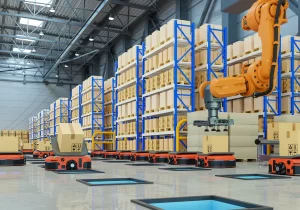
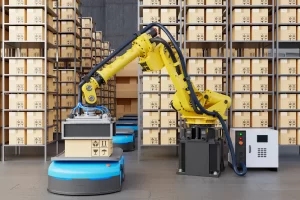
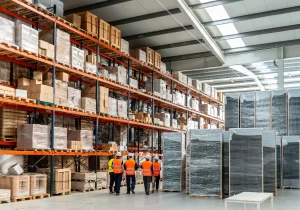
AI-equipped forklifts and autonomous drones are giving warehouses a continuous record of how inventory, labor, and equipment interact across the floor. The visibility exposes congestion, misplaced stock, and hidden handling costs in near real time, helping companies tighten inventory accuracy, reduce wasted movement, and make faster decisions on layout, staffing, and throughput.
From Barcode Snapshots To a Continuous Movement Record
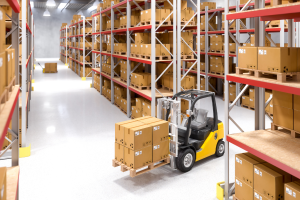
Traditional barcode workflows capture only isolated events; every pallet move between scans depends on assumptions and tribal knowledge. Mounting camera modules on lift trucks and pairing them with AI changes that equation by turning each trip into a verification point. As operators pick up, transport, and store loads, cameras read labels, interpret locations, and feed time-stamped confirmations straight into core systems without adding extra tasks.
Errors surface close to the moment they occur. If a pallet lands in the wrong slot, the system flags it immediately and gives the driver a clear choice, correct the placement or override with intent. Either way, the result enters a live location map, which cuts search time, reduces short-shipment surprises at pick, and tightens cycle-count variance. Inventory becomes traceable not just by where it sits, but by how and when it moves through the building.
The same AI layer extends beyond racking. Lift-mounted cameras cover bulk storage, staging areas, and dock activity, while drones sweep upper levels and hard-to-reach locations. Drone fleets that can swap batteries autonomously and return to flight in minutes support overnight scanning missions without tying up staff. That cadence supports daily validation of stock positions and frees daytime labor to focus on value-adding work rather than manual counts.
The result is a continuous movement record that fuses static and dynamic views. Racked locations, floor stacks, inbound receipts, and outbound staging share one data fabric, which simplifies exception handling and supports more reliable planning inputs. Instead of reconciling separate reports for inventory, labor, and equipment, decision-makers can work from a single view of what actually happened at aisle level.
Forklifts and Drones as Data Platforms For Productivity and Cost
When lift trucks carry cameras and localization technology, they stop being only material movers and start acting as mobile data platforms. Every route, pause, and maneuver becomes a signal about layout efficiency, slotting quality, and traffic conflicts. Route traces expose crisscross patterns, congested intersections, and doors that act as hidden bottlenecks. Those patterns inform decisions on one-way systems, zone reassignments, and re-slotting of fast movers to cut travel.
Autonomous drones add a structured layer to this picture. Scheduled sweeps in off-hours can cover full aisles, count cases, and validate labels and locations at scale. That scanning discipline stabilizes inventory accuracy and reduces the need for disruptive wall-to-wall counts. It also turns variance into a continuous metric rather than an occasional discovery, which supports more confident commitments on availability and service.
The combined data set changes labor planning. Productivity no longer rests only on picks per hour or lines per shift; there is now visibility into travel distance, idle time at docks, and stop-start patterns caused by upstream issues. Coaching can focus on decision quality at the truck rather than on manual scanning compliance, since the system already handles most capture and validation tasks.
Cost-to-serve analysis gains sharper edges as well. With every pallet move time-stamped and geo-located, the true handling burden of specific product families, customers, or channels becomes clear. Some flows may reveal far more touches and route complexity than pricing models assume. That insight supports targeted redesign, re-slotting heavy offenders, adjusting pack formats, or renegotiating service terms with customers whose orders impose disproportionate warehouse effort.
A lift-and-drone visibility stack also feeds upstream and downstream decisions. High-frequency data on dwell times and congestion informs dock scheduling and carrier appointments. Turnover and touch counts at SKU level improve slotting models and replenishment thresholds. Over time, this granular history can support broader network conversations about which sites should handle which mixes of volume, based on proven handling profiles rather than static assumptions.
Warehouse Data Starts Shaping Commercial Decisions
As warehouse visibility becomes granular enough to measure every touch, delay, and route deviation, the data is beginning to influence decisions well beyond the four walls. Companies can see which customers create the highest handling intensity, which SKUs absorb disproportionate labor, and which fulfillment promises create avoidable congestion during peak periods. That level of detail is gradually tightening the connection between warehouse execution, pricing discipline, network planning, and margin management in ways many legacy reporting systems could never fully expose.