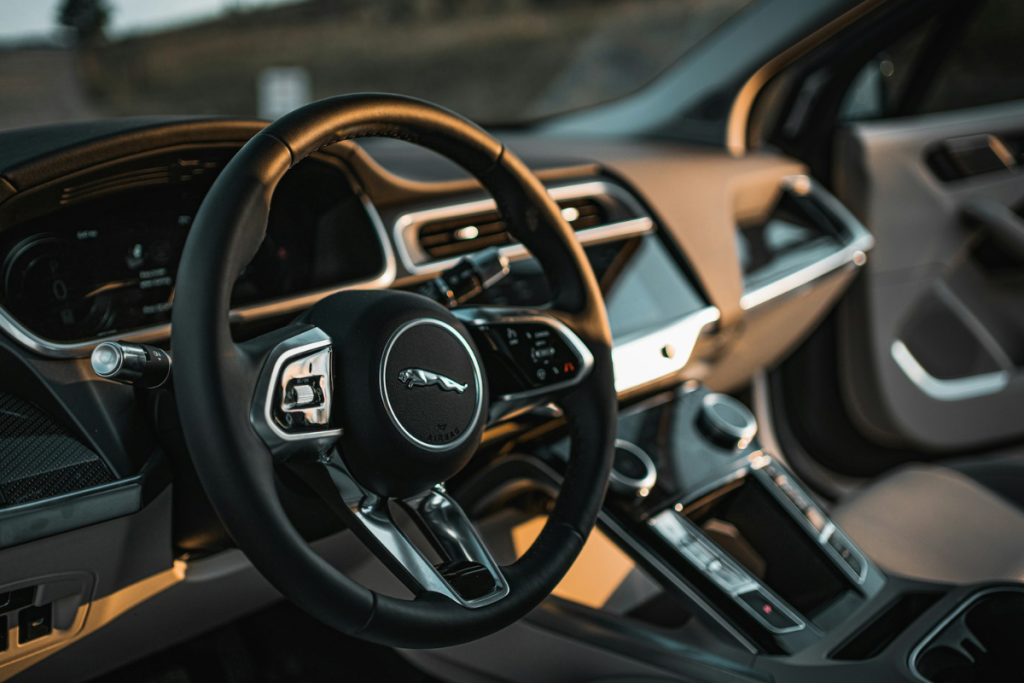
Jaguar Land Rover is restarting production at its U.K. factories after a cyberattack forced weeks of shutdowns across its global network. The recovery comes as the automaker races to support suppliers, repair digital systems, and restore momentum in the face of tariffs and transformation pressures.
Critical Production Lines Come Back Online
Engine and battery assembly operations at JLR’s West Midlands facilities are resuming October 8, alongside stamping, body, paint, and logistics activities at Castle Bromwich, Halewood, and Solihull. The automaker said it has also launched a financing program to accelerate payments to suppliers, offering cash up front to stabilize working capital across its network.
The attack had brought manufacturing to a standstill in the U.K., China, India, Brazil, and Slovakia, interrupting output of around 1,000 vehicles per day and threatening thousands of supplier jobs. According to analyst and former Land Rover chief engineer Charles Tennant, the outage likely erased roughly £5 million in daily profits and delayed more than 30,000 vehicles in total production.
The U.K. government has since provided a £1.5 billion ($2 billion) emergency loan guarantee to help JLR meet supplier obligations. While the measure prevented deeper supply chain strain, experts warn that it underscores an uncomfortable dependency between industrial resilience and public intervention, a signal that cybersecurity investment across manufacturing remains uneven.
Cyber Risks Redefine Operational Resilience
The breach exposed the fragility of digital supply chains in an industry increasingly reliant on connected manufacturing platforms. Automotive cybersecurity incidents have risen sharply in recent years, with research from Upstream showing a 60% increase in cyberattacks targeting connected vehicles and factory systems in 2024. For manufacturers like JLR, which are simultaneously managing electric-vehicle transitions and tariff pressures, such incidents compound operational complexity.
The company, owned by Tata Motors Ltd., is still navigating strategic turbulence. U.S. tariff increases have raised costs in one of its largest markets, while Jaguar’s temporary production pause ahead of a fully electric relaunch has reduced model availability. The cyberattack has only intensified scrutiny over JLR’s transformation strategy and the resilience of its digital infrastructure.
Securing the Next Production Model
JLR’s rebound may signal a return to output, but it also highlights how manufacturing resilience now hinges as much on digital recovery protocols as on physical capacity. As more automakers integrate AI-driven production planning and connected machinery, cyber risk is becoming a core element of operational design. Firms that embed real-time threat monitoring directly into factory control systems, an approach already underway at Toyota and Volkswagen, are setting a new benchmark for what operational continuity looks like in a digitized industry.