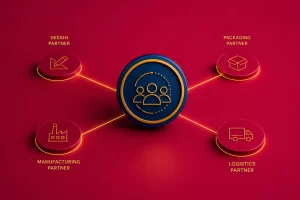
Fourth party logistics is no longer a niche outsourcing model. As supply chains become more fragmented, data intensive, and risk exposed, more organizations are turning to 4PL companies to orchestrate complex networks end to end. Unlike traditional 3PL providers that execute transport or warehousing, a 4th party logistics provider acts as an integrator, aligning carriers, warehouses, systems, and performance governance under a single operating framework.
This shift reflects a deeper operational reality. Service expectations are rising, cost pressures remain constant, and disruption has become routine rather than exceptional. In that environment, fourth party logistics companies are increasingly positioned as control tower partners rather than transactional vendors.
Below is a detailed look at ten of the most established 4PL logistics companies globally, alongside context on how the 4PL model is evolving and what to consider before adopting it.
What Is a 4PL and How Does It Differ from a 3PL?
A 4PL logistics provider typically oversees the entire logistics ecosystem on behalf of a client. That includes carrier selection, contract management, freight audit, performance analytics, technology integration, and continuous improvement. The 4PL may or may not own physical assets. In many cases, it operates as a neutral orchestrator that manages multiple 3PL partners.
This distinction is important. A 3PL focuses on execution within defined lanes or facilities. A 4th party logistics structure, by contrast, aims to design and manage the broader network. It often introduces centralized visibility platforms, standardized governance cadence, and structured exception management processes.
For organizations struggling with fragmented provider landscapes or inconsistent performance across regions, 4PL companies may offer a route to simplification. However, the model requires clarity of accountability and strong data integration to deliver measurable results.
The Top 10 4PL Logistics Companies
1. DHL Supply Chain
As part of Deutsche Post DHL Group, DHL Supply Chain operates one of the most mature 4PL offerings globally. Its Lead Logistics Partner model focuses on integrating transport, warehousing, and digital control tower capabilities. DHL’s 4PL services are often positioned around network optimization, inventory visibility, and supplier coordination.
Recent trade reports highlight DHL’s continued investment in digital platforms that connect multi carrier networks under a single data architecture. For organizations seeking standardized governance across regions, this scale can be a differentiator.
2. Kuehne + Nagel
Kuehne + Nagel has developed a strong 4PL presence through its integrated logistics and control tower services. The company emphasizes data visibility, risk management, and cross border coordination. Its 4PL logistics companies model typically combines ocean, air, and overland freight management within a unified performance dashboard.
The firm’s experience in complex industrial and healthcare supply chains has strengthened its credentials as a fourth party logistics company capable of managing high compliance environments.
3. DB Schenker
DB Schenker provides end to end 4PL services with a focus on network design and digital integration. Its solutions often center on centralized transport management and supplier coordination. As global trade patterns shift, DB Schenker has expanded analytics driven planning tools that support scenario modelling and resilience planning.
For organizations seeking structured lane governance and standardized reporting, its 4th party logistics provider framework offers scalability across geographies.
4. CEVA Logistics
Backed by CMA CGM Group, CEVA Logistics combines freight forwarding, contract logistics, and 4PL orchestration. Its Lead Logistics model integrates transport procurement, performance analytics, and supplier management under a central control structure.
CEVA has positioned its 4PL companies offering around cost transparency and operational alignment. According to industry commentary, this integrated model can help organizations rationalize carrier portfolios and reduce complexity in multi site networks.
5. XPO Logistics
XPO Logistics has built advanced technology platforms to support multi carrier management and real time visibility. While traditionally known as a 3PL, XPO’s managed transportation services function effectively as a 4th party logistics structure in many engagements.
The company’s strength lies in analytics driven optimization and capacity orchestration, particularly in high volume distribution networks.
6. GEODIS
GEODIS offers integrated 4PL services through centralized control tower solutions. Its model typically includes freight procurement, carrier performance monitoring, and continuous improvement programs.
Industry observers note that GEODIS has invested heavily in digital dashboards that consolidate data from multiple 3PL partners. This data centric approach is often central to successful fourth party logistics companies.
7. Ryder System
Ryder’s Supply Chain Solutions division provides managed transportation services that align closely with 4PL principles. Its focus on network engineering and cost to serve analytics makes it a contender among 4PL logistics companies operating in complex distribution environments.
Ryder’s long standing experience in fleet management also strengthens its integration capabilities where dedicated transport assets are involved.
8. UPS Supply Chain Solutions
Part of United Parcel Service, UPS Supply Chain Solutions offers 4PL style orchestration through its control tower services. The organization integrates freight forwarding, customs brokerage, and contract logistics within centralized governance structures.
UPS emphasizes visibility and compliance management, particularly in cross border operations where regulatory complexity is high.
9. Accenture
Although primarily known as a consulting firm, Accenture has developed supply chain orchestration services that function as a 4th party logistics provider in certain engagements. Its strength lies in digital transformation, analytics integration, and operating model redesign.
For companies seeking a technology led 4PL approach rather than asset heavy logistics management, Accenture’s capabilities may complement existing execution partners.
10. Wipro
Wipro has expanded into supply chain managed services, including orchestration and analytics platforms. While not a traditional freight provider, its technology centric 4PL services focus on visibility, performance management, and digital control towers.
This reflects a broader trend in which fourth party logistics companies increasingly combine logistics expertise with advanced data infrastructure.
Why 4PL Companies Are Gaining Strategic Relevance?
The renewed interest in 4PL logistics companies is closely linked to network complexity. Multi site manufacturing, omnichannel distribution, and global sourcing have created interdependencies that traditional lane based management can struggle to coordinate.
Recent data from trade associations shows that supply chain volatility remains elevated compared to pre pandemic benchmarks. Port congestion, geopolitical tensions, and capacity imbalances continue to influence lead times. In such an environment, a centralized 4th party logistics model can provide earlier visibility into risk signals.
However, implementation is rarely straightforward. A 4PL structure requires robust data integration, transparent governance, and clear contractual alignment. Without these foundations, the model may introduce additional layers of coordination rather than simplification.
Operational Considerations Before Selecting a 4th Party Logistics Provider
Selecting among fourth party logistics companies should involve more than brand recognition. Several operational questions are critical:
First, clarity of accountability. The 4PL must have defined authority to manage 3PL partners, negotiate carriers, and enforce performance standards.
Second, data ownership and transparency. Control tower dashboards are only as reliable as the underlying data integration. Organizations should assess whether systems can connect seamlessly across regions and partners.
Third, cost structure. While 4PL logistics companies can consolidate spend and improve visibility, fee models vary. Some operate on management fees, others on gain share mechanisms. Transparency in cost to serve reporting is essential.
Finally, cultural alignment. A 4PL is often embedded deeply within daily operations. Governance cadence, escalation protocols, and decision rights must be agreed upfront.
A Model That Rewards Discipline More Than Hype
Fourth party logistics is often presented as a strategic upgrade. In practice, its effectiveness depends less on the label and more on execution discipline. A 4PL structure can enhance visibility, standardize governance, and reduce fragmentation. It can also expose weaknesses in master data, unclear ownership, or inconsistent performance metrics.
The more mature approach is to view 4PL not as outsourcing, but as orchestration. When combined with strong internal leadership and clear KPIs, 4PL companies may help stabilize lead times and reduce reactive freight decisions. When layered onto unresolved structural issues, the model may struggle to deliver the intended outcomes.
The Next Phase of 4PL Is About Data Authority
The most interesting development in 4PL logistics companies is not scale, but data authority. As digital twins, predictive analytics, and AI driven planning tools mature, the value of a 4th party logistics provider increasingly lies in its ability to integrate and interpret network data faster than fragmented in house teams.
The competitive edge will likely belong to providers that can combine neutral orchestration with deep analytics rather than those relying solely on brand size. In the coming years, fourth party logistics companies may be judged less on asset reach and more on their ability to translate network complexity into actionable operational decisions.
For organizations evaluating this model, the critical question is not whether 4PL is better than 3PL. It is whether centralized orchestration, supported by transparent data and disciplined governance, can improve service reliability and cost stability in a network that has become structurally more volatile.