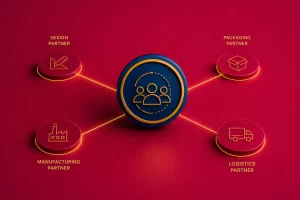
Cyber risk is no longer confined to IT systems. It now moves through suppliers, logistics partners, and digital platforms that underpin day to day operations. As ransomware attacks increasingly target supply chain weak points, organizations are being forced to rethink how they manage third party supply chain risk, not just from a compliance standpoint, but as a core operational discipline.
Why Supply Chain Cybersecurity Has Become an Operational Priority
Supply chain cybersecurity has shifted from a technical concern to a business continuity issue. The reason is simple. Modern supply chains are deeply interconnected, and every connection introduces exposure.
Recent trade reports and public breach analyses show that attackers are no longer targeting only large enterprises directly. Instead, they exploit smaller vendors, software providers, and logistics partners to gain indirect access. This makes third party supply chain risk one of the most critical vulnerabilities in today’s operating model.
The challenge is structural. Over the past decade, supply chains have optimized for cost and efficiency by increasing outsourcing, digitization, and integration. Transportation management systems, warehouse automation platforms, and supplier portals now exchange data continuously. While this has improved visibility and responsiveness, it has also expanded the attack surface.
In practice, most organizations do not have full visibility into the cybersecurity posture of their extended network. Supplier onboarding often focuses on cost, service levels, and compliance documentation, while cyber risk assessments remain superficial or static. This gap is where most supply chain ransomware incidents originate.
A key misconception is that cybersecurity is primarily an IT responsibility. In reality, many attack vectors sit within operational processes. For example:
- A compromised supplier portal can expose order and inventory data
- A logistics partner with weak endpoint security can become a gateway into internal systems
- A third party software update can introduce malicious code into core platforms
This is why supply chain cybersecurity needs to be embedded into procurement, logistics, and supplier management workflows, not treated as a parallel function.
The Real Dynamics of Third Party Supply Chain Risk
Third party supply chain risk is often discussed in terms of vendor assessments and compliance frameworks. However, the operational reality is more nuanced. The first issue is scale. Large organizations can have hundreds or even thousands of suppliers, with varying levels of digital integration. Applying the same level of scrutiny to all vendors is neither practical nor effective. What matters is risk segmentation.
High risk suppliers are not always the largest or most strategic. In many cases, smaller vendors with system access or data exchange capabilities pose greater risk due to weaker security controls. This includes niche software providers, regional logistics partners, and subcontractors.
The second issue is timing. Most supplier risk assessments are conducted during onboarding and then revisited annually, if at all. This creates a false sense of security. Cyber risk is dynamic, and a supplier that was secure six months ago may no longer meet required standards.
According to industry guidance from organizations such as the Department of Energy and NMFTA, continuous monitoring is becoming a baseline expectation rather than a best practice. This includes tracking vulnerabilities, breach reports, and changes in supplier security posture in near real time.
The third issue is accountability. In many organizations, ownership of third party cyber risk is fragmented across procurement, IT, and risk functions. This leads to gaps in decision making. For example, procurement teams may prioritize cost savings without full visibility into cyber implications, while IT teams may lack influence over supplier selection.
A more effective approach is to align cyber risk with cost to serve. This means explicitly factoring security exposure into supplier decisions. For instance, a lower cost carrier with weak cybersecurity controls may increase the likelihood of disruption, ultimately raising total cost. This is where leading organizations are starting to differentiate. They are integrating cyber risk scoring into supplier performance management, alongside traditional metrics such as OTIF and cost.
How Supply Chain Ransomware Is Evolving
Supply chain ransomware has become one of the fastest growing threat categories. Unlike traditional attacks that target a single organization, these attacks aim to disrupt entire networks. The typical pattern involves infiltrating a third party system, then using that access to deploy ransomware across connected organizations. This approach allows attackers to maximize impact while exploiting weaker defenses.
One of the most notable trends is the shift towards double extortion. Attackers not only encrypt systems but also exfiltrate sensitive data, increasing pressure to pay. In a supply chain context, this can include:
- Customer order data
- Pricing agreements
- Inventory and shipment information
- Supplier contracts
The operational consequences can be severe. A ransomware attack on a logistics provider can halt shipments, delay deliveries, and disrupt customer commitments. In manufacturing environments, it can stop production lines by blocking access to critical systems.
What makes supply chain ransomware particularly challenging is the speed of propagation. Once inside a network, attackers can move laterally across connected systems, often before detection.
Another emerging trend is targeting software supply chains. This involves compromising software updates or development pipelines, allowing attackers to distribute malicious code at scale. This type of attack is harder to detect because it leverages trusted channels. From an operational standpoint, the key takeaway is that traditional perimeter defenses are no longer sufficient. Protection needs to extend across the entire ecosystem.
Building a Practical Approach to Supply Chain Cybersecurity
While the risks are well documented, the challenge lies in implementation. Many organizations struggle to translate cybersecurity principles into operational routines that actually reduce risk.
A practical approach starts with prioritization.
1. Segment suppliers based on cyber exposure
Not all suppliers carry the same level of risk. Focus on those with system access, data exchange, or critical operational roles. This allows resources to be allocated where they have the greatest impact.
2. Move from periodic assessments to continuous monitoring
Static assessments quickly become outdated. Use tools and processes that provide ongoing visibility into supplier vulnerabilities and incidents.
3. Integrate cybersecurity into procurement decisions
Cyber risk should be treated as a cost driver, not just a compliance requirement. This means including security criteria in RFPs, contracts, and supplier evaluations.
4. Strengthen contractual controls
Contracts should clearly define cybersecurity expectations, incident reporting requirements, and accountability. This creates a foundation for enforcement.
5. Develop incident response playbooks that include third parties
Most incident response plans focus on internal systems. However, supply chain ransomware often involves external partners. Clear protocols for coordination are essential.
6. Build a control tower for cyber risk visibility
Many organizations are extending their control tower capabilities to include cybersecurity signals. This allows for faster identification and resolution of issues, reducing operational disruption.
Where Most Strategies Fall Short
Despite increased awareness, many supply chain cybersecurity initiatives fail to deliver meaningful risk reduction. The reasons are often operational rather than technical. One common issue is over reliance on frameworks without execution depth. Organizations may adopt standards such as NIST or ISO, but fail to embed them into daily processes. This results in compliance on paper but limited real world impact.
Another challenge is underestimating the cost of implementation. Continuous monitoring, supplier engagement, and incident response capabilities require investment. Without clear ownership and funding, initiatives lose momentum.
There is also a tendency to treat cybersecurity as a one time project rather than an ongoing capability. In reality, threat landscapes evolve rapidly, and strategies need to adapt accordingly.
Finally, many organizations struggle with data integration. Cyber risk data often sits in separate systems from operational data, making it difficult to connect risk signals with business impact. Bridging this gap is critical for effective decision making.
What Leading Organizations Are Doing Differently
Organizations that are making progress in supply chain cybersecurity are taking a more integrated approach. They are aligning cybersecurity with broader supply chain objectives, such as resilience and service reliability. This helps secure executive support and funding. They are also investing in cross functional governance. Instead of siloed ownership, they are creating shared accountability across procurement, logistics, IT, and risk teams.
Another key differentiator is the use of advanced analytics. By combining cyber risk data with operational metrics, they can identify patterns and prioritize actions more effectively.
For example, linking supplier risk scores with delivery performance can highlight vulnerabilities that may not be visible through traditional metrics alone. There is also a growing focus on collaboration. Organizations are working more closely with suppliers to improve security practices, rather than relying solely on audits and compliance checks.
The Next Phase of Supply Chain Cybersecurity Maturity
The next phase of supply chain cybersecurity will be defined by how well organizations integrate risk management into operational decision making.
Rather than treating cyber risk as a separate domain, it will become part of everyday trade offs. Decisions about supplier selection, network design, and inventory strategies will increasingly consider cybersecurity implications.
At the same time, regulatory expectations are likely to increase. Governments and industry bodies are placing greater emphasis on supply chain resilience, which includes cybersecurity. According to public sector guidance and trade reports, organizations that proactively strengthen their supply chain cybersecurity capabilities will be better positioned to manage disruption and maintain service levels.
The Overlooked Trade Off That Will Define Future Resilience
The conversation around supply chain cybersecurity often focuses on protection and compliance. What is less discussed is the trade off between efficiency and control. Highly optimized supply chains tend to rely on tight integration and minimal redundancy. While this improves cost efficiency, it can increase vulnerability to cyber disruption.
In contrast, more resilient models may introduce redundancy, diversify suppliers, or limit system integration. These changes can increase costs but reduce exposure.
The critical question is not whether to invest in cybersecurity, but how to balance these trade offs in a way that supports long term performance. Organizations that treat supply chain cybersecurity as a strategic lever, rather than a defensive measure, will be better equipped to navigate this balance and build operations that are both efficient and resilient.