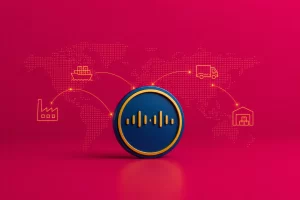
Many supply chain transformations deliver impressive roadmaps but struggle to produce lasting operational change. Schneider Electric has taken a different approach by embedding transformation into the way its supply chain is designed, governed, and executed.
Supply chain transformation has never been more urgent, yet many organizations are finding it harder than ever to turn investment into lasting performance. Digital platforms are implemented, AI capabilities are added, and operating models are redesigned, but the expected gains often fade once the program ends.
Schneider Electric has taken a different path. Rather than treating transformation as a destination, it has built an organization that continually questions, redesigns, and improves the way its supply chain operates. That mindset has helped the company retain the number one position in Gartner’s Global Supply Chain Top 25 for four consecutive years, with Gartner recognizing its progress in autonomous workforce capabilities, end-to-end orchestration, AI-enabled decision making and disciplined execution.
The lesson is not that every company should replicate Schneider’s technology investments or organisational structure. It is that lasting competitive advantage comes from making transformation an organisational capability rather than a one-off programme.
Transformation starts with better decisions
Many transformation programmes begin with technology selection. Schneider’s journey suggests the opposite sequence.
More than a decade ago, the company began using supply chain modelling to optimise regional networks. Over time, that capability evolved from consultant-led projects into an internal team responsible for continuously analysing its global network. Today, network design is not simply a planning exercise. It has become part of how Schneider manages its supply chain.
That distinction matters. A transformation program built around software implementation has a natural finish line. A transformation built around better decision making has no finish line because the environment never stops changing.
Demand shifts. Trade policies change. New regulations emerge. Customers expect shorter lead times. Supply risks evolve. Every one of those changes creates new trade-offs between cost, service, resilience and sustainability.
Schneider’s approach acknowledges that the optimal network today may not be the optimal network twelve months from now. Instead of defending yesterday’s design, the organisation continually asks whether its operating model still reflects current business realities.
Discipline matters more than ambition
One of the most striking aspects of Schneider Electric’s transformation is not its investment in technology. It is its restraint. Many organizations fall into the trap of presenting optimistic business cases that assume every projected benefit will be achieved exactly as planned. Schneider deliberately avoids that mindset.
If modelling suggests a network redesign could generate $10 million in savings, the company may only commit to delivering half that amount. That conservative approach recognises an uncomfortable truth that experienced supply chain leaders already understand. Real operations are rarely as predictable as analytical models.
Customer requirements change. Lease agreements cannot always be exited on schedule. Labour markets tighten. Transport costs fluctuate. Political conditions shift. Local regulations evolve.
Each of those variables can erode theoretical savings before implementation is complete. Rather than treating uncertainty as a failure of planning, Schneider appears to treat it as a normal characteristic of large-scale operations. The result is greater credibility with business stakeholders and a higher likelihood that promised improvements are ultimately delivered.
Transformation succeeds when organisations consistently achieve slightly less than theoretical perfection rather than consistently missing unrealistic expectations.
Collaboration turns analysis into action
Even the best supply chain analysis creates little value if operational teams do not trust the conclusions. Schneider has evolved its approach significantly in this area. Early modelling projects focused primarily on producing the right analytical answer. Today, regional teams are involved throughout the design process.
Finance contributes cost assumptions. Warehousing teams validate operational constraints. Transportation specialists test logistics scenarios. Business leaders provide commercial context.
This collaborative approach achieves something that sophisticated optimization software cannot deliver on its own. It builds confidence.
When regional teams understand how recommendations were developed and have contributed their own expertise, implementation becomes significantly easier. Instead of questioning assumptions after decisions have been made, stakeholders help shape those assumptions from the outset.
For global organisations operating across dozens of markets, that level of engagement is often the difference between transformation that looks impressive in presentations and transformation that changes day-to-day operations.
Technology supports judgement rather than replacing it
Artificial intelligence has become the defining theme of supply chain transformation over the past two years. Gartner highlighted Schneider’s use of generative and agentic AI to improve visibility, predictive insights and coordinated action across its supply chain.
What is notable, however, is the role AI plays within the broader operating model.
Schneider is not positioning AI as an autonomous decision-maker. Instead, it is using AI to strengthen human decision making by improving visibility, accelerating analysis and enabling faster coordination across functions.
That distinction reflects a more mature understanding of digital transformation.
The objective is not to automate every decision. It is to ensure that people make better decisions with better information and respond more quickly when conditions change. Technology becomes an enabler of operational discipline rather than a substitute for it.
Transformation extends beyond the four walls
Schneider’s transformation is also notable because it reaches beyond its own operations.
Its supplier decarbonisation programmes, renewable energy initiatives and circular economy projects demonstrate that modern supply chains cannot optimise performance by focusing solely on internal assets.
Resilience increasingly depends on supplier capability. Sustainability increasingly depends on supplier behavior. Visibility increasingly depends on ecosystem collaboration.
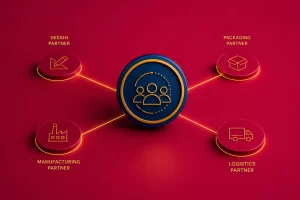
The most mature supply chains therefore extend transformation across suppliers, logistics providers and strategic partners rather than limiting improvement programmes to internal functions.
That broader perspective aligns with Gartner’s view that leading supply chains are moving towards end-to-end orchestration rather than isolated functional excellence.
The operating model keeps evolving
Perhaps the biggest misconception about transformation is that success can be measured by program completion. Schneider’s experience suggests something different.
The company has gradually expanded the questions its supply chain asks itself. Initially, modelling focused largely on cost and service. Today, every major network decision also considers resilience, carbon emissions, simplification, inventory positioning, regionalisation and circularity.
Each new capability builds on those that came before it. Transformation therefore becomes cumulative rather than episodic. The organization is not repeatedly starting over with new initiatives. It is continually strengthening an operating model that becomes more capable with every cycle of learning.
That is considerably harder than launching a transformation programme, but it is also much more difficult for competitors to replicate.
Turning transformation into capability
The strongest lesson from Schneider Electric is not about AI, digital twins or network optimisation software. It is about organisational behaviour.
Technology changes quickly. Supply chain conditions change even faster. What endures is the discipline to question assumptions, redesign networks when circumstances change and involve the right people before decisions are made.
Organisations looking to strengthen their own supply chains should begin by asking a different set of questions. Are transformation programmes producing lasting capabilities or simply completing projects? Are network decisions reviewed continuously or only when disruption forces action? Are business cases grounded in operational reality rather than optimistic assumptions? Do regional teams help shape change or merely receive it?
Those questions are less exciting than discussions about emerging technology, but they are far more likely to determine whether transformation delivers lasting competitive advantage.
Schneider Electric’s success shows that the strongest supply chains are not defined by the size of their transformation programmes. They are defined by the discipline to keep transforming long after the programme itself has ended.