Reducing emissions is no longer just a sustainability target. Schneider Electric is showing how supplier collaboration, renewable energy and operational design can turn decarbonisation into a competitive advantage across the supply chain.
For many organisations, decarbonisation still sits alongside the supply chain rather than within it. Sustainability teams set targets, publish progress reports and monitor emissions, while operations teams continue to focus on cost, service and resilience.
That separation is becoming increasingly difficult to maintain.
Most large manufacturers generate the majority of their emissions beyond their own operations. Scope 3 emissions span suppliers, logistics providers, product lifecycles and distribution networks, making them significantly harder to control than emissions from owned facilities. Improving performance therefore depends less on internal efficiency and more on the strength of the wider supply chain ecosystem.
Schneider Electric has embraced that reality. Rather than viewing decarbonisation as a reporting exercise, the company has integrated it into the way it develops suppliers, designs its network and strengthens long-term resilience. The result is a strategy that goes beyond reducing emissions to build a more capable and collaborative supply chain.
Scope 3 has changed the rules
Supply chain leaders have always managed trade-offs between cost, service and risk. Today, carbon has become another critical design variable.
Unlike Scope 1 and Scope 2 emissions, which organisations can address through operational improvements and renewable electricity, Scope 3 emissions originate across thousands of external businesses. That makes supplier engagement one of the defining challenges of modern supply chain management.
Traditional supplier management tools are not enough.
Scorecards can measure progress, and contractual obligations can establish expectations, but neither automatically gives suppliers the knowledge, investment or market access required to reduce emissions.
This is where Schneider Electric has taken a different approach. Instead of relying primarily on compliance, it has focused on building capability across its supplier network.
Why supplier capability matters more than supplier compliance
Many suppliers face similar barriers regardless of industry or geography.
Some lack expertise in greenhouse gas accounting. Others struggle to access renewable energy markets or understand science-based targets. Smaller organisations often have limited resources to develop internal sustainability capabilities while managing day-to-day operations.
Asking suppliers to reduce emissions without helping them overcome those barriers rarely delivers meaningful results. Schneider’s strategy recognizes that supplier performance improves when suppliers are equipped to succeed.
Rather than simply requesting lower emissions, the company provides practical tools, technical guidance and collaborative programmes that enable suppliers to make measurable progress on their own decarbonisation journeys.
That subtle shift changes the relationship between customer and supplier. Sustainability becomes a shared operational objective instead of another compliance requirement.
Building capability across the supplier ecosystem
One of the defining characteristics of Schneider Electric’s approach is its investment in supplier education.
Through its Zeigo Hub platform, suppliers can access guidance on greenhouse gas accounting, science-based target setting, renewable electricity procurement, energy efficiency, electrification and circular economy strategies. Instead of expecting every supplier to develop these capabilities independently, Schneider provides a structured learning environment that supports organisations at different stages of maturity.
Education is also delivered at scale. Live webinars are available in more than 60 languages, helping suppliers across different regions access consistent technical knowledge regardless of local market conditions.
The results demonstrate the scale of the programme.
More than 2,700 supplier companies representing over 50 global brands are now participating in Schneider Electric’s supplier decarbonisation initiatives. Together, those suppliers have procured more than 752,000 MWh of renewable electricity through Energy Attribute Certificates.
These figures illustrate an important point. Decarbonisation does not have to remain confined to pilot projects. With the right operating model, supplier capability can be developed across a global network.
Renewable energy as a supply chain capability
Renewable energy is often discussed as an environmental initiative. Schneider Electric increasingly treats it as a supply chain capability.
Through programmes including Catalyze, Energize, LEAP and REnew, the company helps suppliers access renewable electricity through collaborative purchasing models and shared expertise.
This approach addresses one of the biggest obstacles many suppliers face.
Large multinational organisations typically possess greater purchasing power, stronger market intelligence and more sophisticated energy expertise than smaller suppliers. By extending that capability across the supplier ecosystem, Schneider enables organisations that might otherwise struggle to participate in renewable energy markets.
The benefits extend beyond emissions reduction.
Suppliers with improved access to renewable energy are often better positioned to manage long-term energy costs, reduce exposure to market volatility and strengthen operational resilience. What begins as a sustainability initiative ultimately improves the competitiveness of the wider supply chain.
How does decarbonisation improve supply chain resilience?
Sustainability and resilience are increasingly becoming two sides of the same strategy.
A supplier that improves energy efficiency often becomes less vulnerable to energy price fluctuations. Facilities investing in electrification are better positioned for future regulatory change. Circular economy initiatives reduce dependence on virgin materials while improving resource security.
Each environmental improvement also strengthens operational performance.
Schneider’s broader supply chain strategy reflects this thinking. Carbon emissions are considered alongside network design, regionalisation, inventory strategy and customer service rather than being managed as a separate corporate objective.
That integration matters because modern supply chains can no longer optimise one objective at the expense of another. Resilience, sustainability and commercial performance are becoming increasingly interconnected.
Collaboration has become a competitive advantage
One theme runs consistently throughout Schneider Electric’s supply chain strategy.
Whether redesigning its global network, implementing AI-enabled decision making or supporting supplier decarbonisation, collaboration sits at the centre of execution.
Instead of presenting suppliers with increasingly demanding sustainability requirements, Schneider invests in helping them develop the capabilities required to meet those expectations.
That creates stronger long-term relationships while improving visibility, resilience and operational performance across the value chain.
As regulatory expectations continue to increase and customers demand greater transparency, organisations with capable supplier ecosystems are likely to respond faster than those relying solely on contractual compliance. In that environment, supplier capability becomes a competitive advantage in its own right.
The future belongs to connected supply chains
Supply chains are no longer measured only by cost, inventory turns or on-time delivery.
Increasingly, they are assessed by how effectively they manage disruption, collaborate across partner networks and reduce environmental impact without compromising operational performance.
That changes the role of sustainability. Rather than existing as a standalone programme, it becomes part of supply chain design itself.
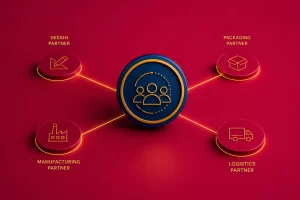
Schneider Electric’s approach suggests that the organisations leading the next generation of supply chains will not necessarily be those setting the most ambitious climate targets. They will be those building the strongest ecosystems around suppliers, logistics providers and manufacturing partners.
What other organisations can learn
Schneider Electric demonstrates that meaningful decarbonisation starts long before emissions are reported. It begins with supplier capability, collaboration and operational design.
For organisations looking to strengthen their own supply chains, several practical lessons stand out. Invest in supplier education before increasing reporting requirements. Build collaborative programmes that help suppliers access renewable energy rather than expecting them to solve the challenge independently. Integrate carbon considerations into network design, sourcing and resilience planning instead of managing sustainability as a separate initiative. Finally, measure success not only by emissions reduced, but by the long-term capability created across the wider supply chain.
The companies that lead on decarbonisation over the next decade are unlikely to be those placing the greatest pressure on suppliers. They will be those investing the most in helping suppliers succeed.
Frequently Asked Questions
- Why is Scope 3 the biggest challenge in supply chain decarbonisation?
For most manufacturers and multinational organisations, the majority of emissions occur outside their own operations, across suppliers, logistics providers and product lifecycles. Unlike Scope 1 and Scope 2 emissions, these activities are not directly controlled by the business, making collaboration across the supply chain essential. Reducing Scope 3 emissions therefore requires supplier engagement, better data sharing and long-term capability building rather than internal operational improvements alone.
- How does Schneider Electric support supplier decarbonisation?
Schneider Electric combines education, digital platforms and collaborative renewable energy programmes to help suppliers reduce their emissions. Through initiatives such as Zeigo Hub, Catalyze, Energize, LEAP and REnew, suppliers receive practical guidance on greenhouse gas accounting, renewable electricity procurement, energy efficiency, science-based targets and circular economy principles. The focus is on enabling suppliers to make lasting improvements rather than simply measuring compliance.
- Can supply chain decarbonisation improve resilience as well as sustainability?
Yes. Many of the investments that reduce emissions also strengthen operational resilience. Improving energy efficiency lowers exposure to volatile energy prices, renewable energy reduces dependence on fossil fuel markets, while circular economy initiatives improve access to valuable materials. When sustainability is embedded into supply chain design, organisations often become more resilient as well as more environmentally responsible.
- What role does supplier collaboration play in reducing Scope 3 emissions?
Supplier collaboration allows organisations to move beyond reporting and compliance by helping suppliers build the capabilities needed to reduce emissions. Sharing expertise, improving access to renewable energy and providing technical support creates stronger supplier relationships while accelerating decarbonisation across the wider value chain. As supply chains become more interconnected, collaboration is increasingly becoming a competitive advantage rather than simply a sustainability initiative.
- What lessons can other organisations take from Schneider Electric’s approach?
The biggest lesson is that decarbonisation should be treated as a supply chain capability rather than a standalone sustainability programme. Organisations should integrate carbon considerations into supplier development, network design and resilience planning, invest in supplier education before increasing reporting requirements and create collaborative programmes that help partners make measurable progress. Companies that build stronger supplier ecosystems will be better positioned to improve resilience, meet regulatory expectations and reduce emissions at scale.