Schneider Electric’s supply chain advantage is not built on one technology, one transformation programme or one operating metric. It comes from the way the company has made network design, resilience, sustainability, AI and execution discipline part of the same operating system.
Schneider Electric’s supply chain is often discussed as a benchmark for performance. Gartner ranked it number one in the 2026 Supply Chain Top 25, citing its three-year transformation, autonomous workforce capabilities, end-to-end orchestration, supplier collaboration, circularity and disciplined execution.
What makes the company interesting, however, is not the ranking itself. It is the operating logic behind it.
Schneider Electric is not a simple supply chain. The company operates across energy management, industrial automation and building automation. It serves utilities, data centres, factories, infrastructure operators and commercial buildings. Its supply chain includes 153 factories in 38 countries and 79 distribution centres in 44 countries. It produces and ships around 300,000 finished goods in a quarter and manages around 164,000 order lines per day.
That level of complexity can easily become a drag on performance. It creates more inventory decisions, more network trade-offs, more product flows, more exposure to disruption and more pressure on service. Schneider’s advantage appears to come from treating that complexity as a design problem, not just an execution problem.
Network design has become a core capability
For many companies, network design is still episodic. It is triggered by a cost challenge, a merger, a new market, a warehouse constraint or a one-off resilience review. Schneider Electric has moved further than that. It has built network design into the way the supply chain is managed.
The company began by using external consultants to model parts of its Asian supply chain. It then brought the capability in-house, built a dedicated modelling team and developed the data routines needed to support repeated analysis. That matters because modelling is only useful when the organisation has the internal muscle to keep using it.
The original focus was familiar: maintain or improve service while lowering cost. Over time, the remit widened. Schneider now uses design capability to examine resilience, CO₂, simplification, lead time, inventory placement and regional exposure.
That shift reflects a broader change in supply chain leadership. The question is no longer simply, “What is the lowest-cost network that meets today’s service requirement?” It is, “What network gives us enough manoeuvrability to serve customers, absorb disruption, reduce carbon and still remain commercially competitive?”
Resilience is being designed into the footprint
Schneider Electric, like many global manufacturers, has historically produced a significant amount of product in lower-cost countries. Since the pandemic, the company has pushed to simplify its supply chain and move more production closer to the regions where demand exists.
This is not a retreat from global supply chain management. It is a more selective version of globalisation. Long supply chains still offer cost and scale advantages, but they also create exposure. Lead times are longer. Disruption travels further. Tariffs and geopolitical shifts become harder to absorb.
Customer responsiveness is more difficult to protect.
The more interesting point is that Schneider does not seem to treat regionalisation as a slogan. It is a modelling question. Which products need to be closer to demand? Which flows can remain centralised? Where does additional safety stock improve resilience? Where does centralisation improve reliability for slow-moving products, even if lead time increases?
These are the decisions that determine whether resilience is real or rhetorical.
The model does not get the final word
One of the most useful lessons from Schneider’s approach is its caution around the model itself.
The company does not assume that a modelled saving will become a realised saving. If an analysis suggests that $10 million can be saved by changing the warehouse footprint, the team may only commit to around half of that. That discipline matters because the real supply chain always contains frictions that the model cannot fully resolve.
Lease terms, labour availability, customs realities, regional politics, local service expectations, customer behaviour and business unit resistance can all dilute theoretical savings. In Brazil, Schneider modelled network options that included tariffs and tax considerations, but chose not to proceed because
the political context made those assumptions unstable.
That is a mark of maturity. The point of modelling is not to prove that a preferred answer is right. It is to make trade-offs visible enough for better decisions to be made.
Collaboration is part of the operating model
Schneider’s network design capability also appears to have matured organisationally. Early modelling work was more analytical: run the study, produce the answer, hand it over. The company has since moved towards involving regional teams earlier in the process.
That is essential in a global supply chain. Regions often hold the operational truth. Local finance understands cost structures. Warehouse teams understand capacity and constraints. Transport teams understand lanes, service issues and carrier realities. Business units understand customer risk.
When central teams deliver a recommendation without that input, regional leaders question the assumptions. When those teams contribute to the model, they are more likely to trust the result and act on it.
This is an important point for any multinational. Network design is not just a technical discipline. It is a governance process. The quality of the answer depends on the quality of the collaboration behind it.
Sustainability is no longer separate from supply chain design
Schneider’s supply chain story is also inseparable from sustainability. The company’s decarbonisation work extends beyond its own operations into its supply base, with programmes designed to help suppliers access renewable energy, improve emissions accounting and build practical decarbonisation capability.
For supply chain leaders, the lesson is that sustainability has moved from reporting into operating design. CO₂ is now part of the network decision. Renewable energy access is part of supplier strategy. Circularity affects product flows, reverse logistics and end-of-life responsibility.
Schneider’s work on reverse logistics and circular economy projects, particularly in Europe and China, reflects where supply chain design is heading.
Regulation is making it harder for companies to treat the sale of a product as the end of their responsibility. Products, components and materials increasingly need to move back through the network.
That changes the nature of supply chain effectiveness. The best networks will not only move product out to customers efficiently. They will also recover value, reduce waste and manage end-of-life obligations without creating a parallel system that sits outside the core operation.
AI strengthens the model but does not replace it
Gartner’s 2026 report describes Schneider as integrating autonomous workforce capabilities and end-to-end orchestration, with generative and agentic AI supporting decision-making, visibility, predictive insight and coordinated action. The important word is supporting. Schneider’s supply chain is not effective because AI has been layered on top of existing processes. Its advantage appears to come from the combination of digital capability, network design, governance and execution discipline. AI can improve visibility, accelerate scenario analysis and support decision-making, but it only creates value when the organisation is ready to act on the insight.
That is where many supply chain transformations fall short. They build more dashboards but not better decisions. They improve forecasting but not escalation. They automate tasks but do not redesign roles. They invest in tools but do not resolve ownership.
Schneider’s example points to a more useful path. Technology should help the organisation sense earlier, decide faster and coordinate action across functions and partners. It should not become a substitute for operating clarity.
What others can learn
The lesson from Schneider Electric is not that every company needs the same footprint, the same tools or the same transformation programme. Its supply chain is shaped by its own product portfolio, customer base, industrial footprint and sustainability commitments.
The transferable lesson is more fundamental. Effective supply chains are designed continuously. They are not optimised once and then defended until the next disruption.
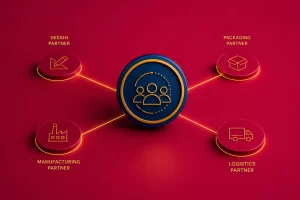
For other large organisations, the practical implications are clear. Build internal capability in network design rather than treating it as an occasional consulting exercise. Use models to expose trade-offs, not to manufacture certainty. Involve regional operators early enough for the recommendations to be trusted. Treat resilience, carbon, cost and service as connected design variables. Make supplier and partner collaboration part of the operating system. Use AI to improve decisions, not just to accelerate existing processes.
Schneider Electric’s supply chain advantage is not perfection. It is the ability to keep redesigning the network, the work and the ecosystem while the business continues to run. For a world of unstable demand, shifting regulation, constrained capacity and rising sustainability pressure, that may be the most important capability of all.