For years, supply chain resilience was often treated as an insurance policy. Organisations invested in contingency plans, documented recovery procedures, and hoped they would never need them.
The events of the past decade have exposed the limits of that approach. Geopolitical instability, natural disasters, supplier failures, transportation disruptions, and volatile demand have demonstrated that resilience cannot be something activated only when a crisis occurs. It has to be designed into the supply chain itself.
Cisco recognised this well before resilience became one of the industry’s most discussed topics.
The company had already begun evolving its approach to supply chain resilience, but major disruptions, including the 2011 earthquake and tsunami in Japan, reinforced the importance of that strategy and accelerated its development. Rather than viewing resilience as a reactive capability, Cisco increasingly embedded it into product design, supplier management, network planning, and operational decision-making. The result was not simply a stronger response to disruption, but a more resilient operating model capable of adapting before problems escalated.
For organisations still balancing efficiency with resilience, Cisco’s evolution offers a practical blueprint.
Resilience Is Designed Long Before Disruption Happens
Many organisations still rely on business continuity plans that focus on responding after an event has occurred.
Cisco concluded that this was only the first stage of resilience.
Its supply chain evolved through three distinct phases:
- Business Continuity Planning
- Proactive Supply Chain Risk Management
- Design for Resiliency
The progression is significant.
Business continuity focuses on recovery. Risk management focuses on identifying vulnerabilities. Design for resiliency focuses on reducing vulnerabilities through sourcing, product, and network decisions before they become operational failures.
This evolution required resilience to become embedded across planning, sourcing, engineering, manufacturing, and supplier management rather than remaining the responsibility of a dedicated risk function.
Every new supplier, product launch, manufacturing strategy, and sourcing decision became an opportunity to strengthen the supply chain against future disruption.
That shift remains highly relevant today, as organisations increasingly face overlapping risks rather than isolated events.
Visibility Beyond Tier One Matters
One of the biggest lessons from the Japan earthquake was that the greatest risks often sit beyond direct suppliers.
While many companies understood the impact on their Tier One suppliers, far fewer had visibility into lower-tier manufacturers producing critical components further upstream.
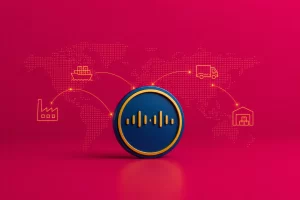
Cisco invested heavily in improving multi-tier supplier visibility to understand not only where products were assembled, but where critical materials and components originated. This allowed the company to identify exposure more quickly when disruption occurred and prioritise mitigation efforts before shortages spread across the network.
As global supply chains become increasingly interconnected, supplier visibility is no longer simply a procurement requirement.
It is a resilience capability. Without understanding dependencies beyond immediate suppliers, organisations cannot accurately assess operational risk.
Measuring Recovery Changes Behaviour
One of the practices Cisco adopted to strengthen its resilience programme was the use of Time-to-Recovery (TTR).
Rather than asking whether a disruption might occur, Cisco asked a more practical question: If this supplier fails tomorrow, how long will it take to restore operations?
That seemingly simple metric changes how organisations prioritise investment.
Suppliers with long recovery times require different mitigation strategies than those capable of recovering quickly.
Products dependent on single-source suppliers demand different sourcing strategies than products supported by diversified manufacturing.
By quantifying recovery capability, resilience becomes measurable rather than theoretical.
This enables leaders to make informed trade-offs between inventory, dual sourcing, manufacturing flexibility, and customer service instead of relying on assumptions.
Building Resilience Into Everyday Decisions
Cisco recognised that resilience cannot rely on additional inventory or contingency plans alone. While buffer stock may provide temporary protection, it rarely addresses the structural weaknesses that make supply chains vulnerable in the first place.
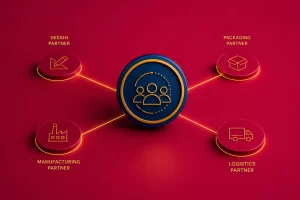
Instead, the company focused on building flexibility into its operating model. Alternative suppliers were evaluated, manufacturing options were expanded, and critical components were continuously assessed for risk. Engineering teams became involved earlier in product development to reduce dependence on vulnerable materials and single-source components, making resilience a shared responsibility across sourcing, manufacturing, logistics, engineering, and product management rather than the responsibility of a single function.
Cisco also invested in the processes needed to make better decisions when disruption occurred. During a crisis, organisations rarely struggle because contingency plans do not exist. More often, information is fragmented, ownership is unclear, and decisions take too long. Cisco developed repeatable processes that enabled teams to quickly identify affected suppliers, assess customer impact, prioritise actions, and coordinate responses across the business.
This reflects an important shift in how resilience is approached. Rather than depending primarily on recovery plans, organisations can reduce disruption by embedding resilience into the way products are designed, suppliers are selected, and operational decisions are made.
Efficiency and Resilience Are Not Opposites
One of the most persistent misconceptions in supply chain management is that resilience inevitably increases cost.
Cisco’s experience suggests the relationship is more nuanced.
The objective is not to duplicate every supplier, warehouse, or manufacturing site.
It is to understand where disruption would create the greatest business impact and invest selectively in reducing that exposure.
Some risks justify redundancy. Others require better visibility. Some can be addressed through design changes. Others demand stronger supplier relationships or more flexible manufacturing capacity.
The discipline lies in understanding which response is appropriate for each risk rather than applying the same solution everywhere.
For multinational organisations operating under constant cost pressure, this balanced approach is particularly relevant. Resilience is not about preparing for every possible disruption; it is about knowing where investment will have the greatest impact on business continuity and customer service.
Turning Resilience Into Competitive Advantage
As supply chains continue to navigate geopolitical uncertainty, trade policy shifts, climate-related disruption, and evolving customer expectations, resilience will increasingly distinguish high-performing organisations from reactive ones.
Cisco’s approach demonstrates that resilience is not built by writing better contingency plans. It is built by designing supply chains that recover faster, see further, and make better decisions under pressure.
For organisations reviewing their own resilience strategy, there are several practical lessons worth considering:
- Design resilience into sourcing, product, and network decisions rather than relying solely on contingency plans.
- Improve visibility beyond Tier One suppliers to understand where critical dependencies exist.
- Measure recovery capability, not just risk exposure, using metrics such as Time-to-Recovery.
- Establish cross-functional decision-making processes before disruption occurs, ensuring teams can respond quickly when events unfold.
- Balance resilience investments against business impact, focusing resources where they will protect customers and operations most effectively.
Ultimately, resilient supply chains are not defined by how rarely disruption occurs, but by how effectively they adapt when it does. Cisco’s experience shows that organisations that embed resilience into the way they design and operate their supply chains are better positioned to maintain customer trust, protect revenue, and gain a competitive advantage when uncertainty becomes the new normal.