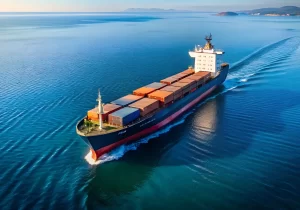
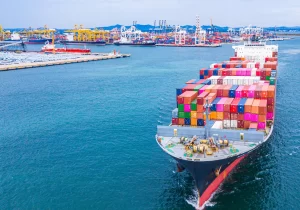
The near-shutdown of transit trade through the Strait of Hormuz is a supply chain data problem as much as a freight crisis, and it is exposing fragile assumptions about supply chain decision intelligence. When a waterway carrying roughly a quarter of global seaborne oil, plus key industrial commodities, collapses by 93% year-on-year in a single month, AI without connected, trusted data becomes little more than a reporting layer.
Disruption Without Decision Intelligence
Transit traffic through the Strait of Hormuz in May dropped to a fraction of its prior-year volume, and the International Energy Agency has described the resulting energy shock as the most severe since the 1970s. Major container carriers, including Maersk and Hapag-Lloyd, have extended transit suspensions into June, which means the impact reaches far beyond crude and gas into containers, chemicals, and finished goods moving through those lanes.
The operational challenge is not only the loss of capacity on a critical corridor. The deeper issue is the absence of live, integrated data that can support rapid replanning when a major route goes offline. Many organizations still rely on last month’s inventory snapshot, manually compiled carrier updates, and supplier information scattered across multiple platforms. When a corridor closes, the speed of the response is defined by how fast that information can be connected, not by the sophistication of any single model.
Decision intelligence describes a structured way to convert data into repeatable decisions, including the chain from signal to recommendation to action, with context and auditability built in. In this context, an AI system should be able to move from ‘this supplier is exposed to a high-risk region’ to a clear, explainable recommendation, qualify an alternate source, accelerate existing orders, or hold and redeploy inventory elsewhere. That recommendation needs to be transparent enough that a procurement lead can defend it to finance, and traceable enough to survive later review.
The Strait of Hormuz crisis illustrates how often that chain breaks. A typical answer to a basic question like ‘when will this complex machine order arrive’ can still take days. The information exists across a customer relationship platform, an enterprise resource planning system, a planning engine, supplier feeds, and internal approvals on substitution costs. Each system may be accurate in its own context, but none is aligned to deliver a timely, cross-functional answer that AI can automate or augment.
The Hidden Cost of Fragmented Data
The structural fragmentation of supply chain data makes AI brittle in the face of fast-moving shocks. Core systems such as ERPs, warehouse platforms, supplier portals, carrier APIs, and demand forecasting tools were purchased and optimized separately. They were rarely designed for real-time data exchange. An AI model tasked with routing around the Strait of Hormuz needs live views of carrier capacity, alternative ports, current inventory positions by node, supplier location and tier exposure, and near-term demand signals. In practice, it receives static exports from different time horizons, often reconciled manually by someone who already suspects the correct answer.
Recent surveys of large enterprises in the United States highlight the same pattern. Senior technology executives increasingly point to internal constraints, not model capability, as the main brake on AI performance. Data quality and integration rank as the dominant issues, and only a minority describe their data as mostly unified with limited silos. Those numbers match what operational teams experience in every major disruption.
Four precision challenges from engineering apply directly to this environment, format, quality, time, and semantics. Freight and supplier information arrives as relational tables, JSON feeds, EDI messages, PDF contracts, and spreadsheets. A missing country code in a master record can quietly undermine an entire risk model. Daily warehouse snapshots, weekly carrier schedules, and quarterly supplier risk scores do not align on a common time base. Even basic phrases like ‘in transit’ or ‘order delivery date’ can carry different meanings across systems and change over the life of an order. Solving three of those issues while ignoring the fourth leaves AI operating on unstable ground.
Organizations that invested early in unified, governed data layers are reacting to the Hormuz disruption with more control. They can plug carrier and supplier APIs into a common platform, expose lineage and quality signals to AI tools, and let teams interrogate or override model output with confidence. Others are watching the same models spin in place, not because the algorithms are weaker, but because the underlying terrain of their data is closer to loose sand than a finished road.
The Next Resilience Investment May Not Be Physical Capacity
For years, resilience strategies have focused on alternative suppliers, additional inventory and backup transportation routes. Those investments remain important, but major disruptions increasingly reveal a different constraint, the ability to assemble a trusted view of the network quickly enough to act. Organizations that can connect supplier, inventory, logistics and demand data into a common decision framework are likely to respond faster and with greater precision than those relying on fragmented systems and manual reconciliation. In periods of extreme volatility, the speed of understanding can become as valuable as the availability of physical capacity itself.