For years, inventory was treated as a balancing act between cost and availability. Keep enough stock to protect customer service, but not so much that warehouses become expensive storage facilities for uncertainty. It sounded simple in theory. In practice, it became one of the most misunderstood areas of modern supply chain management.
Today, many companies still believe they have an effective inventory optimization strategy because dashboards look cleaner, planning systems are more advanced, and forecast accuracy has improved marginally. Yet operational teams continue firefighting shortages. Logistics leaders are still relying on premium freight to protect OTIF performance. Warehouses remain full of slow moving stock while critical SKUs go unavailable at the worst possible moments.
This disconnect is becoming increasingly visible across global supply chains.
The uncomfortable truth is that many inventory optimization strategies were designed for a business environment that no longer exists. They were built around stability, predictable lead times, consistent supplier performance, and relatively linear demand patterns. Modern supply chains now operate in a world shaped by volatility, disruption, geopolitical shifts, transportation instability, and continuous demand variability.
That changes everything. Inventory optimization is no longer simply about carrying less stock. It is about making better operational decisions under uncertainty. The companies succeeding today are not necessarily the ones with the lowest inventory levels. They are the ones building faster, more adaptive, and financially aligned supply chains.
This is why inventory strategy has become a boardroom discussion rather than just a planning function.
The Real Problem Is Not Inventory. It Is Decision Misalignment
One of the biggest misconceptions in supply chain management is that inventory problems begin inside planning systems. In reality, inventory issues often start much earlier in the organization.
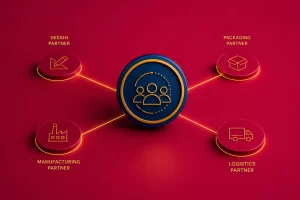
Procurement teams negotiate larger buys to reduce unit costs. Commercial teams push aggressive availability targets for key accounts. Finance teams focus heavily on working capital reduction. Manufacturing wants production stability. Logistics teams are then expected to make all those competing priorities work operationally.
The result is predictable.
Some facilities hold excessive stock that moves slowly. Other locations face recurring shortages. Transport costs increase because expedited shipments become the easiest way to recover service failures. Warehousing complexity rises. Inventory transfers between sites increase. Planners spend more time managing exceptions than improving the network itself.
This is why an inventory optimization strategy cannot succeed in isolation. The strongest supply chains are no longer treating inventory optimization as a software initiative alone. They are treating it as an organizational alignment challenge. They understand that inventory reflects the quality of decision making across the business.
When supply chain leaders talk about improving inventory performance today, the conversation increasingly includes governance, operating cadence, cross functional accountability, and faster exception management.
Technology matters, but operational alignment matters more.
Why Traditional Inventory Optimization Strategies Are Losing Effectiveness
For decades, inventory optimization strategies focused heavily on efficiency. The goal was straightforward. Reduce excess stock, improve inventory turns, and free up working capital.
That approach worked relatively well when supply chains were more predictable. Then disruption exposed how fragile many networks had become.
Supplier instability, transportation bottlenecks, labor shortages, port congestion, and volatile demand patterns forced companies to rethink inventory positioning almost overnight. Many organizations reacted by increasing safety stock aggressively across the network.
Initially, that appeared logical. More stock created operational protection. Service levels improved temporarily. Production continuity became easier to manage. But over time, the side effects became impossible to ignore.
Warehouses filled faster than expected. Carrying costs increased significantly. Obsolescence risks rose. Working capital deteriorated. In several industries, organizations discovered they had protected customer availability while simultaneously damaging profitability. This is where the market is shifting again.
Senior supply chain leaders are moving away from broad inventory expansion and toward more intelligent segmentation. Not every SKU deserves the same service level. Not every customer requires the same fulfillment strategy. Not every disruption justifies additional stock.
The new generation of inventory optimization strategies focuses less on blanket policies and more on targeted resilience. That distinction matters because resilience without discipline quickly becomes inefficiency.
Inventory Visibility Has Improved. Execution Has Not
Over the last five years, companies have invested heavily in visibility platforms, control towers, and real time inventory tracking capabilities. Most organizations can now see inventory positions far more clearly than before. But visibility alone has not solved the problem.
Many supply chains remain operationally slow despite having significantly better data. Teams identify shortages earlier, but still struggle to coordinate responses quickly enough. Inventory is visible across the network, yet decision making remains fragmented between functions.
This is becoming one of the defining operational gaps in modern supply chains. An organization can have world class dashboards and still perform poorly if decision rights are unclear or response processes are too slow. Visibility creates awareness. It does not automatically create execution capability. This is particularly challenging for multinational businesses operating across regions, business units, and distribution networks.
One market increases inventory buffers because supplier lead times are unstable. Another aggressively reduces stock to hit quarterly financial targets. A third prioritizes customer service for strategic accounts. Without operational alignment, the entire network begins pulling in different directions.
The consequence is rising variability. This is why many inventory optimization strategies now focus heavily on orchestration rather than only forecasting. The goal is not simply to predict demand more accurately. The goal is to improve how quickly the organization responds when conditions change.
That operational shift can influence nearly every major supply chain metric. Lower premium freight spend. Fewer emergency inventory transfers. Better warehouse utilization. More stable replenishment cycles. Stronger OTIF performance. Reduced operational firefighting.
These are often governance outcomes as much as planning outcomes.
Inventory Optimization Has Become a Financial Strategy
Supply chain leaders increasingly understand that inventory decisions directly influence business performance far beyond operations. Inventory impacts cash flow, customer experience, profitability, transportation costs, and manufacturing stability simultaneously. That makes inventory optimization one of the few areas where supply chain decisions can materially affect multiple executive priorities at once.
This is why CFOs are now more involved in inventory discussions than ever before. However, many organizations still approach inventory reduction too narrowly. They focus on lowering stock levels without fully understanding the operational trade offs.
Reducing inventory may improve balance sheet metrics in the short term, but hidden costs often emerge elsewhere in the network.
Transport costs increase because replenishment becomes more reactive. Production schedules become unstable due to inconsistent material availability. Warehouse productivity declines because inventory flows become less predictable. Service performance weakens because critical SKUs are unavailable during demand spikes.
In other words, the business may reduce inventory while quietly increasing operational inefficiency. This is where inventory cost reduction optimization strategies techniques become particularly important.
The most effective companies are not reducing inventory blindly. They are redesigning the economics of the network itself. They evaluate inventory decisions alongside transportation spend, warehouse utilization, fulfillment responsiveness, and customer profitability.
That broader perspective changes how leaders think about inventory optimization. Inventory is no longer viewed as a static operational asset sitting inside warehouses. It is increasingly viewed as a dynamic financial lever connected to the entire supply chain ecosystem.
AI Will Improve Inventory Planning But It Will Not Fix Operational Weaknesses
Artificial intelligence is rapidly becoming part of the inventory optimization conversation. There is genuine value here. Advanced analytics can improve forecasting responsiveness. Machine learning models can identify anomalies faster. AI driven systems can optimize inventory placement across multiple nodes more dynamically than traditional planning methods.
In highly complex supply chains, these capabilities can create meaningful operational improvements. But there is also growing evidence that many companies are expecting technology to solve structural business problems it was never designed to fix.
If supplier lead times remain unstable, forecast inputs are inconsistent, data governance is weak, or planners continuously override systems manually, even sophisticated AI models will struggle to produce reliable outcomes. Technology cannot compensate for organizational misalignment.
This is one of the most important leadership lessons emerging across supply chain transformation programs today. Some organizations invested heavily in advanced planning platforms but failed to improve execution because operational processes remained fragmented.
The systems became smarter while the organization itself stayed slow. AI can support inventory optimization strategy. It can accelerate insights. It can improve scenario planning. It can strengthen responsiveness. But it cannot replace operational discipline, cross functional alignment, or strong governance structures.
The organizations likely to gain the most value from AI are not necessarily the ones deploying the most advanced technology first. They are the ones building mature operational foundations around planning, execution, and decision making.
The Next Competitive Advantage Is Inventory Agility
The future of inventory optimization may not belong to companies carrying the least inventory. It may belong to companies capable of repositioning inventory the fastest.
This is an important shift because modern supply chains no longer operate in stable environments. Consumer behavior changes quickly. Transportation disruptions emerge with little warning. Supplier performance can deteriorate unexpectedly. Trade conditions evolve continuously. Static inventory models struggle in these conditions.
As a result, more organizations are focusing on inventory agility rather than pure inventory minimization. That includes strategies such as regional inventory positioning, flexible warehouse capacity models, dynamic replenishment structures, faster inter facility transfers, and scenario based planning capabilities.
The objective is adaptability. Organizations are realizing that inventory optimization strategies must support operational flexibility rather than simply drive cost reduction targets. A supply chain that responds faster to disruption often outperforms one that appears more efficient on paper.
This is especially true in industries where service continuity directly affects revenue retention and customer loyalty.
The next generation of supply chain leaders will likely be judged less on how aggressively they reduce stock and more on how effectively they balance resilience, service, speed, and cost simultaneously.
What Senior Leaders Should Actually Be Asking
Many executive conversations around inventory continue focusing on the wrong questions.
- How much inventory can we reduce?
- How do we improve forecast accuracy?
- How do we lower working capital?
- These questions matter, but they are incomplete.
- The more important questions today may include:
- Which inventory protects strategic revenue?
- Where does variability originate inside the network?
- Which customers justify higher availability costs?
- How quickly can the organization reposition inventory during disruption?
- Are finance, commercial, procurement, operations, and logistics teams aligned around the same inventory priorities?
- Which operational behaviors are creating unnecessary inventory volatility?
These questions move the conversation beyond formulas and into enterprise capability. That is where the industry is heading.
An effective inventory optimization strategy is no longer about finding the perfect inventory target. It is about building an organization capable of making faster and better decisions under uncertainty.
That is far more difficult than simply lowering stock levels. But it is also where long term competitive advantage increasingly exists.
Inventory Strategy Is Becoming a Leadership Test
Inventory performance has become one of the clearest reflections of how well an organization actually operates. Weak inventory performance often signals deeper structural problems such as fragmented planning, delayed decision making, siloed incentives, poor governance, or slow operational response mechanisms.
Strong inventory performance usually reflects something very different. It shows organizational alignment. It indicates that finance, procurement, logistics, manufacturing, and commercial teams are operating with shared priorities rather than competing objectives.
That alignment is difficult to achieve at scale. But in volatile global supply chains, it may now matter more than the optimization models themselves. Because the companies outperforming today are rarely the ones with perfect forecasts. They are the ones capable of responding faster, coordinating better, and adapting earlier than competitors.
That is why inventory optimization strategy is no longer just about inventory. It has become a direct reflection of leadership quality across the supply chain.