A new sentiment report from Exotec finds warehouse workers increasingly view automation as a career catalyst, not a threat, citing higher pay, safer working conditions, and stronger long-term prospects. The findings challenge lingering assumptions about worker resistance and shed light on why robotics-enabled sites are becoming a hiring advantage.
Warehouse Robots Drive Retention Gains
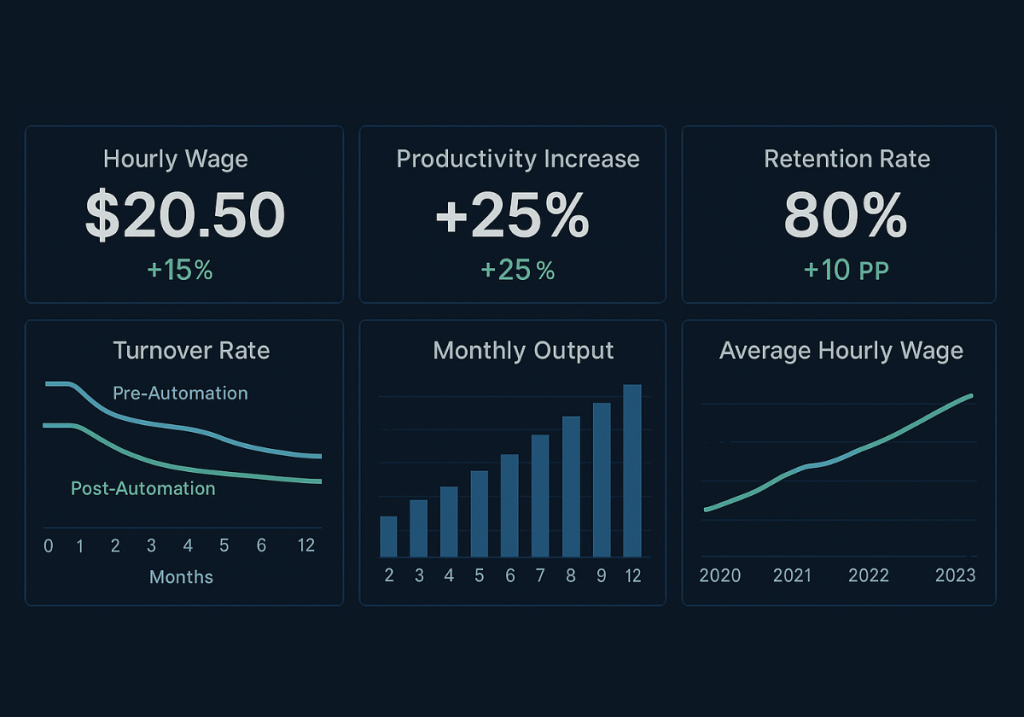
Exotec’s Warehouse Workers Sentiment Report reveals a clear shift in warehouse worker attitudes toward automation. Nearly half of surveyed employees (49%) say they have received pay increases because of automation, and two in five believe that partnering with robots improves their chances of a raise or promotion. While labor shortages have dominated logistics headlines, the report suggests the value proposition for workers inside automated sites is steadily improving.
Seven in 10 respondents are open to or interested in working alongside automation, nearly three times more attracted to automated warehouses than deterred by them (37% vs. 13%). Job satisfaction follows the same pattern: 63% report being more satisfied in automated environments, and 98% say automation makes them more productive.
The retention effect is also notable. Workers using automation are three times more likely to stay longer in their current roles than leave early (36% vs. 11%), underscoring how robotics can stabilize labor pools during peak demand. Recent industry data shows the average U.S. warehouse turnover rate still exceeds 40%, making any sustained improvement meaningful for operators under margin pressure.
Direct Experience Reduces Resistance
The report segments attitudes into three groups: “Robooptimists” (48%), “Roboreluctant” (32%), and “Roboneutrals” (20%). The strongest predictor of shifting sentiment is first-hand exposure. Four in five workers who initially doubted robotics reported changing their opinion after using them, with most citing physical relief and task support.
Three in five automation-enabled workers report fewer injuries, and 59% say physical strain has decreased, a recurring concern in labor-intensive facilities. These findings align with OSHA case data showing persistent musculoskeletal injury rates in manual picking operations. As robotics adoption grows, safety improvements are becoming an increasingly important lever for attracting and retaining workers.
Even during peak seasons, when stress and attrition typically spike, 70% of workers say automation reduces stress, and one-third report fewer colleagues quitting after automation was deployed. This suggests robotics are not only improving day-to-day tasks but smoothing disruptions during the periods when warehouses are most vulnerable to labor loss.
The Next Worker Divide
If robotics now helps raise pay and reduce attrition, the next divide may emerge between companies that invest in structured worker onboarding for automation and those that simply deploy equipment. Exotec’s data shows resistance declines sharply with training and exposure, a signal that workforce development, not just capital spend, will determine who wins the future labor market. Companies that treat automation as an employee value proposition, not a head-count offset, may gain a structural advantage long before the next hiring crunch arrives.