Tesla’s use of artificial intelligence extends well beyond autonomous driving. Across its manufacturing network, battery operations and engineering teams, the company applies data and AI to improve production efficiency, product development and factory performance. Millions of connected vehicles continuously generate operational data, while Gigafactories produce manufacturing information that supports engineering decisions and process improvements. Together, these capabilities have become an important part of Tesla’s supply chain strategy, helping the company accelerate innovation, respond to disruption and scale production across multiple regions.
From Data to Decisions: How Tesla Innovates with Big Data
Tesla’s vehicles, factories and charging infrastructure generate enormous volumes of operational data every day. Rather than treating this information as isolated datasets, the company integrates engineering, manufacturing and product development around continuous data collection and analysis.
Information gathered from production equipment, battery systems, vehicle sensors and manufacturing processes allows engineers to identify performance trends, improve product quality and optimize production workflows. This continuous feedback loop shortens the time between identifying a problem and implementing improvements across factories or vehicle software. Unlike traditional automotive development cycles that often rely on model-year updates, Tesla continuously refines both products and manufacturing processes using real-world operating data.
Manufacturing Powered by AI
Artificial intelligence plays an increasingly important role inside Tesla’s factories. Computer vision systems inspect components during production, helping identify manufacturing defects and quality deviations more quickly than traditional manual inspection methods. AI models also assist engineers in monitoring production consistency across battery manufacturing, vehicle assembly and final inspection.
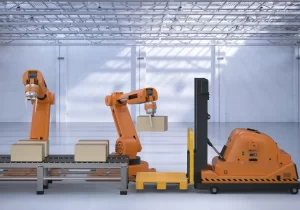
These capabilities enable manufacturing teams to detect issues earlier, reduce rework and improve overall production efficiency. Tesla continues to expand automation throughout its Gigafactories while balancing robotic systems with human oversight in areas requiring greater flexibility.
AI Supports Continuous Manufacturing Improvement
Tesla’s manufacturing strategy depends on continuous optimization rather than periodic process redesign. Production systems generate operational data that engineers analyze to identify bottlenecks, equipment utilization patterns and opportunities to improve throughput. Rather than making isolated improvements, Tesla updates manufacturing processes as production evolves.
This approach supports higher production volumes while maintaining consistent quality across multiple Gigafactories. Manufacturing itself has become a software-driven capability where engineering and factory operations continuously influence one another.
Fleet Data Strengthens Product Development
One of Tesla’s largest competitive advantages comes from the connected nature of its vehicles. Every vehicle contributes anonymized operational data that supports software development, battery management improvements and autonomous driving research. Engineers use these insights to better understand how vehicles perform across different climates, road conditions and driving behaviors.
The same data enables Tesla to deploy over-the-air software updates that improve vehicle functionality without requiring customers to visit service centers. For supply chain teams, this continuous flow of field data also provides valuable insight into component performance, helping engineering teams refine future product designs and manufacturing processes.
Software Creates Supply Chain Flexibility
Tesla develops much of its vehicle software internally, including battery management systems, manufacturing software and vehicle operating systems. This integration became particularly valuable during the global semiconductor shortage when Tesla engineers rapidly modified software to support alternative chips after preferred semiconductors became unavailable.
Rather than waiting for constrained suppliers to recover production, Tesla adapted its software architecture to maintain manufacturing output. The episode demonstrated how software engineering can become an important supply chain capability, enabling manufacturers to respond more quickly to component shortages and changing supplier availability.
AI Infrastructure Extends Beyond Vehicles
Tesla’s investment in artificial intelligence increasingly supports multiple parts of its business. The company’s AI infrastructure powers autonomous driving development, factory automation and the Optimus humanoid robot program. High-performance computing systems process data collected from millions of vehicles while supporting the training of increasingly sophisticated neural networks.
Although these investments are often associated with autonomous driving, they also strengthen manufacturing by improving robotics, computer vision and industrial automation capabilities. As AI models become more capable, they are expected to play a growing role in production planning, factory optimization and engineering workflows.
Data Supports Battery Manufacturing
Battery production remains one of Tesla’s most data-intensive operations. Manufacturing battery cells requires precise control over temperature, materials, coating quality and production consistency. AI-assisted monitoring helps identify process variation before it affects product quality, allowing manufacturing teams to make adjustments earlier in the production cycle.
Tesla also uses production data to improve battery efficiency, manufacturing yields and product reliability across successive generations of battery technology. As battery production scales globally, maintaining consistent quality becomes increasingly dependent on data-driven manufacturing systems.
Sustainability Through Better Data
Tesla also applies data across its sustainability initiatives. Manufacturing facilities monitor energy consumption, allowing operations to improve efficiency while increasing the use of renewable electricity. Battery recycling programs use production and lifecycle data to recover valuable materials and reduce waste.
The company’s lithium refining operations, battery production and recycling initiatives increasingly work together as part of a more integrated battery supply chain designed to improve long-term material availability while supporting environmental objectives. Rather than treating sustainability as a separate initiative, Tesla incorporates resource efficiency into manufacturing and supply chain decisions.
Lessons for Supply Chain Leaders
Tesla’s experience illustrates how data and artificial intelligence can strengthen supply chain performance when integrated into core business operations.
Several lessons emerge.
- Treat data as a strategic asset. Continuous access to manufacturing and product data allows organizations to improve decisions across engineering, production and quality.
- Integrate software with manufacturing. Software should not simply manage operations. It should enable faster engineering changes and greater production flexibility.
- Use AI to improve execution. Computer vision, predictive analytics and machine learning can enhance manufacturing quality, equipment utilization and process consistency.
- Create continuous feedback loops. Connecting customer usage data with engineering and manufacturing helps organizations improve products more rapidly throughout their lifecycle.
- Build digital capabilities alongside physical assets. Investments in factories become more valuable when supported by AI infrastructure, software platforms and advanced analytics.
Looking Ahead
Artificial intelligence is becoming increasingly integrated into industrial operations, and Tesla continues to expand its use across manufacturing, engineering and product development. The company’s approach demonstrates that the value of AI extends beyond automation. Combined with continuous data collection and vertically integrated engineering, AI enables manufacturers to improve quality, accelerate innovation and respond more quickly to changing market conditions. As supply chains become more software-defined, organizations that combine digital intelligence with manufacturing expertise will be better positioned to improve resilience and long-term competitiveness.