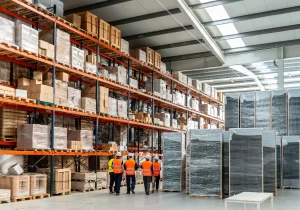
Warehouse storage automation is helping distribution networks increase capacity, improve accuracy and reduce dependence on manual handling as fulfillment demands grow. The greatest returns come from selecting storage systems that match operational requirements today while remaining adaptable as order profiles and network strategies evolve.
Matching Storage Technology To Network Reality
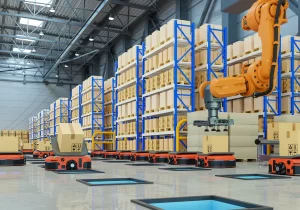
Automated pallet storage, deep lane solutions, and high-speed retrieval systems sit on the same spectrum of warehouse storage automation but serve different operating realities. Automated pallet storage increases vertical utilization and enables sequenced access to full-pallet loads, which suits high-volume distribution centers that move repetitive product flows in and out of fixed locations. Deep lane storage compresses similar inventory into fewer aisles by extending pallets back multiple positions, reducing travel distance and supporting higher pallet counts per square foot.
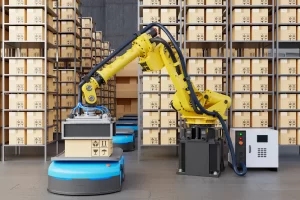
Both approaches raise storage density, yet they impose distinct constraints on access patterns and inventory mix. Deep lane configurations work best when inventory turns rapidly in large batches and when product lines are stable enough to justify dedicated lanes. Automated pallet storage provides more flexible slotting, but the return on investment depends on sustained pallet throughput and disciplined load standardization. Advanced automated retrieval systems, often combining conveyors, shuttles, or robotic handling, add another layer by enabling case or tote-level access, tighter order accuracy, and more controlled sequencing into packing or shipping.
Selecting among these options requires a clear picture of demand profiles across the network. Facilities feeding large retail or industrial replenishment flows can lean toward deep lane storage or automated pallet systems that optimize bulk movement. Sites handling a diverse order mix, frequent promotions, or multi-channel fulfillment gain more from automated retrieval systems that preserve access to individual cases. Industry reports indicate that misalignment between facility profile and storage design is a common reason automation projects fall short on promised payback, particularly when future volume and product variability were underestimated in early modeling.
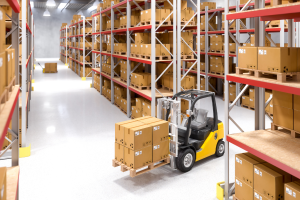
Safety and labor strategy also shape the choice of equipment. Automated pallet systems and deep lane designs that limit manual handling reduce exposure to lift-truck incidents and repetitive strain, while retrieval systems that bring goods to people lessen travel time and congestion in aisles. Recent trade data shows that distribution centers with higher automation levels report lower lost-time incident rates, but only when maintenance and change-management programs are fully embedded. The capital outlay often prompts a rethink of maintenance skills, vendor partnerships, and uptime targets, turning the storage system into a managed asset rather than a static fixture.
From Equipment Purchase To Fulfillment Architecture
Treating storage automation as a standalone equipment purchase misses its broader role in fulfillment architecture. Automated pallet storage, deep lane systems, and retrieval technologies influence planning horizons, replenishment logic, and even product design, because they define how easily inventory can be relocated, sequenced, or reconfigured. When storage density increases without corresponding changes to order release rules, slotting policies, and transport integration, congestion can simply shift from aisles to docks or yard operations.
High-volume distribution centers derive the most value when storage automation ties directly into warehouse management and planning systems, allowing order waves, replenishment tasks, and trailer loading to reflect real-time capacity. Advanced retrieval systems can feed multiple picking zones or automation islands, which creates opportunities to segment service levels by customer, channel, or product criticality. This segmentation turns storage into a lever for orchestrating lead times and margin protection, not only a way to store more pallets in the same footprint.
Specialized facilities such as temperature-controlled sites, hazardous material depots, or high-value component hubs face an additional layer of complexity. Storage decisions must balance regulatory constraints, product integrity, and recovery time objectives for disruptions. Automated deep lane cold storage, for example, can cut energy usage per pallet by improving cube utilization, yet it can also lengthen recovery time if a lane or crane is unavailable. Aligning these trade-offs with business continuity expectations and insurance requirements becomes as important as calculating labor savings.
A practical evaluation framework begins with three questions, what growth scenarios must the facility absorb without major redesign, what order and replenishment patterns define day-to-day work, and what safety and compliance outcomes are non-negotiable. From there, teams can map how each storage option affects travel paths, error rates, and exposure to single points of failure. Industry benchmarks increasingly show that successful projects stage deployments, starting with constrained areas such as reserve pallet storage or a dedicated automated zone, then expanding once data confirms throughput, reliability, and maintenance performance.
Storage Flexibility Will Influence Long-Term Returns
As distribution networks become more dynamic, the value of storage automation will increasingly depend on how easily systems can adapt to changing inventory, fulfillment channels and customer requirements. Building expansion paths, modular layouts and integrated software into early design decisions can extend asset life while helping warehouses improve throughput without repeated infrastructure overhauls.