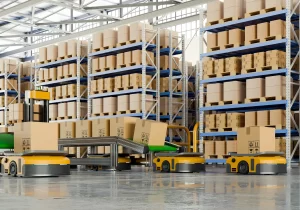
As Shopify expands its AI-powered tools and fulfillment networks, it is strategically reshaping its e-commerce operations to meet the growing demand for seamless, global commerce solutions.
Key Takeaways:
A Strategic Break in Global Commerce Expansion
Shopify’s latest earnings report marks a pivotal moment in its evolution, with the company aggressively advancing its AI-driven supply chain strategy. As e-commerce becomes more embedded within global commerce, Shopify is leveraging its data-rich platform to transform shopping experiences. By integrating AI-powered tools across the supply chain, from product discovery to post-purchase engagement, Shopify is shaping the future of agentic commerce, where AI agents help consumers shop across merchant stores with unprecedented ease.
The strategic inflection comes as Shopify’s global market share continues to expand, with international GMV growing by 41% in Q3. This is complemented by a 67% year-over-year growth in Shop Pay GMV. Shopify is increasingly centralizing its position in global commerce, using automation, AI, and enhanced fulfillment to serve its global merchant base.
Operationalizing AI-Driven Commerce
The AI-driven supply chain strategy is underpinned by tools like Sidekick, Shopify’s on-platform intelligent assistant, which facilitated 750,000 first-time users in Q3. This marks a significant operational achievement, with AI conversations reaching 8 million in October alone, supporting daily business operations for merchants. Sidekick’s functionality spans from customer segmentation to sales automation, reflecting a deeper level of AI integration within Shopify’s core offerings.
Shopify’s investments are also visible in its embedded fulfillment solutions. The company has expanded Shopify Payments penetration to 65% of GMV, with a notable increase in cross-border e-commerce solutions. Shopify is further extending its supply chain footprint by partnering with carriers such as DHL, Canada Post, and Australia Post to reduce customs delays and enhance the global shopping experience for both merchants and consumers. These moves represent Shopify’s commitment to offering merchants greater flexibility in choosing cost-effective or faster fulfillment options.
Benchmark Context: Positioning Among Peers
Shopify’s operational shift aligns with broader industry trends where e-commerce players are embracing digital solutions to streamline fulfillment and improve customer engagement. Walmart and Amazon have similarly invested in AI-powered tools and fulfillment networks, though Shopify’s focus on agentic commerce and personalized shopping experiences places it ahead of many of its peers. While Amazon continues to build scale in physical distribution, Shopify’s ability to seamlessly connect merchants with global consumers using AI-driven personalization is a distinguishing factor.
In contrast, Etsy has adopted AI in a more incremental fashion, focusing largely on improving product search functionality rather than embedding AI throughout the customer experience and operational back end. Shopify’s more holistic approach could offer a competitive advantage as the e-commerce industry continues to shift towards AI-powered fulfillment and digital commerce tools.
Operational Constraints and Execution Risk
Despite Shopify’s ambitious AI-driven strategy, the company faces several operational risks, including margin pressure as it scales its global operations. The push for international expansion and the addition of new payment methods are expected to compress margins in the short term. Shopify’s gross margin has decreased from 51.7% in the previous year to 48.9%, driven by increased fulfillment costs and the growing investment in AI tools. This shift towards a low-margin, high-volume model in payments and fulfillment will require Shopify to balance its customer acquisition strategy with profitability over the long term.
Additionally, the global landscape of tariffs and regulations poses an ongoing challenge for Shopify’s cross-border operations. Although the company has adapted its shipping solutions to mitigate customs delays, the risk of fluctuating tariffs remains a constraint that could slow the pace of international growth. While the company’s robust infrastructure has allowed it to weather tariff impacts better than smaller competitors, this volatility could affect margin stability in the coming quarters.
The Road Ahead for Shopify
Shopify’s focus on embedding AI tools throughout the supply chain, along with its expanding global fulfillment network, signals its intent to reshape the e-commerce industry. The company’s ability to streamline global commerce through agentic tools, combined with its strategic push into the enterprise market, positions it well for long-term growth. However, this expansion comes with risks related to margin pressure and international regulatory complexities that could challenge its ability to sustain profitability.
The balance Shopify must strike between operational scale and margin discipline will be crucial as it accelerates its AI-driven initiatives. With international GMV growth, Shopify Payments penetration, and AI adoption, Shopify appears poised to lead in a more global, AI-empowered e-commerce landscape, though its success will ultimately depend on how well it navigates the execution risks inherent in such an expansive strategy.