Manufacturers are rapidly tightening control over how artificial intelligence enters their operations. After years of experimentation with personal AI tools, companies are shifting toward sanctioned platforms and formal governance. New data by Netskope Threat Labs shows a sharp rise in authorized generative-AI use across the sector, and a renewed focus on protecting valuable industrial IP as automation scales deeper into production environments.
Managed AI Gains Momentum as Shadow Usage Falls
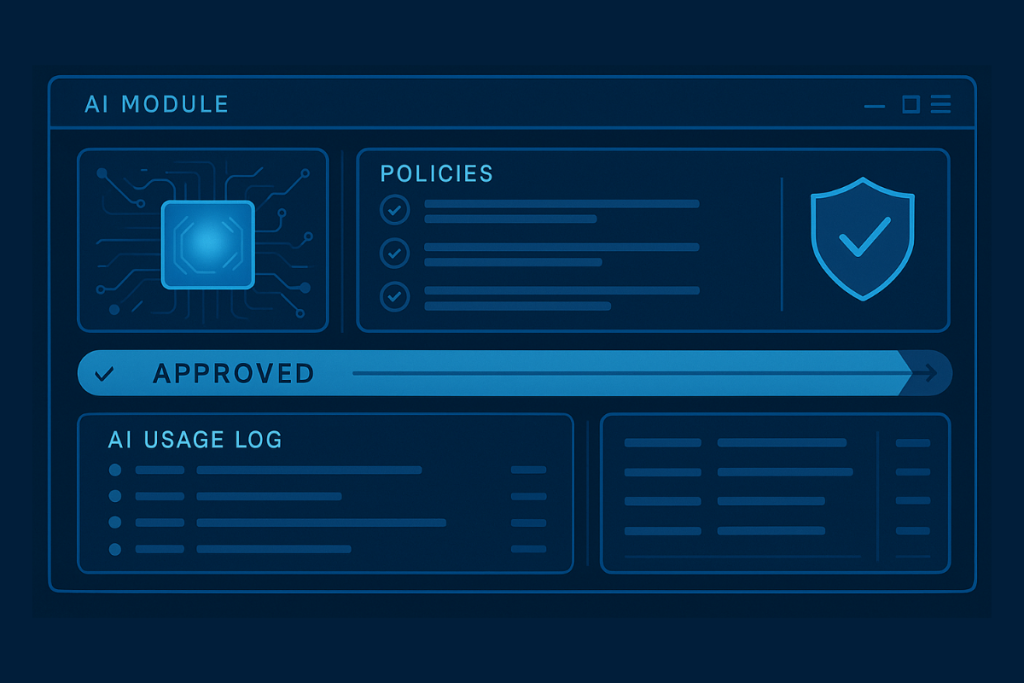
According to Netskope Threat Labs, 94% of manufacturing organizations now use generative AI applications. Crucially, personal and unmanaged AI usage has fallen sharply, from 83% in December 2024 to 51% by September 2025, while approved enterprise use has climbed from 15% to 42% over the same period. That shift reflects an industry-wide effort to put formal guardrails around rapidly growing AI experimentation.
“Manufacturers are clearly prioritizing structured oversight,” said Gianpietro Cutolo, cloud threat researcher at Netskope Threat Labs, in an official statement. “The narrowing gap between official and shadow AI use shows that security and innovation are becoming mutually reinforcing rather than competing priorities.”
The move toward governed deployment is also evident in private AI architecture decisions. Nearly a third of manufacturers now use one of the three major genAI platforms to build private AI systems, reinforcing the trend toward secure, controlled environments for sensitive production intelligence.
This pivot mirrors broader industrial technology patterns: as robotics, MES, and IoT platforms matured, governance layers followed. AI is now undergoing a similar shift from experimentation to enterprise foundation.
IP and Regulated Data Still at Risk in AI Workflows
Even as oversight improves, the report cautions that data exposure remains a material threat. Attempts to share regulated data (41%), intellectual property (32%), and passwords or API keys (19%) account for the majority of violations across personal and corporate AI use.
For a sector where competitive advantage often hinges on proprietary process knowledge, CAD files, and automation models, the stakes are significant. Netskope notes that source code alone accounts for 28% of AI-related exposure incidents, often driven by developers turning to genAI for coding without proper controls in place.
Meanwhile, 67% of organizations now connect to api.openai.com to support internal automation and tool development, underscoring how deeply genAI is embedding into manufacturing workflows beyond browser-based interfaces.
Where AI Maturity Will Show Up Next
One under-examined fault line is emerging at the intersection of AI governance and supplier integration. As manufacturers accelerate use of private AI models and secure APIs, downstream partners, from automation vendors to contract assemblers, will need to meet equivalent security and data-handling standards. Several industrial firms have already begun updating supplier requirements to include AI governance criteria, similar to how cybersecurity language became standard in vendor contracts after major OT breaches earlier this decade. The companies that treat AI controls as a shared operational standard across their ecosystem, not just an internal discipline, will be better positioned to scale automation without introducing new vulnerabilities into production networks.