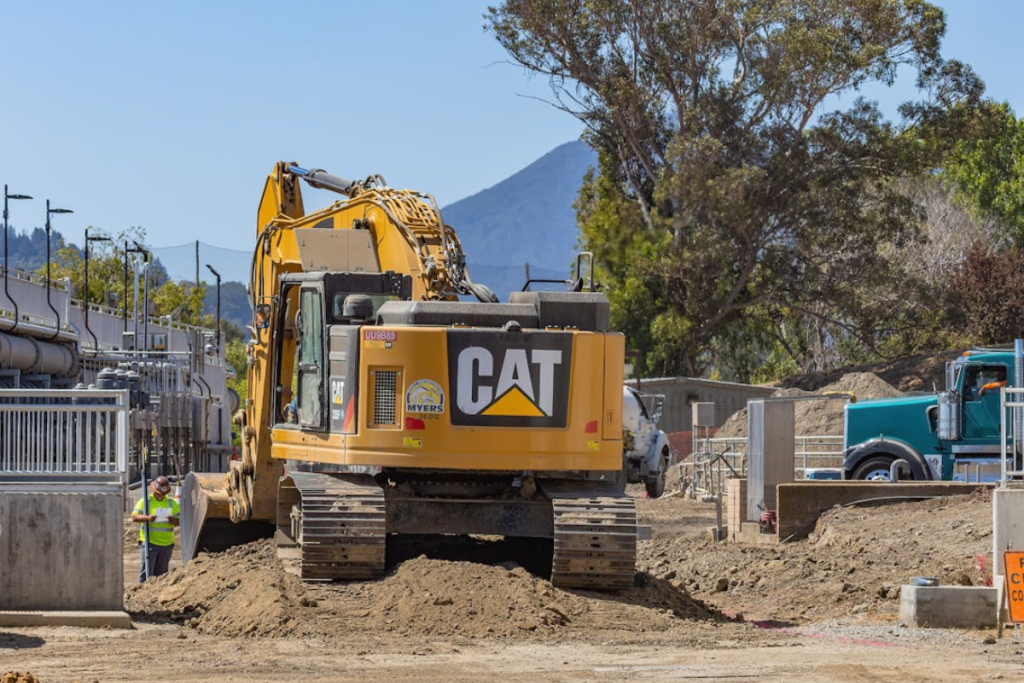
Caterpillar’s Q3 results reveal a structural shift as its Energy & Transportation division expands capacity to meet surging data center power demand, recasting its manufacturing network for the next phase of industrial-scale energy supply.
Key Takeaways:
From Heavy Equipment to Continuous Power Systems
Caterpillar’s operational inflection in the third quarter of 2025 was not about machines, but megawatts. The company’s Energy & Transportation segment delivered a 17% sales rise, including 33% growth in power generation, driven largely by data center applications for cloud and generative AI. For an enterprise known for earthmoving and mining, the supply logic is now centered on uninterrupted power delivery, not cyclical construction cycles.
CEO Joe Creed described the moment plainly: “We’re seeing a lot more of this, prime power is a great opportunity for us because it creates services opportunity as we move forward.” Beneath that remark lies a fundamental operating shift. Manufacturing assets once geared to industrial demand surges are being retooled for continuous-duty production, long-run servicing, and uptime commitments that mirror utilities more than contractors.
Caterpillar’s backlog expanded $2.4 billion sequentially to a record $39.8 billion, led by Energy & Transportation orders. Lead times at its Solar Turbines business are extending, and reciprocating-engine capacity in Lafayette, Indiana, is being scaled to meet sustained demand from AI-linked power infrastructure.
Operationalizing the Energy Pivot
To execute this transition, Caterpillar is leaning on classical supply-chain levers: capacity staging, supplier synchronization, and throughput optimization. The company reported active investment in large-engine manufacturing lines and closer coordination with suppliers to accelerate shipments already in backlog.
In practice, a pivot of this type typically requires:
1. Dynamic capacity modeling to balance turbine and reciprocating-engine mix across sites.
2. Supplier-certification acceleration to secure dual-sourced components for high-spec engines.
3. Inventory alignment with dealer networks to avoid bottlenecks between factory output and regional energy projects.
4. Field-service orchestration through predictive maintenance scheduling — critical given Solar Turbines’ direct-service model.
Margins have held up under pressure. Despite tariffs nearing $600 million in the quarter, adjusted operating margin reached 17.5%, above expectations. That resilience signals strong cost-to-serve control within manufacturing and service operations, even as input costs rise.
A Sector Moving Toward Power-as-Infrastructure
Caterpillar’s shift mirrors a broader industrial realignment around energy-hungry digital infrastructure. Honeywell reported a 28% surge in its energy-systems business, citing “grid-scale storage and turbine controls for data center and AI infrastructure.” Cummins likewise expanded engine output 22% year-over-year, cutting delivery lead times 15%. And Schneider Electric disclosed that 40% of new orders now originate from AI and data-center power systems, supported by regionalized sourcing that covers 70% of its bill of materials.
Relative to peers, Caterpillar is ahead in monetizing the AI-energy nexus but remains more exposed to tariff volatility. Deere and Ferguson, for instance, have already localized two-thirds of their supply bases, reducing tariff exposure by up to 25%. Caterpillar, by contrast, has taken a measured path, implementing “no-regrets” short-term cost controls and USMCA product certification while deferring deeper sourcing changes until trade policy stabilizes.
Balancing Backlog Expansion and Supply Constraint
The record backlog reflects both success and strain. While Energy & Transportation orders grew 25% year-over-year, delivery velocity is increasingly shaped by component availability and policy friction. CFO Andrew Bonfield acknowledged that 55% of fourth-quarter tariff costs will fall on Construction Industries, but Energy & Transportation will still absorb roughly 25%. That exposure, worth $650–800 million in Q4 alone, represents a material headwind to any margin expansion from higher throughput.
Tariff-related delays also constrain flexibility. Long-cycle turbine programs require certified tooling and supplier validation, limiting near-term sourcing shifts. As Creed noted, “If we’re going to make longer-term adjustments to really offset tariffs…it will require investments…and they will take time because we’ll have to certify components.”
This interplay of demand acceleration and trade-policy friction illustrates the new manufacturing dilemma: speed of capacity ramp-up now depends as much on regulatory predictability as on physical assets.
Execution Logic and Future Operating Design
To sustain growth, Caterpillar is embedding three operational disciplines that will define its post-2025 model:
1. Integrated manufacturing and service flow. Solar Turbines operates on a direct-service model with its own field technicians, converting installed base into recurring service revenue.
2. Scenario-based sourcing governance. By linking tariff exposure to certification cycles, the firm can delay capital-intensive retooling until trade conditions justify it.
3. Throughput-driven cost control. The enterprise targets high OPACC dollar generation rather than margin percentage, prioritizing absolute value creation over spread compression.
This positions Caterpillar for “continuous-load manufacturing”, a mode closer to industrial utilities than heavy-equipment cycles. Managing this effectively will require synchronized production planning across component suppliers, predictive logistics scheduling, and capital allocation tied to engine-fleet utilization data.
Strategic Constraint and Industry Signal
The key constraint is timing. Data-center power demand is rising faster than component re-certification and plant expansion can accommodate. Lead times are lengthening, and trade-policy uncertainty makes permanent localization risky. Yet Caterpillar’s operational discipline, high cash flow ($3.2 billion in Q3), tight dealer inventories, and early-stage capacity adds, suggests it is positioning methodically for a multi-year expansion.
For peers, the message is clear: AI-era growth will not be captured through product launches alone but through manufacturing architectures capable of running like utilities, continuously, predictively, and globally balanced against tariff and sourcing volatility.