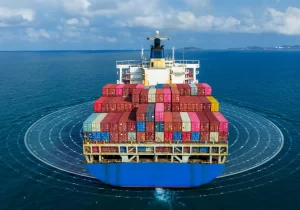
Supply chain leaders are recasting cost control as a continuous, network-wide discipline under rising geopolitical and freight pressure. By linking data, decisions, and governance, AI exposes margin leakage, automates disruption response, and gives supply chain heads greater authority on enterprise financial outcomes.
From Fragmented Cost Data To a Full Profit Lens
Cost pressure is intensifying as conflict-related routing changes, fuel surcharges, and war-risk premiums work through transport and insurance contracts. Traditional cost programs often chase line items in isolation, which hides how incremental changes in freight, inventory, or sourcing compound into material margin erosion. AI helps rebuild that picture by drawing data from planning, procurement, manufacturing, logistics, and customer operations into a unified view of cost to serve.
This integrated analysis reveals patterns that are difficult to see manually, such as specific customers or channels that look profitable when viewed by revenue alone but destroy value once expedited freight, low fill rates, or complex handling are included. When AI links increased marine insurance premiums with longer transit times and elevated safety stocks, the full financial effect of a routing decision becomes visible before it flows through to the P&L. Gartner expects that by 2030, 40% of supply chains will apply AI to proactive cost management, and its research shows that 73% of executive teams already expect supply chain leaders to steer financial goals.
More advanced deployments pair this cost lens with digital representations of the network that behave like living models of the end-to-end flow. These models test how alternative suppliers, modes, or sourcing regions change working capital, service reliability, and exposure to disruption. Leaders can stress-test proposals to offset Middle East congestion or new tariffs by running side-by-side scenarios instead of pushing through blanket cuts. Recent industry research points to a related development: by 2031, AI systems are expected to resolve around 60% of disruptions without human intervention, indicating that cost, risk, and service decisions are beginning to sit inside the same intelligent architectures.
Real-time Optimization Under Controlled Autonomy
Once the connections between cost drivers are visible, AI becomes an execution engine that scans live data for precise intervention points. Conversational interfaces already allow planners to query inventory policies or transport options in natural language and receive targeted recommendations. Instead of issuing broad directives to reduce stock by a fixed percentage, the system flags individual SKUs where transportation volatility or demand behavior justifies changes to safety stock, lead times, or sourcing mixes.
The same pattern extends across the wider network. Routing engines can rebalance loads across carriers and lanes when war-risk premiums spike, while optimization tools align production schedules to current material availability and energy prices. The result is a cost discipline embedded in daily decisions, with algorithms proposing adjustments and humans curating exceptions where brand, regulatory, or strategic stakes are highest. Gartner research on AI-enabled supply chains stresses that these systems should not jump straight to full autonomy for high-impact calls. Routine decisions such as carrier reallocation, mode selection within policy, or low-value purchase approvals are suitable for automation, while capital-intensive or reputationally sensitive changes remain human-led but AI-informed.
This dual-track model demands stronger governance. Data quality and lineage must support auditable decisions, and roles need to evolve from transaction processing to oversight of AI agents and exception handling. Gartner advises allocating budget not only for technology but for continuing assessment of how greater autonomy affects performance, accountability, and workforce expectations. Contingency plans for AI missteps, including clear human intervention protocols and post-incident learning loops, are becoming as important as traditional business continuity playbooks.
Cost Leadership In an Autonomous Era
The long-term consequence is that cost management folds into network design, resilience strategy, and workforce architecture rather than sitting as a periodic finance exercise. As agentic AI handles a growing share of disruption response, recent trade data suggests that the gap will widen between organizations that treat cost visibility, decision automation, and governance as a single design problem and those that focus only on tools upgrades and headcount cuts.