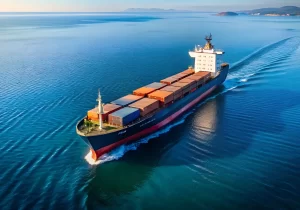
Supplier diversification offers limited protection when multiple sources rely on the same maritime corridors. Oxford Economics finds disruption increasingly takes the form of delays, diversions, capacity constraints and cost shocks while routes remain open, increasing the importance of transport-network visibility.
The Hidden Concentration Sits Between Suppliers
Supplier diversification is commonly measured by vendor, country and production site. That view can conceal a shared transport dependency. Two suppliers in different markets may use the same export gateway, transshipment hub or narrow maritime passage, leaving the apparent diversification vulnerable to one disruption.
The exposure is significant because maritime transport carries more than 80% of world merchandise trade by volume, according to UN Trade and Development. Oxford Economics estimates that nearly one-quarter of global trade passes through the Malacca and Taiwan straits. A security event, port closure or navigation restriction in either corridor could affect manufacturing inputs, energy flows, vessel schedules and consumer-goods availability across several regions.
The disruption does not require a complete closure. Houthi attacks have weakened schedule reliability in the Red Sea and forced carriers to manage longer routes, higher security costs and uncertain transit conditions. Disruptions at major Chinese ports have also altered vessel rotations, affecting connecting ocean services, terminal activity and inland transport. A waterway can remain physically accessible while becoming commercially unreliable.
Climate conditions create a different version of the same constraint. The Panama Canal reduced allowable vessel drafts five times as El Niño threatened water levels in Lake Gatun, which supplies the canal’s locks. Lower drafts reduce cargo capacity and can require additional sailings or alternative routes. Typhoons have also closed major Asian container ports twice within a single month, disrupting tightly sequenced liner networks and equipment positioning.
Route Exposure Belongs In The Planning Model
The strategic break is the separation of sourcing resilience from transport resilience. A diversified supplier base provides limited protection when its volume converges on the same corridor. Route concentration therefore needs the same scrutiny applied to supplier capacity, financial health and geographic exposure.
That assessment begins with mapping the full physical path of priority materials and finished goods. The model should identify origin ports, transshipment hubs, canals, straits, destination gateways and critical inland connections. It should also expose where tier-two and tier-three suppliers feed materials through corridors already used by direct suppliers.
Alternative routes require operational validation. A technically available diversion may add weeks of transit time, exceed inventory coverage or depend on ports without enough terminal, rail or trucking capacity. Larger transport bills can also arise through fuel consumption, war-risk insurance, surcharges and equipment imbalances. These costs should be incorporated into scenario models before a disruption forces immediate action.
The resulting analysis can inform differentiated inventory policies. Materials with high corridor concentration, long replacement cycles or limited transport alternatives may justify larger buffers or pre-positioned stock. Other flows may be protected through reserved capacity, secondary gateways or contracts that permit rapid routing changes. Financial impact models should quantify revenue exposure, margin erosion and service risk under each scenario.
The same logic belongs in digital twins and control platforms. External security, weather and port data can trigger simulations of capacity loss, transit delays and cost escalation. Planning teams can then evaluate rerouting, inventory allocation and customer-priority decisions using a shared view of operational and financial consequences.
Route Dependencies Need Continuous Review
Trade flows, carrier networks and infrastructure constraints change more frequently than many sourcing strategies. Periodic reviews of transport corridors, transshipment hubs and inland connections can help organizations identify emerging concentrations before they become embedded in procurement, inventory and customer commitments. Incorporating route dependencies into regular network planning also provides a stronger basis for evaluating future sourcing decisions against the transport capacity needed to support them.