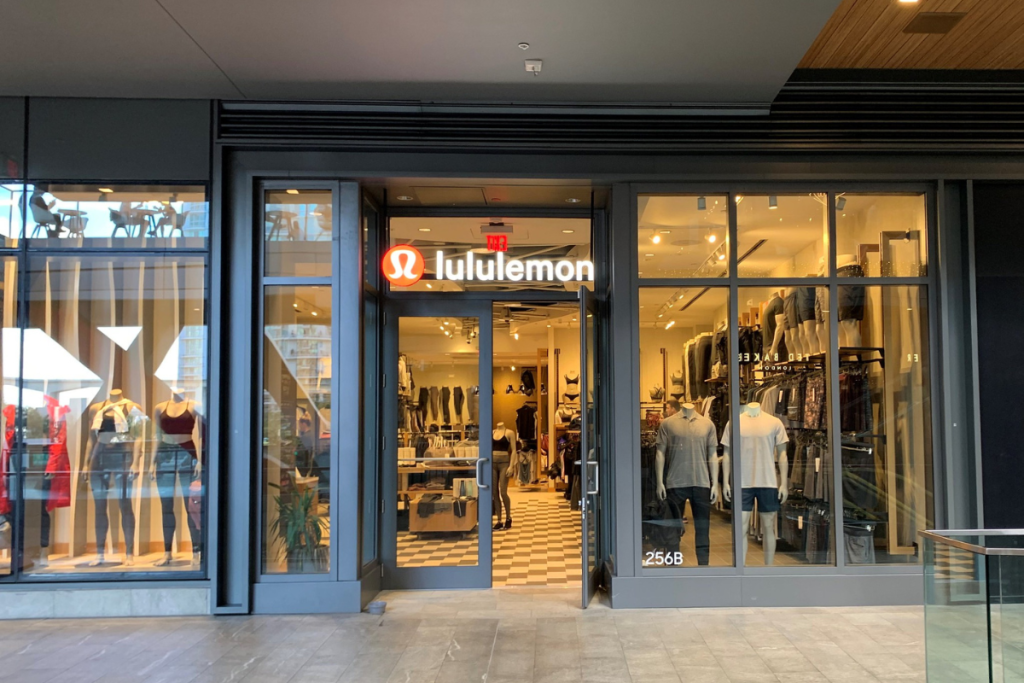
Lululemon is bracing for a $240 million hit to gross profit this year after the U.S. scrapped duty-free treatment for low-value imports. The policy shift upends a cross-border fulfillment model that had long shielded the retailer from tariff costs.
Tariff Shock Ripples Through Fulfillment
The de minimis exemption, which allowed goods under $800 to enter the U.S. duty-free, was eliminated on Aug. 29, striking at the heart of Lululemon’s e-commerce strategy. Roughly two-thirds of the company’s U.S. online orders are shipped from Canadian distribution centers, a setup that had relied heavily on the exemption. With the change, most of those parcels now face duties, driving a $240 million gross profit impact in 2025, according to the company’s latest securities filing.
CEO Calvin McDonald acknowledged the policy shift “played a large part” in reducing both revenue and earnings expectations this year. The company is negotiating with vendors, adjusting prices, and exploring supply chain levers to cushion the blow. But CFO Meghan Frank noted the removal alone accounts for about 170 basis points of the 220-basis-point decline in annual gross margin now projected. Four of Lululemon’s seven leased distribution centers are in Canada, underscoring the structural exposure.
Rethinking Distribution Networks and Costs
Beyond selective price hikes, Lululemon is reassessing inventory placement and its distribution network to blunt cost pressures. Frank told investors the retailer is “looking actively” at options that could ease reliance on cross-border flows, though any benefits will take time to realize. The company also anticipates a $320 million net drag on 2026 operating margins from the combined effect of tariff hikes and the de minimis removal.
The policy shift comes at a challenging moment for the sector. U.S. consumer demand is cooling, and discretionary categories like apparel face pressure. According to recent trade reports, other retailers that leaned on cross-border e-commerce, particularly those routing through Canada or Mexico, are similarly retooling logistics strategies to minimize tariff exposure. The wider trend points toward rising costs for online fulfillment models once optimized around duty-free thresholds.
The Next Pressure Point
While tariff mitigation and vendor negotiations are front of mind, the overlooked question is whether apparel companies will accelerate investment in U.S. distribution capacity to structurally reduce exposure. For Lululemon, nearshoring fulfillment closer to its U.S. customer base could buffer future policy swings, but it would also lock in higher fixed costs. With trade rules subject to sudden change, companies must weigh cost savings against the need for supply chains that can adapt quickly.