PepsiCo is overhauling its North American supply chain to make it faster, leaner, and more connected. The company is combining automation, data, and artificial intelligence to run its factories and warehouses more efficiently and respond faster to changing demand.
In Brief:
Building a Smarter, Faster Network
PepsiCo’s latest supply chain redesign focuses on speed and simplicity. After years of expanding capacity to meet growing demand, the company is now streamlining its network, keeping only what adds value and trimming what slows it down.
“We’re clearly going after some manufacturing nodes that are not needed anymore,” said Chairman and CEO Ramon Laguarta during the company’s latest earnings call. “These are normally the least efficient, older manufacturing nodes… and as we’ve increased capacity throughout the system in the last few years, those nodes can go away.”
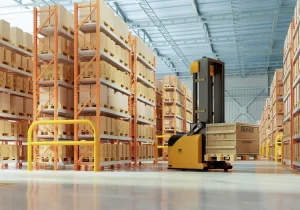
Warehouses are also being rethought. PepsiCo is combining storage and distribution for its beverage and snack divisions in some regions, supported by automation. “We’re rationalizing our warehouse infrastructure, both in the context of automation and some combination with the beverage business,” Laguarta said.
In Texas, the company is testing its “One North America” pilot by merging beverage and snack distribution under one roof. Early results show faster deliveries and higher asset use. “We’re testing and learning in Texas,” Laguarta noted. “The end solution will not be a one-size-fits-all for the whole country.” The move signals a shift away from rigid supply chains toward modular networks that can adapt to different markets and demand patterns.
Turning Tech Investment Into Real-World Speed
PepsiCo’s ability to move fast today stems from technology investments it made years ago. Those tools, ranging from AI-driven forecasting to automated production scheduling, are now embedded across the business. “We’ve invested a lot in technology in the last five years,” Laguarta said. “Now we can benefit from applying AI and overlaying intelligence to the data we’ve created, and that will give us agility and flexibility.”
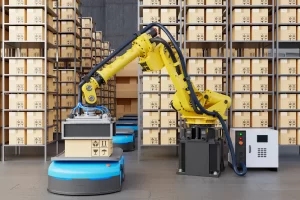
That intelligence layer connects planning, production, and distribution in near real time. PepsiCo now uses AI-enabled transportation towers to reroute shipments dynamically, predictive maintenance to anticipate plant downtime, and automated warehouse systems that sync with live order and inventory data. Together, these systems feed into a unified data backbone that allows planners to see and respond to disruptions as they emerge.
“As we move from order taking to transportation towers to how we do manufacturing or warehousing, it’s totally different than the past,” Laguarta explained. “We can eliminate some of the human bottlenecks in ways that we couldn’t do before.”
AI also helps PepsiCo prepare for changing demand patterns. The company expects more online orders, store pickups, and large retail partnerships in the future. “We’re trying to solve for the demand of the future, not the demand of the past,” Laguarta said.
Service levels across both the food and beverage divisions now run at 97–98%, a marked improvement from earlier in the year when new systems were still stabilizing, tangible proof that digital orchestration is tightening execution on the ground. By using predictive models, PepsiCo can plan production and logistics before trends fully take shape, turning technology into a competitive edge rather than a cost center.
Where PepsiCo’s Next Tests Will Lie
PepsiCo’s shift toward a more intelligent, agile supply network is impressive, but the real test now is how the company embeds that agility into organizational culture, partnerships, and risk posture. The deeper challenge isn’t just automation or consolidation, it’s turning flexibility into a business habit.
In practice, that means mastering three interlocking pivots:
1. From pilot to scale, with discipline: Success in Texas or in select product lines is one thing; scaling a unified “One North America” approach across diverse geographies, regulatory regimes, and demand patterns will demand rigorous change management, ongoing measurement, and a tolerance for messy iteration.
2. From internal optimization to collaborative intelligence: PepsiCo’s network will increasingly depend on its ability to co-design visibility and data sharing with suppliers, carriers, and customers. True responsiveness will depend on how well external partners can plug into its “intelligent orchestration” layer.
3. From reactive resilience to anticipatory resilience: Building buffer stocks or redundant capacity won’t be enough. PepsiCo must use its new AI infrastructure to anticipate shocks, whether in raw materials, logistics disruption, or demand shifts, and rewire flows proactively.
If PepsiCo can turn those three pivots into repeatable routines, not just one-time initiatives, it won’t merely have a faster supply chain. It may have created a living system that improves under stress, not despite it.