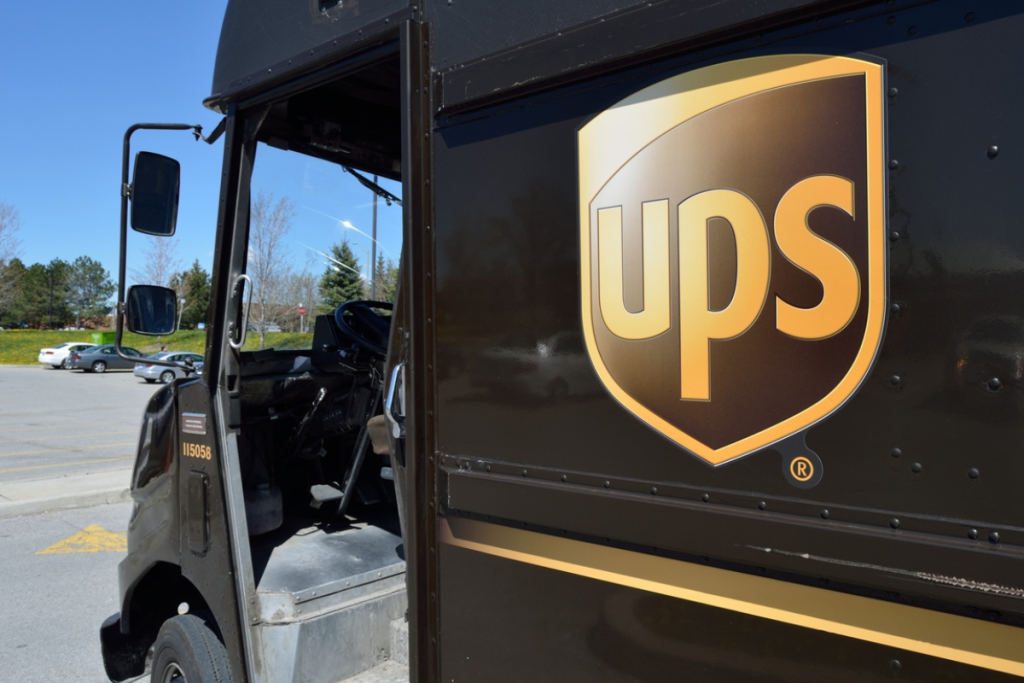
UPS has entered the most consequential phase of its logistics modernization in decades, collapsing physical footprint, elevating automated hubs, and decoupling from low-yield e-commerce flows to rebuild around density, precision, and regulated repeat demand.
Key Takeaways:
From Volume to Velocity and Yield
UPS’ Q3 marks a structural turning point: scale is no longer measured in square footage or daily parcel count. Instead, the network is being rebuilt around controllable density and guaranteed economics, a reversal of the peak-e-commerce era where carriers pursued volume at the expense of margin.
The company closed 93 buildings, consolidated 195 operations, and removed 16 million labor hours with a target of 25 million. The catalyst: a deliberate exit from low-yield Amazon air and Ground Saver freight, which drove a 32.7% decline in lower-value parcel volume. Chief Executive Officer Carol Tomé framed the shift in operational terms rather than commercial optics, “We’re focused on revenue quality and reconfiguring our network accordingly.”
This reset reflects a broader cycle shift. Where the 2010–2020 period rewarded geographic reach and omnivorous parcel intake, the 2025 reality prizes cost-to-serve mastery, tariff agility, and automation resiliency. UPS is building a logistics architecture calibrated for cyclical trade friction, regulated verticals, and industrial throughput, not discretionary peak shopping surges.
The effect is a cleaner demand spine. SMB, B2B, and healthcare mix expanded by 340–350 basis points, supported by 8 million small businesses on the Digital Access Program and the acquisition of Andlauer Healthcare Group. This is the market UPS wants, repeat flows, regulatory lock-in, temperature control, and defensible yield.
Custom Brokerage as Resilience Layer
UPS’ tariff-era performance is as notable as its footprint reset. The company absorbed a 10× spike in dutiable package entries, from 13,000/day in March to 112,000/day in September, and automated 97% of clearance.
This isn’t simply compliance automation; it is network stability under policy shock. By digitizing brokerage and integrating agentic AI into formal entry workflows, UPS insulated throughput from labor-intensive customs bottlenecks. It also turned policy volatility into a competitive differentiator: a carrier able to process friction faster wins volume and working capital.
As China–U.S. flows declined 27.1% under tariff pressure, UPS redeployed air capacity into Europe and Asia lanes, evidence of algorithmic lane rebalancing and federated trade routing in real time.
The Benchmark: Amazon Expands; UPS Tightens
UPS’ strategy this quarter is best understood against the backdrop of Amazon’s opposite posture. While UPS is compressing its network, closing 93 buildings, consolidating 195 operations, and lifting automated sortation to 66% of U.S. volume, Amazon continues to expand physical and algorithmic surface area. Amazon invested $4 billion to extend rural delivery coverage, deployed over one million robots inside fulfilment nodes, and cut U.S. inbound lead times by four days through predictive placement and AI routing.
This divergence reflects two distinct models emerging in large-scale logistics: yield-scale, where network density and controllable cost structures matter more than sheer reach; and demand-scale, where geographic extensibility and consumer flywheel dynamics justify footprint expansion.
Across the sector, both approaches are gaining momentum. FedEx’s DRIVE program halved handoffs and boosted automation density across hubs, while DHL has moved deeper into healthcare and temperature-controlled logistics — echoing UPS’ expansion into regulated verticals through the Andlauer acquisition. Meanwhile, Walmart and Target continue to use store-based fulfilment to anchor last-mile density, with Walmart servicing roughly two-thirds of online orders from stores and Target approaching a similar threshold.
Constraints and System Stress
The UPS reset is not friction-free. Three tensions emerged:
Density transition drag — UPS cited $100M in quarterly headwinds as low-density lanes re-indexed and USPS partnerships spun up.
Automation governance — Scaling algorithmic routing and AI brokerage raises the floor for data hygiene, maintenance cycles, and exception ops.
SMB volatility — Small-business flows are stickier than discretionary consumer parcels, but recession signals would test this mix.
These are execution challenges, not structural weaknesses, but they demand operating discipline and a control-tower mindset.
What It Means for Enterprise Operators
UPS’ evolution signals the next phase of industrial logistics strategy: footprint scale is table stakes; density, automation, and regulated throughput define leadership.
For C-suite supply chain leaders, five implications stand out:
1. Model cost-to-serve by segment, not channel. Prune low-yield volumes before they embed in network rhythm.
2. Automate before expanding. Physical nodes without algorithmic orchestration become stranded costs.
3. Build policy-resilient flows. AI-brokerage maturity is now a frontline supply chain capability.
4. Design hybrid last-mile maps. USPS-style partnerships are a feature, not a concession.
5. Treat labor as a precision asset. Shift from throughput staffing to exception staffing.
UPS has not simply tightened its network, it has rewritten the operating logic around controllable density. It is the clearest indicator yet that the post-e-commerce era belongs not to the biggest network, but to the most intelligently compressed, automated, and yield-defensive one.
The logistics frontier is no longer capacity, it is synchronization and selectivity. UPS is betting that precision, not presence, will define the next decade of supply chain advantage.