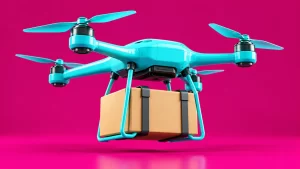
China’s largest retailer by revenue, JD.com, is using delivery robots as part of a broader redesign of its logistics network rather than simply replacing couriers. By combining autonomous delivery, workforce retraining and digital network control, the company is showing how large logistics organizations may build future last-mile capacity without relying on continual labor expansion.
JD.com Rebuilds Last-Mile Capacity Around Automation
JD.com operates China’s largest e-commerce fulfillment network, serving more than 600 million customers and delivering around 90% of retail orders the same day or next day. The company has steadily expanded beyond retail into logistics, technology and supply chain services, giving it direct control over one of the world’s largest integrated distribution networks.
That scale explains why founder Richard Liu’s recent comments at a CEO forum in Beijing matter beyond China. Rather than presenting delivery robots as another automation project, Liu described a long-term transition in which autonomous delivery becomes part of the network’s permanent operating model. Although he gave no timetable, his remarks made clear that the company is planning for structural change measured over decades rather than quarterly investment cycles.
The significance is not the robots themselves. It is the redesign of last-mile capacity.
Replacing large numbers of delivery couriers requires far more than autonomous vehicles. Route planning, fulfillment locations, charging infrastructure, fleet orchestration, exception management and customer service all have to operate as one coordinated system. Capacity planning therefore shifts from managing people alone to balancing autonomous fleets, software platforms and human supervision across the entire delivery network.
JD.com’s existing robot deployments provide operational data that supports those decisions. Every delivery generates information on navigation performance, charging behavior, throughput, service interruptions and urban operating conditions. That information can be used to determine fleet sizing, delivery-zone design, inventory positioning and supervisory requirements before automation expands further.
As autonomous fleets grow, network control becomes increasingly dependent on technologies such as digital twins, edge computing and real-time fleet orchestration. Rather than treating robotics as an isolated technology investment, JD.com appears to be building automation into the foundation of how future delivery capacity will be created and managed.
Workforce Capability Becomes Part of Network Design
Equally notable is how the company is approaching its workforce.
Liu said JD.com is working with approximately 120 schools to develop training programs that prepare employees for robot maintenance, diagnostics and other technical positions. Instead of viewing retraining as a response to automation, the company is embedding workforce development directly into its future network design.
Large robotic fleets require technicians, software-aware maintenance teams, diagnostics specialists and field support personnel distributed throughout fulfillment and delivery operations. Without those capabilities, maintenance delays and equipment downtime can quickly erode the productivity gains automation is expected to deliver.
Building those skills before large-scale deployment reduces one of the biggest constraints on automation adoption: the availability of qualified technical labor.
The strategy also preserves valuable operational knowledge. Employees with experience managing delivery routes, customer expectations and local operating conditions often transition more effectively into robot supervision, fleet support and exception management than newly hired technical staff with limited logistics experience.
Rather than separating automation from workforce planning, JD.com is developing both together. The result is a logistics model in which robots increase physical capacity while retrained employees strengthen the technical capabilities required to keep increasingly automated networks operating reliably.
Automation Requires New Operating Models
The broader lesson extends well beyond one retailer.
As logistics networks automate, competitive advantage is likely to depend less on acquiring robots than on integrating autonomous assets, workforce capability and network control into a single operating model. Organizations that develop these capabilities together will be better positioned to expand last-mile capacity, maintain service reliability and scale automation without creating new operational bottlenecks.