Technology has become one of the defining competitive advantages in modern retail, but its value depends on how effectively it supports business decisions. Many apparel companies have invested heavily in artificial intelligence, automation and digital commerce, yet few have matched Zara’s ability to respond quickly to changing customer demand.
The difference lies in how technology is deployed. Rather than introducing isolated digital tools, Zara’s parent company, Inditex, has spent decades building an integrated operating model where technology connects design, sourcing, manufacturing, logistics, stores and e-commerce into a single decision-making network. Every investment is designed to shorten the time between customer demand and business response.
That approach continued to deliver strong financial performance in FY2025. Inditex increased sales 3.2% to €39.9 billion, while sales in constant currency grew 7.0%. Gross profit increased 3.9% to €23.2 billion, lifting the gross margin to 58.3%. EBITDA increased 5.0% to €11.3 billion, EBIT rose 5.9% to €8.0 billion, and net income increased 6.0% to €6.2 billion. Operating expenses grew 2.8%, below the rate of sales growth, reflecting the efficiency of the company’s integrated business model despite inflation, geopolitical uncertainty and a challenging global trading environment.
Technology Connects Every Stage of the Supply Chain
Unlike traditional apparel companies where merchandising, sourcing and logistics often operate independently, Zara uses technology to keep every function connected throughout the product lifecycle.
Sales information, inventory availability and customer feedback flow continuously between stores, commercial teams, designers, buyers and sourcing specialists. This allows collections to evolve throughout the selling season instead of remaining fixed months before products reach stores.
At the center of this system is Inditex’s headquarters in Arteixo, Spain, commonly known as The Cube. More than a corporate headquarters, it serves as the operational hub where commercial teams monitor business performance and coordinate sourcing, production and distribution decisions.
Technology supports this process by providing timely information rather than automating every decision. Designers and commercial teams continue to determine which products should be introduced, replenished or discontinued, but they do so using current commercial data instead of relying primarily on long-range forecasts.
This integration reduces decision cycles while maintaining close coordination across the supply chain.
RFID Creates Enterprise-Wide Inventory Visibility
One of the most significant technology investments within the Zara supply chain has been the rollout of RFID technology across its stores and products.
Every garment carries an RFID tag that allows inventory to be identified throughout its movement from distribution centers to stores. Compared with conventional barcode systems, RFID improves inventory accuracy and enables employees to locate products much more efficiently.
For store teams, this means faster replenishment, improved stock visibility and quicker product searches. For the business, it provides a more accurate view of inventory across the global retail network.
Inventory visibility has become increasingly important as Zara continues integrating physical stores with e-commerce. Rather than maintaining separate inventories for online and offline sales, Inditex operates both channels through a shared inventory network.
During FY2025, online sales increased 4.8% to €10.7 billion, while the company operated 5,460 stores across 214 markets. Products can be shipped from distribution centers or fulfilled directly from stores depending on availability and customer location. This flexibility improves product availability, reduces excess inventory and supports faster delivery.
Inditex describes this integration between stores and digital platforms as one of the core strengths of its business model because it allows inventory to be used more efficiently across every sales channel.
Digital Stores Extend the Distribution Network
Technology has transformed the role of Zara’s physical stores.
Stores are no longer simply retail locations where customers browse merchandise. Increasingly, they function as local fulfillment centers supporting online orders, click and collect services and product returns.
Inditex continues expanding its in-store technology ecosystem through Assisted Checkout and its soft tag alarm technology. According to the FY2025 Annual Report, the soft tag hardware has now been installed in 100% of physical stores, and the technology will be implemented across 90% of products during the Spring Summer 2026 collections. The initiative simplifies product handling, streamlines checkout and improves the customer shopping experience.
The company has also introduced Zara Try-On, an AI-powered virtual fitting experience that allows customers to create a digital avatar using their own photographs and visualize garments before purchasing. Available on Zara.com in 43 markets, the platform has generated more than seven million sessions and is being progressively rolled out across other Inditex brands. Rather than attempting to predict fashion trends, this application of artificial intelligence focuses on improving customer engagement and supporting digital commerce.
Automation Improves Logistics Performance
While stores have become more digital, Inditex has also continued modernizing its logistics infrastructure.
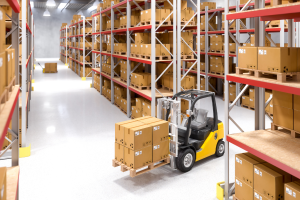
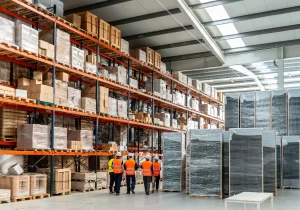
The company completed its extraordinary two-year logistics investment program during FY2024 and FY2025, allocating €900 million in each year to expand logistics capacity and strengthen its ability to support long-term growth. One of the largest projects was Zaragoza II, a logistics facility designed to increase distribution capacity while incorporating higher levels of automation and operational efficiency.
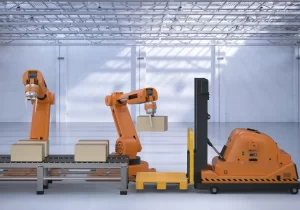
Automated material handling systems, advanced sorting technologies and digital warehouse management support Zara’s rapid replenishment model by improving inventory visibility, processing larger shipment volumes and increasing distribution productivity.
In 2025, Inditex also invested in Spanish robotics company Theker Robotics, reflecting its continued interest in warehouse automation and intelligent logistics technologies that strengthen supply chain productivity.²
Technology Supports Long-Term Growth
Technology alone does not create supply chain agility. Zara’s advantage comes from combining digital capabilities with flexible sourcing, integrated logistics and disciplined inventory management.
Looking ahead, Inditex expects ordinary capital expenditure of approximately €2.3 billion during 2026, primarily dedicated to optimizing commercial space, strengthening technology integration and improving its online platforms. The company also expects annual gross selling space to increase by around 5%, supported by continued store optimization and strong online growth.
As retail becomes increasingly digital and supply chains become more complex, the ability to move information quickly is becoming as important as moving products efficiently. Zara’s technology strategy reflects that shift. Rather than investing in technology for its own sake, Inditex continues to build systems that improve visibility, strengthen coordination and shorten decision cycles across the business. Those capabilities remain a defining reason why Zara continues to set the benchmark for supply chain agility in global fashion.