Artificial intelligence is pushing inventory management into a new phase of precision. Companies are rolling out machine-learning models, RFID tracking, and automated replenishment tools that narrow the gap between demand signals and stock decisions. Deloitte’s recent global survey shows that about 60% of executives saw measurable forecasting gains after adopting AI, and 70% plan to broaden deployment through 2025. The shift is creating faster and more reliable inventory systems across global markets.
AI Drives Real-Time Tracking and Cross-Border Efficiency
Modern inventory platforms knit together continuous data streams from barcodes, sensors, and cloud-based applications, giving companies a clear and consistent view of where products are and how they are performing. According to trade reports, firms adopting these systems are seeing fewer errors during receiving, put-away, and cycle counts as automated identification tools cut manual steps and reduce data-input discrepancies.
Visibility has also become essential for cross-border logistics. Digitized documentation, automated export controls, and AI-enabled compliance checks are helping reduce delays that once slowed the movement of goods through customs. This reflects the broader expansion of digital trade infrastructure, supported by public data from global logistics operators showing faster clearance when shipment information is automated upstream.
Better inventory placement feeds directly into customer experience. With unified stock data, companies can redirect orders to alternate sites, reroute fulfillment paths, or adjust safety-stock levels to absorb unexpected swings in demand. These adjustments reduce the shortages and excess stock that erode margins and weaken service levels.
AI Expands the Scope of Inventory Coordination
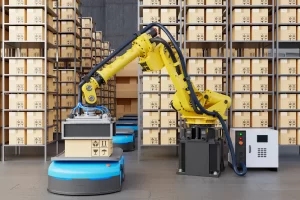
Inventory management now reaches far beyond routine reorder points and storage decisions. Companies use ERP and WMS integrations to monitor stock across global sites, while multi-location networks rely on APIs and middleware to allocate goods based on shifting demand. Automation, from RFID portals to machine-vision scanners, continues to reduce the labor intensity of receiving, auditing, and replenishment tasks.
Recent research from MIT’s Intelligent Logistics Systems Lab shows that more warehouses are moving toward AI-supported automation, especially within multi-site networks. These systems track stock velocity and inbound delays and automatically adjust replenishment when disruptions hit. At the same time, IoT sensors monitor temperature, vibration, and handling conditions for sensitive goods, strengthening traceability and regulatory compliance.
Major companies are now applying these capabilities across their daily operations. Amazon, for instance, has reengineered its replenishment structure through a Vendor Managed Inventory model that gives suppliers real-time access to sales and warehouse data. Instead of issuing purchase orders, Amazon lets suppliers drive replenishment based on preset thresholds and live demand signals. This reduces administrative overhead and stabilizes stock positions across millions of SKUs.
H&M’s global footprint makes mismatched stock especially costly. The company has leaned heavily on analytics to fine-tune assortments for local markets, blending historical demand with trend forecasts and store-level performance. Reuters reporting shows that improvements in product mix were a key contributor to H&M’s stronger operating margin exiting 2024. The retailer has shortened design-to-shelf cycles by up to 50%, aided by faster data feedback loops and more flexible coordination between design, sourcing, and distribution.
Where Inventory Intelligence Quietly Resets Competitive Boundaries
One shift worth watching is how companies are beginning to treat inventory data as a shared signal rather than a proprietary asset. In industries such as apparel, electronics, and consumer goods, several large suppliers have already begun adjusting production plans based on upstream sell-through data they receive in near real time. According to recent trade reports, these shared signals have cut weeks out of planning cycles for brands that once operated with limited visibility. As more companies move toward this kind of coordinated decision-making, competitive advantage will increasingly sit with those that can turn inventory from a static ledger entry into a live information network, one that allows partners, not just internal teams, to adjust to demand at the same pace.