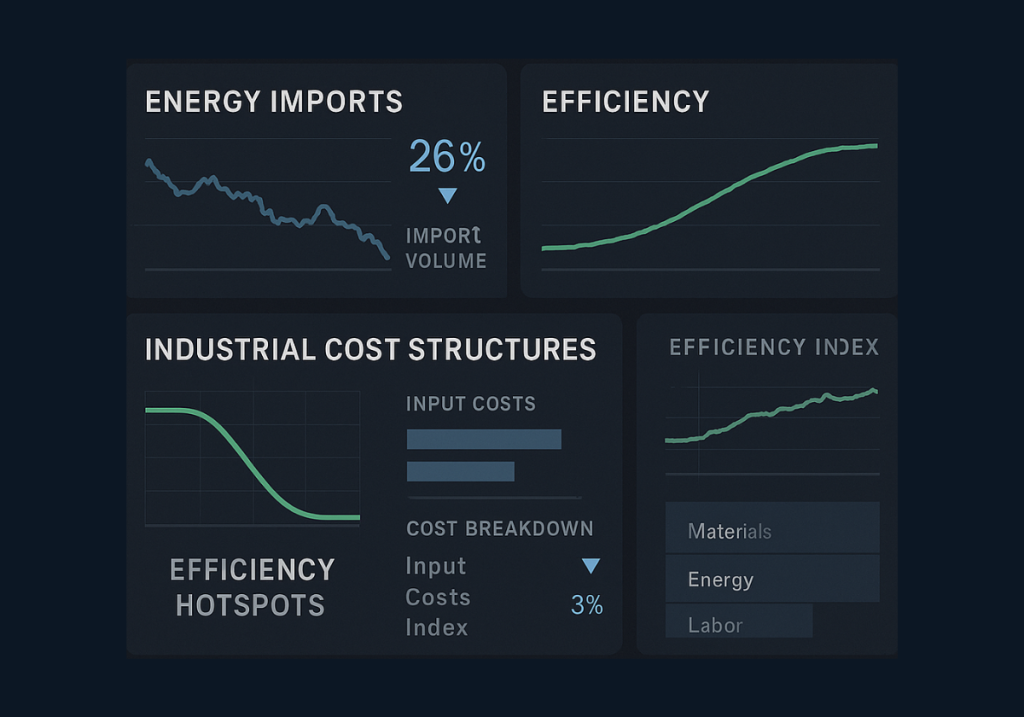
Global energy efficiency gains are expected to reach 1.8% in 2025, up from about 1% last year, according to the IEA. Yet progress has averaged just 1.3% annually since 2019, well short of the 4% target set at COP28. The slowdown comes as efficiency plays a larger role in shaping global supply chains, from fossil fuel demand and trade flows to industrial cost structures and investment patterns.
Reduced Energy Imports Are Rewriting Trade Relationships
Efficiency measures have already cut fossil fuel import needs by roughly 20% across energy-importing nations since 2000, the IEA reports, a shift with potential consequences for shipping corridors that have historically depended on steady long-haul oil and gas flows. Japan’s transport efficiency policies have reduced oil imports by about 18%, while gains in the UK’s industrial and building sectors have slashed natural gas import requirements by half. Even so, the EU spent nearly US$410 billion on energy imports in 2024, though efficiency improvements avoided nearly 500 petajoules of gas consumption.
These shifts signal a strategic realignment: energy security is increasingly tied to efficiency-led demand reduction rather than solely diversifying fuel sources. This dynamic is already visible in Europe’s push to pair grid expansion with building retrofits and industrial heat electrification, rather than relying exclusively on LNG alternatives.
Efficiency Now Shapes Manufacturing Cost Structures
Industrial energy intensity has improved just under 1% annually since 2000, enabling global industry to generate about 20% more value per unit of energy used. European industry in particular has increased value generation by roughly 50% while using 25% less energy over the past two decades, an advantage that is increasingly informing investment decisions and location strategies.
Energy remains a core cost driver: it accounts for up to 35% of sales in food manufacturing, around 20% in textiles, and 25% in non-metallic materials, according to the IEA. Nearly 40% of surveyed industrial leaders say efficiency is their primary lever to manage energy costs.
Investment is following suit. The EU’s Clean Industrial Deal includes over US$115 billion in support for energy-intensive sectors through 2030, while global efficiency-related investment is expected to reach nearly US$800 billion in 2025, about 6% higher than last year. Public-sector incentives are also accelerating electrification and demand-side technologies, echoing recent industrial policy trends seen in the U.S. under the Inflation Reduction Act and similar programs across South Korea and Canada.
EV Supply Chains Reshape Global Growth Centers
Electrification is a major beneficiary of efficiency-driven policy and investment. End-use transport spending is projected to exceed US$330 billion in 2025, driven largely by electric vehicle adoption. EVs accounted for around a quarter of new light-duty vehicle sales globally in the first half of the year, with emerging markets in Asia and Latin America seeing sales rise about 60% in 2024. Chinese automakers drove roughly 75% of that growth, with imports from Chinese brands surging across Egypt, Indonesia, Mexico, and Brazil between 2023 and 2024.
These shifts illustrate a broader realignment: supply chains anchored in China are expanding downstream into consumer markets across developing regions, supported by domestic incentives such as China’s nearly US$42 billion air-conditioner rebate program.
Where Efficiency Meets Grid Capacity Planning
A growing share of efficiency gains will hinge not just on technology adoption but on how quickly power grids adapt to rising electrification across factories, transport, and data centers. Countries prioritizing demand-side flexibility, such as time-shifted industrial loads and grid-connected thermal storage, may accelerate efficiency improvements without waiting for major generation or transmission projects to come online. This shift could influence where energy-intensive supply chains cluster, particularly as firms weigh regions with constrained grid capacity against those designing infrastructure to manage higher loads.