The Supply Chain Behind Starbucks’ 99% Availability
Starbucks has raised product availability from the high 80s to approximately 99% as it expands daily delivery, introduces 24-hour replenishment and strengthens store-level ordering. The

Starbucks has raised product availability from the high 80s to approximately 99% as it expands daily delivery, introduces 24-hour replenishment and strengthens store-level ordering. The

Persistent supply chain turbulence is changing how organizations evaluate major network investments, as recurring volatility reshapes the economics of capacity, service and resilience. Companies that
Faster delivery has long been treated as a competitive advantage in e-commerce. The challenge for most organisations is that speed often comes at the expense

Companies are consolidating logistics partners to simplify execution and improve visibility across inventory, fulfillment and transportation. As more activity sits with a smaller group of

Lights-out cross docks are extending warehouse automation into the middle mile, using robotics, AI and real-time orchestration to accelerate freight movement between facilities. As these

Decision-centric planning is redefining supply chain management by organizing planning around critical decisions rather than fixed planning cycles. As disruption becomes continuous, companies are using

Real-time inventory visibility is becoming a foundational capability for supply chain performance as cloud ERP makes live stock data accessible beyond large enterprises. With working
Artificial intelligence is reshaping more than enterprise technology. It is changing how infrastructure suppliers manage inventory, working capital and product availability. As demand for servers,

The UN’s latest Sustainable Development Goals assessment shows that climate disruption, geopolitical conflict and shrinking development finance are increasingly converging on global supply chains. As
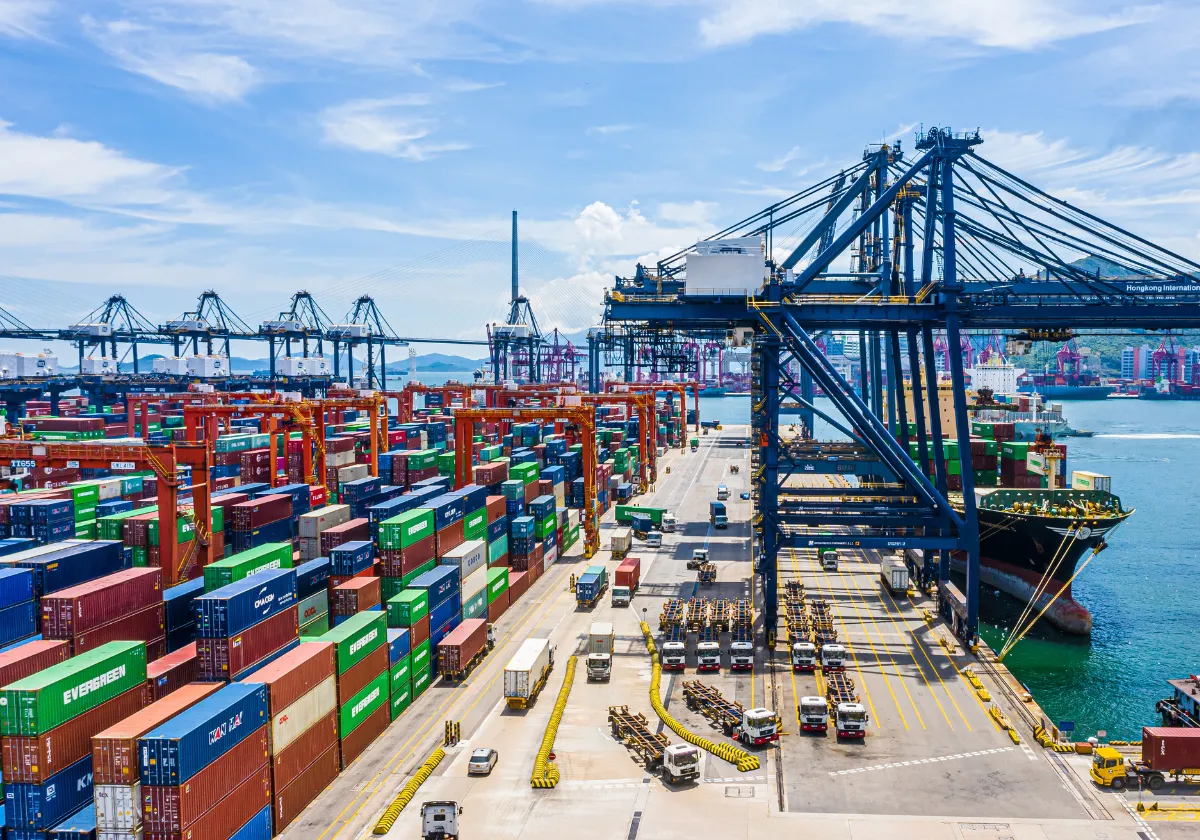
Global supply chains are entering a period of sustained volatility as geopolitical tensions, trade policy shifts and AI-driven industrial demand reshape the economics of sourcing
Starbucks has raised product availability from the high 80s to approximately 99% as it expands daily delivery, introduces 24-hour replenishment and strengthens store-level ordering. The
Persistent supply chain turbulence is changing how organizations evaluate major network investments, as recurring volatility reshapes the economics of capacity, service and resilience. Companies that
Faster delivery has long been treated as a competitive advantage in e-commerce. The challenge for most organisations is that speed often comes at the expense
Companies are consolidating logistics partners to simplify execution and improve visibility across inventory, fulfillment and transportation. As more activity sits with a smaller group of
Lights-out cross docks are extending warehouse automation into the middle mile, using robotics, AI and real-time orchestration to accelerate freight movement between facilities. As these
Decision-centric planning is redefining supply chain management by organizing planning around critical decisions rather than fixed planning cycles. As disruption becomes continuous, companies are using
Real-time inventory visibility is becoming a foundational capability for supply chain performance as cloud ERP makes live stock data accessible beyond large enterprises. With working
Artificial intelligence is reshaping more than enterprise technology. It is changing how infrastructure suppliers manage inventory, working capital and product availability. As demand for servers,
The UN’s latest Sustainable Development Goals assessment shows that climate disruption, geopolitical conflict and shrinking development finance are increasingly converging on global supply chains. As
Global supply chains are entering a period of sustained volatility as geopolitical tensions, trade policy shifts and AI-driven industrial demand reshape the economics of sourcing