El Niño is creating sharply different operating conditions across Latin America, increasing the likelihood of drought, flooding and transport disruption through 2027. Verisk Maplecroft’s latest assessment suggests companies should plan for multiple regional risk profiles rather than a single climate scenario.
Climate Divergence Breaks Regional Assumptions
The strategic break is geographic. Latin America can no longer be treated as a single climate exposure within sourcing, logistics or capacity plans. Verisk Maplecroft’s Hazard Vulnerability Index indicates that the same weather system can restrict water availability in one market while damaging infrastructure through intense rainfall in another. That divergence makes regional averages increasingly unreliable for operational decisions.
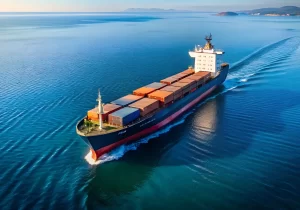
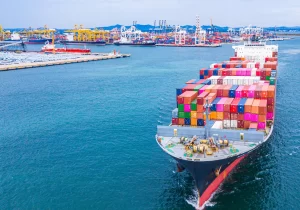
Drought presents the clearest risk across Central America and parts of northern South America. Lower water availability can reduce agricultural yields, constrain electricity generation and interrupt inland transportation. It also threatens traffic through the Panama Canal, where vessel movements depend on freshwater stored in artificial lakes. Drought-related transit restrictions during 2023 and 2024 demonstrated how local rainfall deficits can affect shipping schedules, available capacity and freight costs far beyond the region.
Flood exposure is rising across economically important areas of Peru, Ecuador and Brazil. Excess rainfall can close roads, damage power and communications infrastructure, and interrupt access to ports, mines and production sites. The resulting disruption could affect several globally traded commodity categories, including food ingredients, industrial metals, animal feed and seafood. Verisk Maplecroft identifies Central America and the Andean region as the most vulnerable subregions overall.
The scale of potential loss gives the forecast wider significance. The research associates the 1997-98 El Niño with an estimated $5.7 trillion in global economic damage over time. The current assessment points to exceptionally high Pacific Ocean temperatures and the possibility of extended operational consequences through 2027. That horizon turns climate exposure into a network design and capital allocation issue.
Planning Must Connect Climate Signals To Operating Decisions
Annual risk reviews will provide limited protection against hazards that evolve by location, supplier tier and transport corridor. Planning models need regional climate indicators linked directly to sourcing volumes, inventory policies, production constraints and logistics capacity. A rainfall forecast becomes operationally useful when it triggers a defined decision, such as reserving alternate freight capacity, increasing a critical material buffer or shifting production between qualified sites.
The portfolio effects also require attention. Wetter conditions may improve output for some crops in southern markets while drought reduces supply elsewhere. That does not eliminate risk. It can change trade flows, storage demand, purchasing patterns and transportation requirements within the same planning cycle. Companies with broad commodity exposure may face simultaneous shortages, surpluses and infrastructure bottlenecks across different nodes.
Supplier diversification should therefore account for correlated climate exposure. Two suppliers in separate countries may still depend on the same river basin, port, power system or transport corridor. Mapping those dependencies reveals concentration that conventional country-level sourcing metrics can miss. Contract terms should also clarify allocation rules, recovery responsibilities and access to scarce logistics capacity during disruption.
Financial models have a role alongside physical risk analysis. Scenario planning should quantify possible effects on revenue, margin, working capital and customer service. This creates a common basis for deciding whether redundancy, inventory or infrastructure investment is justified. It also prevents low-probability hazards from being dismissed without measuring their potential enterprise impact.
Regional Conditions Should Drive Network Decisions
Climate forecasts become commercially useful only when they are linked to predefined sourcing, inventory and logistics actions. Regularly testing supplier locations, transport corridors, water availability and utility reliability against updated regional forecasts helps companies adjust procurement and capacity decisions before disruption affects production, freight or customer commitments.