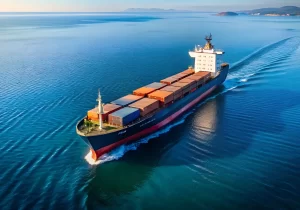
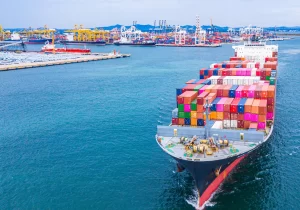
Ocean shipping delays are increasingly emerging during transit and discharge rather than at export terminals, extending end-to-end cycle times even as origin performance improves. Geopolitical rerouting, weather disruption, and downstream congestion are pushing logistics teams to rethink how inventory, buffers, and response plans are positioned across global trade lanes.
Disruption Moves From Port Queues To The Middle Of The Journey
New data from E2open’s Ocean Shipping Index shows global door-to-door shipment times averaging 68 days in the first quarter, two days longer than the previous period and still slightly quicker than a year ago. Performance at origin is stabilizing, yet the timing of disruption is changing as issues crop up later in the cycle.
Bookings clear more cleanly from export hubs in Asia, but variability increases as containers move onto vessels, transit contested waterways, and approach congested terminals. That pattern turns what once looked like a simple port bottleneck into a distributed delay profile that spans booking, sailing, and discharge activities.
As Pawan Joshi, Chief Strategy Officer at E2open, notes, the pace of disturbance is rising across every stage of the ocean process and that variability is eroding execution predictability. What used to be modeled as a single constraint now behaves more like a rolling series of micro shocks along the route.
Geopolitical events are amplifying that complexity. Fighting in the Middle East and the effective closure of the Strait of Hormuz are altering long-standing trade lanes, while security threats in the Red Sea reduce Suez Canal throughput and push carriers to longer diversions around the Cape of Good Hope. Recent trade data shows that each major reroute adds days of sailing time and complicates equipment allocation.
Weather and infrastructure constraints are compounding the impact. Storm systems in Northern Europe, high winds, and labor-intensive safety procedures slow vessel handling, while congestion at hubs such as Rotterdam ties up berths, yard space, and hinterland connections. Even when departure ports load efficiently, these downstream frictions extend actual transit and discharge windows.
Global networks still exhibit pockets of strength. Export platforms across parts of Asia are clearing containers faster, supported by better coordination between terminals, carriers, and inland nodes. Those gains help offset some of the delays in Europe and the Middle East, but they do not neutralize the overall shift toward mid-journey and destination risk.
From Port Bottleneck Thinking To End-To-End Variability Management
The current pattern of disruption challenges planning models built around a single critical constraint such as vessel queues at a handful of mega ports. Cycle time buffers that once sat almost entirely at origin or destination no longer match where variability now appears in the booking-to-delivery chain.
Execution teams that rely on static lead-time assumptions or monthly schedule updates see more surprises as bookings confirmed against available slots encounter late-stage blank sailings, diversions around closed sea lanes, or rolling congestion at import terminals. That volatility flows directly into production sequencing, customer promise dates, and working capital locked in transit.
Industry reports indicate that organizations with multi-node visibility and predictive alerting are better able to reposition inventory and transport capacity when these downstream delays emerge. Visibility by itself is not sufficient; the value comes from linking predicted disruption windows to specific actions such as dynamic order reallocation, safety stock pulls, or mode shifts for critical flows.
This environment also changes how risk gets priced and allocated. Carriers and logistics partners dealing with unpredictable transit and discharge times face tighter vessel schedules, variable bunker consumption, and higher insurance and security costs. Contract structures that assume relatively stable trade lanes and discharge productivity are under pressure as service reliability becomes as critical as headline rates.
Teams focused on planning and logistics need closer integration with finance to translate added days in transit into cash, margin, and revenue exposure. Longer and more volatile ocean legs alter inventory turns and can turn previously acceptable service levels into liabilities in markets where lead-time promises are central to commercial strategy.
Recent operational case studies show that some organizations are building more granular scenario libraries tied to specific corridors, ports, and geopolitical triggers. Rather than treating every ocean lane the same, they map differentiated routing, inventory, and customer allocation rules to lanes exposed to chokepoints such as Hormuz, the Red Sea, or constrained North European gateways.
Transit Volatility Changes Inventory Economics
As disruption spreads across the middle and final stages of ocean journeys, inventory planning is becoming increasingly tied to corridor-specific transit behavior rather than broad regional averages. Companies that continue using standardized lead-time assumptions across diverse trade lanes may find that inventory arrives in the right geography but at the wrong moment for production schedules, promotional windows, or customer commitments.