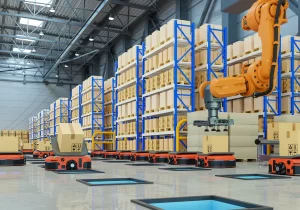
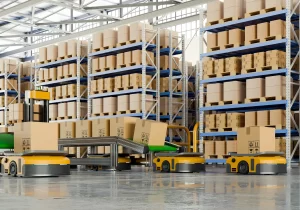
Robots are becoming routine in warehouses, but technology alone isn’t the test anymore. The real question is how companies design work when machines and people operate side by side, and who gets to decide when a robot leads or follows.
A growing group of logistics operators is putting guardrails in place before automation scales any further. Instead of treating robots as replacements for labor, these firms are writing clear rules that preserve human judgment, protect safety, and build trust on the warehouse floor. The aim is straightforward: move faster, not recklessly, and prove that automation can lift performance without sidelining the people who keep operations running.
The companies that get this right won’t just deploy more machines, they’ll earn loyalty from workers, sharpen decision-making, and avoid the quiet friction that can stall even the most advanced warehouse investments.
From Automation Push to Workforce Architecture
Early automation efforts focused on replacing manual tasks. The reality in today’s warehouses looks different. Operations now depend on orchestration, not substitution. Humans oversee autonomous mobile robots, resolve exceptions, manage dock traffic, and step in for safety calls. Robots handle repetitive pallet runs, conveyor transfers, and heavy or hazardous lifts.
This balance only works when it’s intentional. Without clear rules, automation can strain workers, blur decision boundaries, and erode trust faster than it improves productivity. Companies are learning this in real time. Walmart has blended goods-to-person systems with trained floor supervisors who handle exceptions and initiate safety stops in high-volume hubs. DHL Supply Chain deploys Boston Dynamics’ Stretch robot to unload containers while keeping human teams responsible for jam clearing and damaged-goods calls. And Ocado pairs robotic picking arms with human inspection stations, ensuring quality checks remain in human hands as grocery items vary in shape and condition.
Across the industry, operators are now formalizing shared-work rules:
– Automation leads in high-strain and repetitive zones
Humans handle judgment-heavy and exception-driven tasks
– Robots pause, hand off, or wait when conditions aren’t clear
– Humans have the authority to slow or stop systems
Clear role lines are becoming a prerequisite for scaling modern warehouse automation, not an afterthought.
The Human-First Robotics Framework
1. Safety Supremacy Zones
Facilities identify areas where humans hold absolute priority, and robots are permitted to lead only after they meet proven safety and sensing thresholds. These aren’t theoretical rules, they are mapped to the floor, tested, and enforced in daily traffic.
Examples now visible in parcel and retail distribution centers:
– Robotic pallet movers stay within defined fenced paths or beacon-guided corridors
– AMRs in mixed aisles automatically slow and hand off totes when people approach
– Passing or “overtake” behavior requires system authorization, not robot discretion
In these zones, robots are built to behave as cautious guests, not assertive peers. The human has right-of-way, and the system makes that clear, visually, physically, and through enforced logic.
2. Judgment-Priority Workflows
When conditions are uncertain, a blocked tote, mis-scanned label, damaged goods, or a slippery patch on the floor, robots yield. The playbook is simple: detect, pause, and escalate to a human.
Typical escalation pattern:
– Computer vision flags an anomaly or uncertain classification
– AMR holds position and requests human review
– Operator decides: resolve, reroute, or pause the task
This model is already operating in grocery micro-fulfillment centers, where fresh goods vary in shape and spoilage, and in apparel hubs where mixed fabrics and irregular packaging often require tactile judgment. Robots aren’t failing here, they are deferring where judgment matters most.
3. Automation-Lead Thresholds
In steady-state zones, pallet shuttles, controlled sortation lanes, put-to-wall grids, robots run the play. Humans supervise from ergonomic pods or rotate into intervention work when machines escalate an exception.
Autonomy is not a default; it is earned. Thresholds typically include:
– A defined period of incident-free cycles
– Stable congestion and traffic control metrics
– Verified data quality and training-set maturity
As performance proves out, autonomy expands, task by task, zone by zone. This prevents the premature “full-auto” deployments that often create backlash and chaos.
4. Cognitive & Emotional Design Rules
Human-first robotics means reducing cognitive load, not shifting it. Leading operators are adding behavioral design to automation plans, because mental fatigue is as dangerous as physical strain.
Policies include:
– Limiting alert frequency to avoid alarm fatigue
– Simplifying screens and removing unnecessary cues
– Training sensors to recognize hand signals, glances, and intent
– Triggering brief “cooldown” spacing rules in dense AMR traffic
When robotics feel predictable and respectful of human attention, performance rises. When they feel frantic or intrusive, errors and injuries rise instead. Design is a safety layer.
5. Human Override Doctrine
A foundational rule: if a person calls stop, the system stops, immediately and without negotiation.
Override controls today include:
– Voice commands
– Wearable stop badges
– Hand signals and visual gestures recognized by vision systems
This approach mirrors safety culture in aviation and automotive manufacturing, where any crew member can halt operations if safety is in doubt. In hybrid human-machine facilities, that right becomes non-negotiable.
Designing the Workforce for the Automation Era
As automation grows more capable, the defining question for operators isn’t how many tasks can be mechanized, it’s how to develop people who can supervise, guide, and improve increasingly intelligent systems. Leading distribution networks are already shifting frontline roles toward problem-solving, safety stewardship, and real-time decision-making, supported by training paths that blend technical literacy with operational judgment. The companies that treat robotics as a catalyst for building a more skilled workforce, rather than a substitute for it, will be better positioned to staff facilities, uphold safety culture, and extract returns on automation at scale.